Revolutionizing Energy Efficiency: SRJ Heatt GCC’s Reheat Plate Heat Exchangers for Gulf Industries
Discover SRJ Heatt GCC's reheat plate heat exchangers, optimizing energy efficiency for GCC industries. Boost thermal performance and sustainability in oil, gas, and desalination with advanced heat transfer solutions.
In the scorching heat of the Gulf Cooperation Council (GCC) region, where industrial operations demand unwavering reliability and optimal thermal performance, innovative solutions are key to sustainable growth. Enter SRJ Heatt GCC, a pioneering brand delivering cutting-edge reheat plate heat exchangers tailored for the unique challenges of oil and gas, desalination plants, and HVAC systems across the UAE, Saudi Arabia, Qatar, and beyond. These advanced devices aren’t just equipment — they’re game-changers for energy recovery and cost reduction in high-demand environments.
As global energy costs rise and environmental regulations tighten, businesses in the Gulf countries are turning to efficient heat transfer solutions like reheat plate heat exchangers to boost operational efficiency. At SRJ Heatt GCC, we specialize in compact, high-performance units that integrate seamlessly into existing setups, ensuring minimal downtime and maximum heat exchanger maintenance ease. In this comprehensive guide, we’ll explore how these systems work, their benefits, and why they’re essential for industrial cooling and heating optimization in the region.
Press enter or click to view image in full size
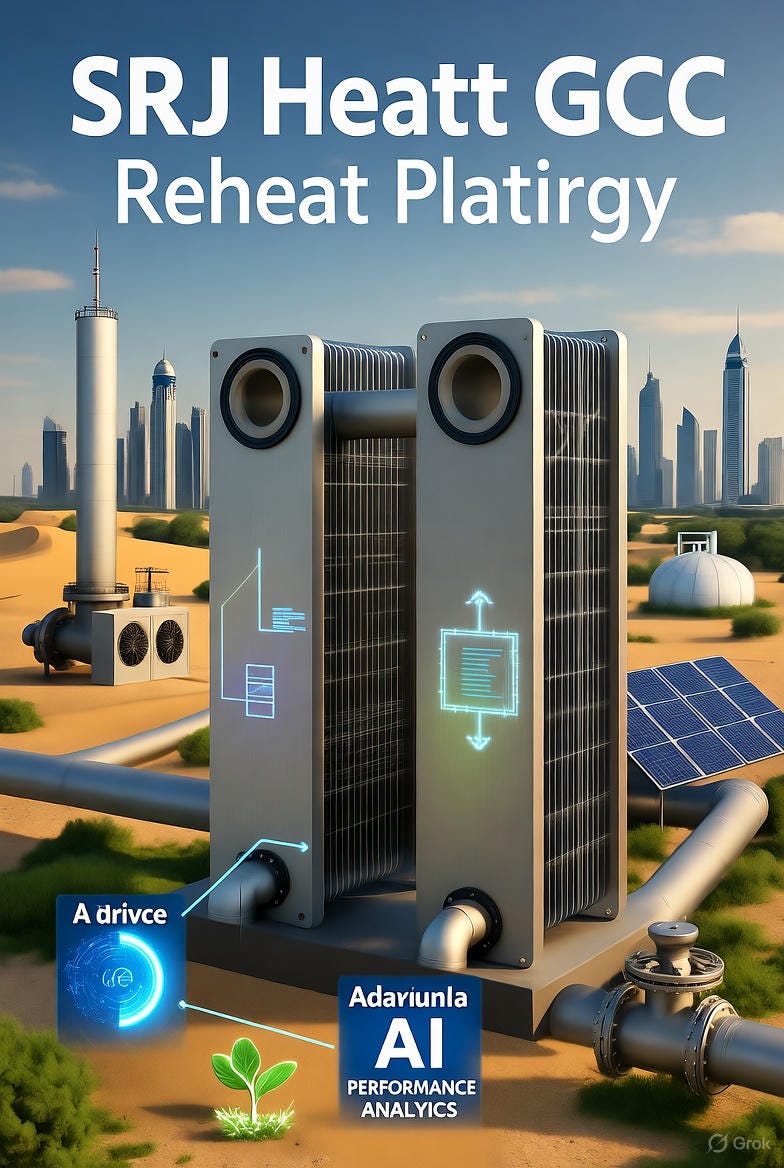
At its heart, a reheat plate heat exchanger is a sophisticated compact heat exchanger designed to recover waste heat from exhaust streams and reintroduce it into processes where it’s needed most. Unlike traditional shell and tube exchangers, these plate-and-frame designs use corrugated plates to create alternating channels for hot and cold fluids, maximizing turbulent flow and surface area contact for superior thermal efficiency.
In GCC industrial applications, where ambient temperatures often exceed 50°C, the ability to preheat incoming fluids or cool process streams without excessive energy input is invaluable. SRJ Heatt GCC’s models feature corrosion-resistant materials like titanium and stainless steel, ideal for handling brackish water in desalination processes or aggressive chemicals in petrochemical plants. This not only extends equipment lifespan but also supports sustainable engineering by reducing fuel consumption and carbon emissions.
Key components include:
- Gasketed plates for easy disassembly and cleaning.
- Frame structures built for high-pressure tolerance.
- Flow distributors ensuring even fluid distribution to prevent hotspots.
By focusing on fouling resistance and scale prevention, reheat plate heat exchangers from SRJ Heatt GCC deliver up to 30% better heat recovery rates compared to older technologies, making them a staple in district heating and power generation sectors.
Why Reheat Plate Heat Exchangers Are a Must for Gulf-Based OperationsThe Gulf region’s industrial landscape — dominated by refineries, power utilities, and water treatment facilities — faces unique hurdles like dust-laden air, saline environments, and fluctuating loads. Here, SRJ Heatt GCC shines with reheat plate heat exchangers engineered for resilience.
Enhanced Energy Savings and ROIInvesting in energy-efficient heat exchangers translates directly to bottom-line gains. For instance, in a typical Saudi Aramco-style refinery, integrating these units can slash boiler fuel usage by recapturing heat from flue gases. SRJ Heatt GCC guarantees a payback period under 18 months through precise CFD modeling during design, optimizing pressure drop and velocity profiles for your specific process integration needs.
Superior Adaptability to Harsh ClimatesHigh-temperature tolerance is non-negotiable in the GCC. Our reheat plate heat exchangers operate flawlessly from -10°C to 150°C, with options for brazed plate variants for ultra-high pressures. This adaptability supports hybrid systems combining solar thermal inputs with traditional fuels, aligning with Saudi Vision 2030’s green initiatives.
Low Maintenance, High UptimeRoutine plate heat exchanger cleaning is simplified with clip-on gaskets and tool-free access. In Qatar’s LNG facilities, where downtime costs millions per hour, SRJ Heatt GCC’s predictive vibration monitoring tech alerts operators to potential leak detection issues early, ensuring continuous operation in multi-stream configurations.
Real-World Applications: SRJ Heatt GCC in Action Across the GulfFrom Dubai’s towering skyscrapers to Oman’s remote oil fields, reheat plate heat exchangers are transforming operations:
- Desalination Boost: In Abu Dhabi’s water plants, these units preheat seawater feeds, cutting steam consumption by 25% and enhancing overall plant efficiency.
- HVAC Optimization: Kuwaiti hotels leverage them for chilled water reheat, maintaining comfort while trimming electrical loads during peak summer demands.
- Petrochemical Precision: Bahrain’s refineries use SRJ Heatt GCC solutions for intercooler duties, improving yield rates through precise temperature control.
Case Study Spotlight: A major Qatari petrochemical firm adopted our reheat plate heat exchangers in 2024, achieving 15% energy cost savings and earning LEED certification for their upgraded facility. This underscores how modular heat transfer can drive circular economy principles in resource-scarce regions.
Best Practices for Implementing Reheat Plate Heat Exchangers with SRJ Heatt GCCTo maximize value, follow these system design tips:
- Conduct a Thermal Audit: Assess your load variations to select the right NTU (Number of Transfer Units) rating.
- Prioritize Material Selection: Opt for Hastelloy alloys in corrosive sour gas environments.
- Integrate Smart Controls: Pair with PLC-based automation for dynamic bypass valves and flow balancing.
- Schedule Proactive Servicing: Annual ultrasonic inspections keep efficiency curves sharp.
SRJ Heatt GCC offers on-site consultations across the Gulf, including customized CAD simulations to fit your retrofit projects.
The Future of Heat Exchange: Why SRJ Heatt GCC Leads in the GCCAs the Gulf pivots toward net-zero ambitions, reheat plate heat exchangers will be central to decarbonization strategies. With innovations like nanocoated plates for self-cleaning and AI-driven performance analytics, SRJ Heatt GCC is at the forefront, empowering industries from Riyadh to Muscat.
Ready to elevate your heat management? Contact SRJ Heatt GCC today for a free efficiency assessment. Discover how our reheat plate heat exchangers can redefine reliability and sustainability in your operations — because in the GCC, efficiency isn’t optional; it’s essential.
Vigortrix: A Complete Guide to Its Features and Potential Benefits
What Is Vigortrix Male Enhancement? Vigortrix is a dietary supplement marketed for adult...


Hotel Econômico São José do Rio Preto-SP Centro Cidade: Encontre Hospe...
Solvarex Review: What Makes This Formula Stand Out?
What Is Solvarex? Solvarex is a dietary supplement designed to support general metabolic...