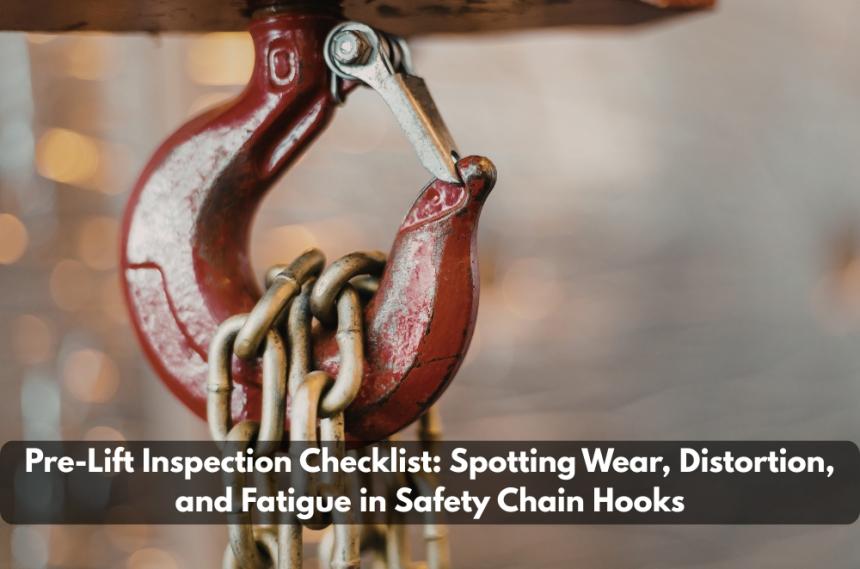

Pre-Lift Inspection Checklist: Spotting Wear, Distortion, and Fatigue in Safety Chain Hooks
Learn the visual cues of wear, distortion, and fatigue in safety chain hooks, and follow an easy pre-lift inspection routine that keeps Australian worksites compliant.
A chain hook that fails mid-lift rarely gives much warning—but a rigger with a trained eye can usually spot the tell-tale signs long before something snaps. Whether you’re loading prefab panels in Brisbane or lifting mining gear in the Pilbara, a quick, systematic inspection of every safety-rated hook is one of the simplest ways to prevent dropped loads, costly shutdowns, and Work Health & Safety (WHS) headaches.
Below is a practical, Australian-focused guide to the visual checks, danger signs, and record-keeping habits that keep lifting operations moving without cutting corners. Along the way, we’ll examine how proper inspection practices apply not only to hooks, but also to industrial chains and lifting slings, helping operators maintain safe and compliant lifting systems.
Why Pre-Lift Hook Inspections Are Non-Negotiable
Australian WHS regulations require duty-holders to eliminate or minimise risks associated with plant and lifting gear “so far as is reasonably practicable.” That obligation begins well before the crane boom moves. According to Safe Work Australia, routine inspections help verify that equipment is fit for purpose, correctly tagged, and free from obvious defects.
Many sites already mandate daily sling inspections—but chain hooks sometimes escape the same scrutiny. Considering hooks are often the smallest link in a complex rigging system, overlooking them can undo every other safety control you’ve put in place.
The Five-Minute Visual Scan: What to Look For First
A thorough inspection doesn’t need to slow the job. Most experienced riggers work through a simple sequence:
- Wipe off grease or dirt so the metal surface is visible.
- Check the manufacturer markings—grade, working load limit (WLL), and identification number haven’t worn off.
- Run your eyes (and gloved fingers) along the throat, latch, and eye/clevis for sharp edges, nicks, or cracks.
- Compare the hook’s shape to a new one if possible—any subtle bend or twist is a red flag.
- Cycle the latch or safety pin to confirm full spring return and no sticking points.
Need a deeper dive into how hooks and slings must work together? This related guide on how to match safety-rated chain hooks with the right lifting sling explains compatibility issues that inspections can miss.
Red Flags You Can’t Ignore: Common Forms of Hook Damage
Even brand-name alloy steel will eventually wear out. Below are the highest-frequency defects seen on Australian worksites and what they might indicate.
Damage IndicatorWhat It May MeanSuggested ActionGrooved, flattened, or razor-sharp contact pointsExcessive wear from chain links or slings; possible overload historyRemove from service; replace rather than re-machine unless manufacturer allowsThroat opening wider than original specPlastic deformation from shock loading or overloadTag out immediately; have a competent person compare to spec before any reuseHook twisted or bent sidewaysSide loading or snag during liftRemove; investigate lifting plan to prevent repeatHairline cracks, spider lines, or “beach marks”Fatigue over many load cyclesRetire the hook; cracks propagate quickly under loadDiscolouration, blueing, or pitted surfaceHeat damage, welding spatter, or corrosionReplace; metal strength may be compromisedLatch won’t fully close or spring is weakWear, dirt intrusion, or spring failureReplace latch kit if approved; otherwise retire hookExcessive Wear on Contact Points
Wear often hides in plain sight. If more than 10 % of the original cross-section is lost—or you can feel a ridge with a fingernail—it’s safer to retire the hook. Machining or grinding a worn tip risks removing the heat-treated outer layer, weakening the alloy beneath.
Bending, Twisting, or Throat Opening
Any permanent deformation suggests the hook has been subjected to forces beyond its WLL. Even if the hook “looks okay,” the micro-structure has changed. Compare throat opening to manufacturer data; if it’s wider, tag it out.
Surface Fatigue and Cracks
Fatigue cracks often start at stress concentrations such as the inside of the hook bowl. Use adequate lighting and, where allowed, a quick dye-penetrant test if you suspect a flaw. Once a crack is visible, retirement is the only safe option.
Corrosion and Heat Damage
Rust might seem cosmetic, but pitting can reduce effective cross-section. Blue or straw-coloured areas indicate heat exposure that can change alloy properties and therefore load rating.
When In Doubt, Tag It Out: Decision Framework for Australian Sites
Site deadlines create pressure to “just use it this once,” but an uncertain hook is rarely worth the gamble. A simple rule-of-thumb decision tree:
- Is the defect visible, measurable, or doubtful?
- Does any manufacturer guideline, Australian Standard AS 3776, or site procedure allow continued use?
- Can a competent person confirm fitness for service now—not at the next shutdown?
If the answer to any step is “no” or “not sure,” quarantine the hardware. Replacement is usually less expensive than a potential incident. When you do need fresh stock, sourcing reliable safety chain hooks that carry clear markings, test certificates, and traceable batch numbers keeps future inspections straightforward.
Simple Record-Keeping Tips That Save Time at Audit
• Keep an inspection logbook (digital or paper) at the lifting gear store. Note hook ID, date, inspector initials, and any corrective action.
• Photograph borderline defects and store them with the record. Images remove doubt about “how bad it really was.”
• Align inspection intervals with other lifting gear—daily visual plus periodic detailed checks.
• File manufacturer certificates and any non-destructive test (NDT) reports in the same place as inspection logs.
• When hooks are retired, record the serial and disposal method to close the loop.
These habits look minor day-to-day but can save hours when a principal contractor, insurer, or regulator asks for evidence.
Final Thoughts
A pre-lift inspection doesn’t require specialist equipment—just a systematic eye, consistent records, and the confidence to tag out anything suspect. Spotting wear, distortion, or fatigue early not only protects workers and loads but also supports smoother operations by preventing unscheduled downtime. With clear markings, traceable paperwork, and regular visual checks, safety-rated chain hooks can quietly do their job—holding fast so every lift reaches the ground in one piece.
Montmorillonite Powder for Pharmaceutical Manufacturing and Gastrointe...
Montmorillonite Powder for Pharmaceutical Manufacturing and Gastrointestinal Care

Modern Biomass Station Upgrades for Reliable Power Generation
Modern Biomass Station Upgrades for Reliable Power Generation

Dish Network Installers Near Me: Professional Satellite Dish Installat...