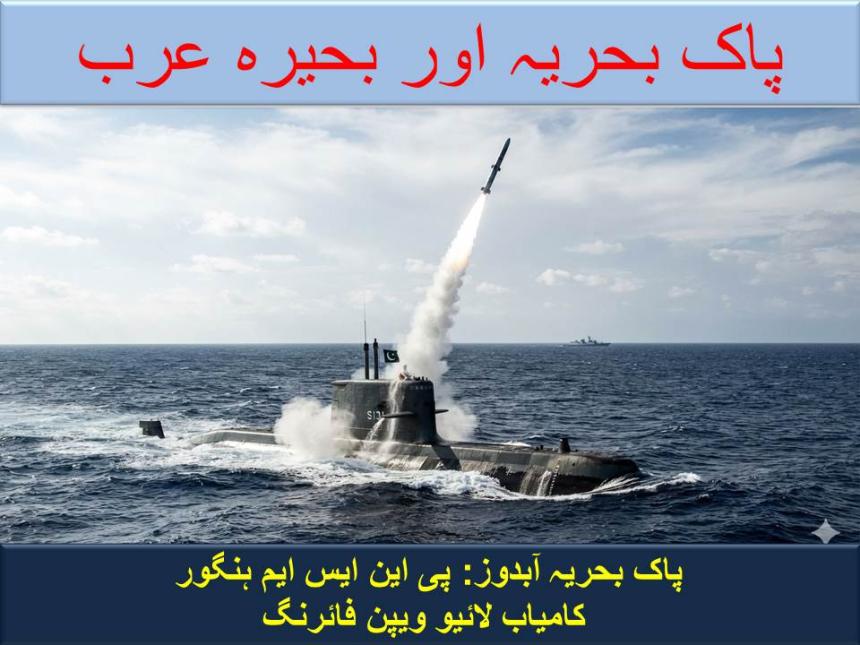

پاک بحریہ اور بحیرہ عرب
Pakistan Navy has transformed itself from a modest coastal defense force into a highly networked, technology-driven maritime power capable of enforcing a credible sea denial strategy. The geopolitical landscape of the Indian Ocean Region (IOR) is undergoing a profound transformation, driven by rapid military modernization and shifting maritime balances. This write up in Urdu "پاک بحریہ اور بحیرہ عرب" is about the latest maiden weapon live firing from PNS/M Hangor which has also been inducted in Pakistan Fleet earlier during last year.
أَعُوذُ بِاللّٰهِ مِنَ الشَّيْطَانِ الرَّجِيمِ
بِسۡمِ ٱللهِ ٱلرَّحۡمَـٰنِ ٱلرَّحِيمِ
اللہ کے نام سے شروع جو بڑا مہربان نہایت رحم کرنے والا ہے
پاک بحریہ اور بحیرہ عرب
Pakistan Navy & The Arabian Sea
Abstract
This paper analyzes the strategic operationalization of the Pakistan Navy's newly inducted Hangor-class submarine, PNS/M HANGOR, following its successful maiden Live Weapon Firing in the North Arabian Sea. It evaluates the vessel's technological advancements—most notably Air-Independent Propulsion (AIP) and long-range anti-ship cruise missile integration—within the broader context of Pakistan's evolving maritime doctrine over the past two decades. The study examines how the Pakistan Navy counters regional conventional asymmetries through a cost-effective strategy of asymmetric sea denial, supported by a sophisticated multi-domain operations web. Finally, it highlights the structural transition toward self-reliance enabled by the indigenous defense manufacturing matrix of KS&EW, NESCOM, and internal naval development structures.
خلاصہ (Abstract)
یہ مقالہ شمالی بحیرہ عرب میں پاک بحریہ کی نئی شامل کردہ ہنگور کلاس آبدوز، PNS/M HANGOR کی پہلی کامیاب لائیو ویپن فائرنگ کے بعد اس کے اسٹریٹجک استعمال کا تجزیہ کرتا ہے۔ یہ گزشتہ دو دہائیوں کے دوران پاکستان کے ابھرتے ہوئے سمندری نظریے کے وسیع تناظر میں آبدوز کی تکنیکی ترقیوں—خاص طور پر ایئر-انڈیپینڈنٹ پروپلشن (AIP) اور طویل فاصلے تک مار کرنے والے اینٹی شپ کروز میزائل کی شمولیت—کا جائزہ لیتا ہے۔ یہ مطالعہ اس بات کا احاطہ کرتا ہے کہ کس طرح پاک بحریہ ایک جدید ملٹی ڈومین آپریشنز ویب کی مدد سے، کم لاگت اور غیر متناسب سمندری دفاع (Asymmetric Sea Denial) کی حکمت عملی کے ذریعے علاقائی روایتی عدم توازن کا مقابلہ کرتی ہے۔ آخر میں، یہ مقالہ KS&EW، NESCOM اور بحریہ کے اپنے اندرونی ترقیاتی
ڈھانچے کے مقامی دفاعی مینوفیکچرنگ میٹرکس کے ذریعے حاصل ہونے والی خود انحصاری کی جانب منتقلی پر روشنی ڈالتا ہے۔
Executive Summary
- Strategic Milestone: The successful maiden live firing of an extended-range anti-ship cruise missile by PNS/M HANGOR marks a qualitative shift in Pakistan’s subsurface combat readiness, validating its weapon integration and underwater stealth capabilities.
- Asymmetric Advantage via AIP: The induction of eight Hangor-class submarines (equipped with AIP technology) expands submerged endurance to three weeks. This capability shifts the regional tactical balance by creating a highly potent, invisible Anti-Access/Area Denial (A2/AD) bubble across the North Arabian Sea and beyond.
- Network-Centric Lethality: The platform operates as an integrated node within a multi-domain operations web, linking subsurface assets with land, air, and unmanned surveillance networks. This allows for automated target acquisition and kill-chain execution without compromising submarine stealth.
- Divergent Military Philosophies: Unlike resource-heavy and fragmented procurement models optimized for global power projection, Pakistan’s defense architecture is tightly streamlined for data-driven, asymmetric efficiency—rendering its naval posture significantly more effective than the sum of its individual parts.
- Institutional Self-Reliance: The program establishes a sustainable framework for engineering sovereignty. Through targeted technology transfers, a robust trilateral partnership between KS&EW, NESCOM, and the Pakistan Navy’s internal development structures ensures the domestic production and long-term evolution of strategic maritime assets.
ایگزیکٹو سمری (Executive Summary)
• اسٹریٹجک سنگ میل: PNS/M HANGOR کی جانب سے طویل فاصلے تک مار کرنے والے اینٹی شپ کروز میزائل کی پہلی کامیاب لائیو فائرنگ پاکستان کی زیرِ آب جنگی تیاریوں میں ایک गुणात्मक (qualitative) تبدیلی کی نشاندہی کرتی ہے، جو اس کے ہتھیاروں کے انضمام اور زیرِ آب اسٹیلتھ صلاحیتوں کی تصدیق کرتی ہے۔
• AIP کے ذریعے غیر متناسب فائدہ: آٹھ ہنگور کلاس آبدوزوں کی شمولیت (جو AIP ٹیکنالوجی سے لیس ہیں) زیرِ آب رہنے کی مدت کو تین ہفتوں تک بڑھا دیتی ہے۔ یہ صلاحیت شمالی بحیرہ عرب اور اس سے آگے ایک انتہائی طاقتور، پوشیدہ اینٹی ایکسیس/ایریا ڈینائل (A2/AD) ببل بنا کر علاقائی تزویراتی توازن کو تبدیل کرتی ہے۔
• نیٹ ورک سینٹرک ہلاکت خیزی: یہ پلیٹ فارم ایک ملٹی ڈومین آپریشنز ویب کے اندر ایک مربوط نوڈ کے طور پر کام کرتا ہے، جو زیرِ آب اثاثوں کو زمین، ہوا اور بغیر پائلٹ کے نگرانی کے نیٹ ورکس سے جوڑتا ہے۔ یہ آبدوز کے اسٹیلتھ کو متاثر کیے بغیر خودکار طریقے سے ہدف کے حصول اور کل-چین (kill-chain) پر عمل درآمد کی اجازت دیتا ہے۔
• مختلف فوجی فلسفے: عالمی سطح پر طاقت کے مظاہرے کے لیے بنائے گئے وسائل سے بھرپور اور بکھرے ہوئے پروکیورمنٹ ماڈلز کے برعکس، پاکستان کا دفاعی فن تعمیر ڈیٹا سے چلنے والی، غیر متناسب کارکردگی کے لیے انتہائی منظم ہے—جس سے اس کا بحری متبادل اپنے انفرادی حصوں کے مجموعے سے کہیں زیادہ موثر ثابت ہوتا ہے۔
• ادارتی خود انحصاری: یہ پروگرام انجینئرنگ کی خودمختاری کے لیے ایک پائیدار فریم ورک قائم کرتا ہے۔ ٹیکنالوجی کی ٹرانسفر کے ذریعے، KS&EW، NESCOM، اور پاک بحریہ کے اپنے اندرونی ترقیاتی ڈھانچے کے درمیان ایک مضبوط سہ فریقی شراکت داری اسٹریٹجک بحری اثاثوں کی گھریلو پیداوار اور طویل مدتی ترقی کو یقینی بناتی ہے۔
Introduction
تعارف (Introduction)
The geopolitical landscape of the Indian Ocean Region (IOR) is undergoing a profound transformation, driven by rapid military modernization and shifting maritime balances. A pivotal milestone in this arena occurred with the Pakistan Navy’s successful maiden Live Weapon Firing (LWF) from its newly inducted submarine, PNS/M HANGOR, in the North Arabian Sea. By launching an anti-ship cruise missile and destroying a designated target at an extended range with pinpoint precision, the Pakistan Navy has not only validated the combat readiness of its newest asset but has also signaled a major qualitative shift in its underwater warfare capabilities.
بحر ہند کے خطے (IOR) کا جغرافیائی سیاسی منظرنامہ تیزی سے فوجی جدید کاری اور بدلتے ہوئے بحری توازن کی وجہ سے گہری تبدیلیوں سے گزر رہا ہے۔ اس میدان میں ایک اہم سنگ میل پاک بحریہ کی جانب سے شمالی بحیرہ عرب میں اپنی نئی شامل کردہ آبدوز، PNS/M HANGOR سے پہلی کامیاب لائیو ویپن فائرنگ (LWF) کے ساتھ سامنے آیا۔ ایک اینٹی شپ کروز میزائل داغ کر اور طویل فاصلے پر متعین ہدف کو انتہائی درستگی کے ساتھ نشانہ بنا کر، پاک بحریہ نے نہ صرف اپنے نئے اثاثے کی جنگی تیاری کی تصدیق کی ہے بلکہ اپنی زیرِ آب جنگی صلاحیتوں میں ایک بڑی गुणात्मक (qualitative) تبدیلی کا اشارہ بھی دیا
ہے۔
Over the last two decades, the Pakistan Navy has transformed itself from a modest coastal defense force into a highly networked, technology-driven maritime power capable of enforcing a credible sea denial strategy. This evolution has been shaped by profound operational challenges. Chief among them are a stark conventional force asymmetry with a numerically superior rival, severe domestic budgetary constraints, and a historical vulnerability to broad 'sea blindness' within national policy frameworks. Furthermore, the operationalization of the Gwadar Port and the China-Pakistan Economic Corridor (CPEC) exponentially expanded the Navy's area of responsibility, demanding a permanent presence to secure critical Sea Lines of Communication (SLOCs) from hybrid, conventional, and non-conventional maritime threats.
پچھلی دو دہائیوں کے دوران، پاک بحریہ نے خود کو ایک معمولی ساحلی دفاعی قوت سے ایک انتہائی نیٹ ورکڈ، ٹیکنالوجی سے چلنے والی بحری طاقت میں تبدیل کر لیا ہے جو ایک قابل اعتماد سمندری انکار (Sea Denial) کی حکمت عملی کو نافذ کرنے کی صلاحیت رکھتی ہے۔ یہ ارتقاء گہرے آپریشنل چیلنجوں کے زیر اثر ہوا ہے۔ ان میں سب سے اہم ایک عددی طور پر برتر حریف کے ساتھ روایتی قوت کا واضح عدم توازن، شدید ملکی بجٹ کی رکاوٹیں، اور قومی پالیسی کے فریم ورک کے اندر وسیع 'سمندری اندھے پن' (Sea Blindness) کا تاریخی مسئلہ رہے ہیں۔ مزید برآں، گوادر بندرگاہ اور چین پاکستان اقتصادی راہداری (CPEC) کے فعال ہونے نے بحریہ کی ذمہ داریوں کے دائرہ کار کو بڑے پیمانے پر بڑھا دیا ہے، جس کے لیے ہائبرڈ، روایتی اور غیر روایتی بحری خطرات سے مواصلات کی
اہم سمندری لائنوں (SLOCs) کو محفوظ بنانے کے لیے مستقل موجودگی کی ضرورت ہے۔
Despite these hurdles, the last 20 years have seen an aggressive reinforcement of Pakistan’s maritime strength. Moving away from a purely defensive posture, the Navy has prioritized high-yield, networked capabilities over raw platform counts. Key surface inductions have included four advanced Tughril-class (Type 054A/P) multi-mission frigates from China, modern Babur-class (MILGEM) corvettes developed in partnership with Türkiye, and the highly versatile Yarmook-class corvettes (built by Dutch shipbuilder Damen). Together, these modern platforms bring formidable anti-air, anti-surface, and anti-submarine capabilities to the fleet.
ان رکاوٹوں کے باوجود، گزشتہ 20 سالوں میں پاکستان کی بحری طاقت میں جارحانہ اضافہ دیکھا گیا ہے۔ محض دفاعی انداز سے ہٹ کر، بحریہ نے پلیٹ فارمز کی تعداد کے بجائے اعلیٰ کارکردگی، نیٹ ورکڈ صلاحیتوں کو ترجیح دی ہے۔ اہم سطحی شمولیتوں میں چین سے چار جدید طغرل کلاس (Type 054A/P) ملٹی مشن فریگیٹس، ترکی کے تعاون سے تیار کردہ جدید بابر کلاس (MILGEM) کارویٹس، اور انتہائی ورسٹائل یرموک کلاس کارویٹس (جو ڈچ جہاز ساز ڈیمن نے بنائے ہیں) شامل ہیں۔ مشترکہ طور پر، یہ جدید پلیٹ فارم بیڑے میں زبردست اینٹی ایئر، اینٹی سرفیس، اور اینٹی سب میرین صلاحیتیں لاتے ہیں۔
Concurrently, the establishment of the international AMAN exercise series since 2007 has elevated Pakistan’s maritime diplomacy into a powerful global platform. Drawing over 50 nations into a unified counter-piracy and counter-terrorism framework, these biennial drills are anchored in a profound message: promoting peace for all in the Indian Ocean. Operating under the official slogan 'Together for Peace,' the AMAN exercises highlight the Pakistan Navy’s role as a collaborative regional stabilizer. These two decades of modernization and strategic outreach have culminated in a potent blend of foreign technology transfer and deep integration, laying the structural groundwork for the Hangor-class to thrive.
اس کے ساتھ ہی، 2007 سے بین الاقوامی امن (AMAN) مشقوں کے سلسلے کے آغاز نے پاکستان کی بحری سفارت کاری کو ایک طاقتور عالمی پلیٹ فارم میں بدل دیا ہے۔ 50 سے زائد ممالک کو بحری قزاقی اور دہشت گردی کے خلاف ایک متحدہ فریم ورک میں لانے والی یہ دو سالہ مشقیں ایک گہرے پیغام پر مبنی ہیں: بحر ہند میں سب کے لیے امن کا فروغ۔ 'امن کے لیے متحد' کے باضابطہ سلوگن کے تحت کام کرتے ہوئے، امن مشقیں ایک باہمی علاقائی استحکام فراہم کرنے والے کے طور پر پاک بحریہ کے کردار کو نمایاں کرتی ہیں۔ جدید کاری اور اسٹریٹجک رسائی کی ان دو دہائیوں کا نتیجہ غیر ملکی ٹیکنالوجی کی منتقلی اور گہرے انضمام کے ایک طاقتور امتزاج کی شکل میں نکلا ہے، جس نے ہنگور کلاس کی کامیابی کے لیے ساختی بنیاد فراہم کی ہے۔
Technical Prowess and Combat Capabilities
تکنیکی مہارت اور جنگی صلاحیتیں (Technical Prowess and Combat Capabilities)
The PNS/M HANGOR is the vanguard of an ambitious eight-vessel procurement program, representing a massive technological leap forward for Pakistan’s submarine fleet. At the core of its strategic value is the integration of Air-Independent Propulsion (AIP) systems. Traditional diesel-electric submarines must surface or snorkel frequently to recharge their batteries, leaving them highly vulnerable to modern anti-submarine warfare (ASW) surveillance. AIP technology shatters this limitation, allowing the Hangor-class to remain submerged for weeks at a time. This extreme endurance, combined with advanced acoustic silencing, grants the vessel unparalleled stealth in the challenging littoral waters of the Arabian Sea.
PNS/M HANGOR ایک پرعزم آٹھ بحری جہازوں کے حصول کے پروگرام کا ہراول دستہ ہے، جو پاکستان کے آبدوز بیڑے کے لیے ایک بہت بڑی تکنیکی چھلانگ کی نمائندگی کرتا ہے۔ اس کی اسٹریٹجک اہمیت کے مرکز میں ایئر-انڈیپینڈنٹ پروپلشن (AIP) سسٹمز کا انضمام ہے۔ روایتی ڈیزل الیکٹرک آبدوزوں کو اپنی بیٹریاں ری چارج کرنے کے لیے کثرت سے سطح پر آنا پڑتا ہے یا سنورکل کرنا پڑتا ہے، جس سے وہ جدید اینٹی سب میرین وارفیر (ASW) کی نگرانی کے لیے انتہائی کمزور ہو جاتی ہیں۔ AIP ٹیکنالوجی اس حد کو ختم کرتی ہے، جس سے ہنگور کلاس ایک وقت میں ہفتوں تک زیرِ آب رہ سکتی ہے۔ یہ طویل برداشت، جدید صوتی خاموشی (Acoustic Silencing) کے ساتھ مل کر، بحیرہ عرب کے مشکل ساحلی پانیوں میں آبدوز کو بے مثال اسٹیلتھ (پوشیدگی) فراہم کرتی ہے۔
The success of the live weapon firing confirms that this stealthy platform is backed by lethal teeth. The seamless integration of extended-range anti-ship cruise missiles allows the submarine to engage surface threats well beyond the horizon. Furthermore, the platform's architectural capacity to deploy dual-use precision systems—including the potential for nuclear-capable regional deterrence weapons like the Babur-3—solidifies its role as a survival-driven asset capable of maintaining a robust second-strike capability.
لائیو ویپن فائرنگ کی کامیابی اس بات کی تصدیق کرتی ہے کہ اس اسٹیلتھ پلیٹ فارم کو مہلک ہتھیاروں کی پشت پناہی حاصل ہے۔ طویل فاصلے تک مار کرنے والے اینٹی شپ کروز میزائلوں کا ہموار انضمام آبدوز کو افق سے کہیں آگے سطحی خطرات کو نشانہ بنانے کی اجازت دیتا ہے۔ مزید برآں، دوہرے استعمال کے درست نظاموں کو تعینات کرنے کی پلیٹ فارم کی ساختی گنجائش—بشمول بابر-3 جیسے جوہری صلاحیت کے حامل علاقائی روک تھام کے ہتھیاروں کی صلاحیت—اس کے کردار کو ایک بقا پر مبنی اثاثے کے طور پر مستحکم کرتی ہے جو ایک مضبوط سیکنڈ اسٹرائیک صلاحیت کو برقرار رکھنے کے قابل ہے۔
The Economics of Sea Denial and Multi-Domain Integration
سمندری انکار کی معیشت اور ملٹی ڈومین انضمام (The Economics of Sea Denial and Multi-Domain Integration)
The deployment and successful weapon testing of PNS/M HANGOR carries immense strategic weight, primarily serving as a highly efficient maritime deterrent. In the matrix of South Asian security, asymmetric naval balances have long pressured Pakistan to seek innovative, cost-effective, and highly lethal defensive measures. The Hangor-class addresses this imbalance by exponentially increasing the operational and financial cost of sea denial for adversarial surface fleets.
PNS/M HANGOR کی تعیناتی اور کامیاب ہتھیاروں کی جانچ انتہائی اسٹریٹجک اہمیت کی حامل ہے، جو بنیادی طور پر ایک انتہائی موثر بحری ڈیٹرنٹ کے طور پر کام کرتی ہے۔ جنوبی ایشیائی سلامتی کے میٹرکس میں، غیر متناسب بحری توازن نے طویل عرصے سے پاکستان کو اختراعی، کم لاگت، اور انتہائی مہلک دفاعی اقدامات تلاش کرنے پر مجبور کیا ہے۔ ہنگور کلاس مخالف سطحی بیڑوں کے لیے سمندری انکار (Sea Denial) کی آپریشنل اور مالی لاگت میں زبردست اضافہ کر کے اس عدم توازن کو دور کرتی ہے۔
A submarine, however, is only as lethal as its targeting data. Rather than operating in isolation, the Hangor-class is seamlessly woven into a sophisticated multi-domain operations web. By feeding off an integrated data network that connects subsurface assets with land-based radar, maritime patrol aircraft, and unmanned aerial vehicles (UAVs), these submarines can complete complex kill chains without exposing themselves through active sensors.
تاہم، ایک آبدوز صرف اتنی ہی مہلک ہوتی ہے جتنا کہ اس کا ہدف بنانے والا ڈیٹا (Targeting Data)۔ تنہائی میں کام کرنے کے بجائے، ہنگور کلاس کو ایک جدید ملٹی ڈومین آپریشنز ویب میں رکاوٹ کے بغیر پرویا گیا ہے۔ ایک مربوط ڈیٹا نیٹ ورک سے ڈیٹا حاصل کر کے جو زیرِ آب اثاثوں کو زمینی راڈار، بحری گشتی طیاروں، اور بغیر پائلٹ کے ہوائی جہازوں (UAVs) سے جوڑتا ہے، یہ آبدوزیں ایکٹو سینسرز کے ذریعے خود کو ظاہر کیے بغیر پیچیدہ کل-چینز (Kill Chains) کو مکمل کر سکتی ہیں۔
With an extended submerged endurance of three weeks, a cluster of advanced AIP submarines can remain continuously deployed and undetectable. This prolonged operational window completely alters the tactical calculus in the region; it forces an adversary to expand its ASW resources thin across the entirety of its maritime periphery—stretching from the Arabian Sea all the way to deep-water ports in the Bay of Bengal—keeping hostile forces permanently guessing.
تین ہفتوں کی طویل زیرِ آب برداشت کے ساتھ، جدید AIP آبدوزوں کا ایک کلسٹر مسلسل تعینات اور ناقابل شناخت رہ سکتا ہے۔ یہ طویل آپریشنل ونڈو خطے میں ٹیکٹیکل حساب کتاب کو مکمل طور پر بدل دیتی ہے؛ یہ حریف کو مجبور کرتی ہے کہ وہ اپنے ASW وسائل کو اپنے پورے بحری ماحول میں پھیلا دے—جو بحیرہ عرب سے لے کر خلیج بنگال میں گہرے پانی کی بندرگاہوں تک پھیلا ہوا ہے—جس سے معاندانہ قوتیں مستقل طور پر اندیشوں کا شکار رہتی ہیں۔
Divergent Procurement Philosophies and Strategic Efficacy
مختلف پروکیورمنٹ فلسفے اور اسٹریٹجک افادیت (Divergent Procurement Philosophies and Strategic Efficacy)
The structural contrast between the regional defense establishments reflects fundamentally different strategic constraints and procurement philosophies. While larger regional defense budgets are frequently strained by complex, fragmented, and bureaucratic global power projection goals—such as the simultaneous pursuit of aircraft carriers and indigenous destroyers—Pakistan’s procurement is tightly optimized for asymmetric efficiency.
علاقائی دفاعی اداروں کے درمیان ساختی تضاد بنیادی طور پر مختلف اسٹریٹجک رکاوٹوں اور خریداری (Procurement) کے فلسفوں کی عکاسی کرتا ہے۔ جہاں بڑے علاقائی دفاعی بجٹ اکثر پیچیدہ، بکھرے ہوئے، اور بیوروکریٹک عالمی پاور پروجیکشن کے اہداف—جیسے کہ بیک وقت ہوائی جہاز بردار بحری جہازوں اور مقامی ڈیسٹرائیرز کے حصول—کی وجہ سے دباؤ کا شکار رہتے ہیں، وہیں پاکستان کی خریداری غیر متناسب کارکردگی کے لیے سختی سے موزوں بنائی گئی ہے۔
By focusing heavily on unified networks, standardized platforms, and targeted technology transfers, Pakistan ensures its systems are data-driven and fully integrated. The overarching Hangor agreement structures this procurement into two deliberate phases:
• Phase One: The construction of the first four hulls in China, ensuring rapid technology transfer and timely fleet reinforcement.
• Phase Two: The transfer of technical expertise to the Karachi Shipyard & Engineering Works (KS&EW), where the final four submarines are being built domestically.
متحدہ نیٹ ورکس، معیاری پلیٹ فارمز، اور ہدف شدہ ٹیکنالوجی کی منتقلی پر بھرپور توجہ مرکوز کر کے، پاکستان اس بات کو یقینی بناتا ہے کہ اس کے سسٹم ڈیٹا سے چلنے والے اور مکمل طور پر مربوط ہوں۔ ہنگور کا جامع معاہدہ اس خریداری کو دو واضح مراحل میں تقسیم کرتا ہے:
• پہلا مرحلہ: چین میں پہلے چار ہلوں (Hulls) کی تعمیر، جس سے تیز رفتار ٹیکنالوجی کی منتقلی اور بیڑے کی بروقت کمک کو یقینی بنایا گیا ہے۔
• دوسرا مرحلہ: کراچی شپیاڑڈ اینڈ انجینئرنگ ورکس (KS&EW) کو تکنیکی مہارت کی منتقلی، جہاں آخری چار آبدوزیں مقامی طور پر تیار کی جا رہی ہیں۔
This streamlined synergy ensures that Pakistan's naval defense architecture functions as significantly more than the sum of its individual parts.
یہ ہموار ہم آہنگی اس بات کو یقینی بناتی ہے کہ پاکستان کا بحری دفاعی فن تعمیر اس کے انفرادی حصوں کے مجموعے سے کہیں زیادہ مؤثر طریقے سے کام کرے۔
Conclusion
نتیجہ
Crucial to the sustainability of this modernization is Pakistan’s aggressive transition toward self-reliance, achieved through robust indigenous capability. This is driven by the structural synergy between the Karachi Shipyard & Engineering Works (KS&EW), national research bodies like NESCOM, and the Pakistan Navy's own internal infrastructure. KS&EW's proven capacity to build complex surface vessels and advanced AIP submarines domestically ensures localized engineering sovereignty. Concurrently, NESCOM provides critical development for indigenous missile tech and electronic systems, while the Navy's own technical commands optimize software and sensor integration. This trilateral indigenous matrix ensures that Pakistan’s strategic assets are not merely purchased, but organically sustained, secured, and evolved from within.
اس جدید کاری کی پائیداری کے لیے پاکستان کا خود انحصاری کی طرف جارحانہ منتقلی انتہائی اہم ہے، جو مضبوط مقامی صلاحیتوں کے ذریعے حاصل کی گئی ہے۔ یہ کراچی شپیاڑڈ اینڈ انجینئرنگ ورکس (KS&EW)، NESCOM جیسے قومی تحقیقاتی اداروں، اور پاک بحریہ کے اپنے اندرونی انفراسٹرکچر کے درمیان ساختی ہم آہنگی سے چلتا ہے۔ مقامی طور پر پیچیدہ سطحی بحری جہازوں اور جدید AIP آبدوزوں کی تعمیر کے لیے KS&EW کی ثابت شدہ صلاحیت مقامی انجینئرنگ کی خودمختاری کو یقینی بناتی ہے۔ ساتھ ہی، NESCOM مقامی میزائل ٹیکنالوجی اور الیکٹرانک نظاموں کے لیے اہم ترقی فراہم کرتا ہے، جبکہ بحریہ کی اپنی تکنیکی کمانڈز سافٹ ویئر اور سینسر کے انضمام کو بہتر بناتی ہیں۔ یہ سہ فریقی مقامی میٹرکس اس بات کو یقینی بناتا ہے کہ پاکستان کے اسٹریٹجک اثاثے نہ صرف خریدے جائیں بلکہ اندرونی طور پر منظم، محفوظ اور تیار کیے جائیں۔
The maiden live weapon firing of PNS/M HANGOR is far more than a routine military exercise; it is the opening chapter of a rejuvenated maritime strategy in the Arabian Sea. In a strategic environment where full-spectrum deterrence is paramount, assets like the Hangor-class act as a vital insurance policy. By successfully pairing deep-submergence stealth with an integrated multi-domain operations web, the Pakistan Navy has demonstrably enhanced its defensive posture—ensuring that it retains the capability to exact an unacceptably high operational cost from any hostile force and preserving equilibrium across the vital waters of the Indian Ocean.
PNS/M HANGOR کی پہلی لائیو ویپن فائرنگ محض ایک معمول کی فوجی مشق سے کہیں بڑھ کر ہے؛ یہ بحیرہ عرب میں ایک نئی بحری حکمت عملی کا افتتاحی باب ہے۔ ایک ایسے اسٹریٹجک ماحول میں جہاں مکمل سپیکٹرم روک تھام (Full-Spectrum Deterrence) سب سے اہم ہے، ہنگور کلاس جیسے اثاثے ایک اہم انشورنس پالیسی کے طور پر کام کرتے ہیں۔ گہرے زیرِ آب اسٹیلتھ کو ایک مربوط ملٹی ڈومین آپریشنز ویب کے ساتھ کامیابی کے ساتھ جوڑ کر، پاک بحریہ نے واضح طور پر اپنے دفاعی انداز کو بہتر بنایا ہے—اس بات کو یقینی بناتے ہوئے کہ وہ کسی بھی معاندانہ قوت سے ناقابل قبول حد تک زیادہ آپریشنل قیمت وصول کرنے کی صلاحیت برقرار رکھے اور بحر ہند کے اہم پانیوں میں توازن کو برقرار رکھے۔

Best Yoga Retreat in Rishikesh: The One You Can Still Keep at Home
The best yoga retreat in Rishikesh is the one whose clock and sequence survive Monday — ad...


The Changing Digital Landscape: Technology, Innovation, and Online Exp...