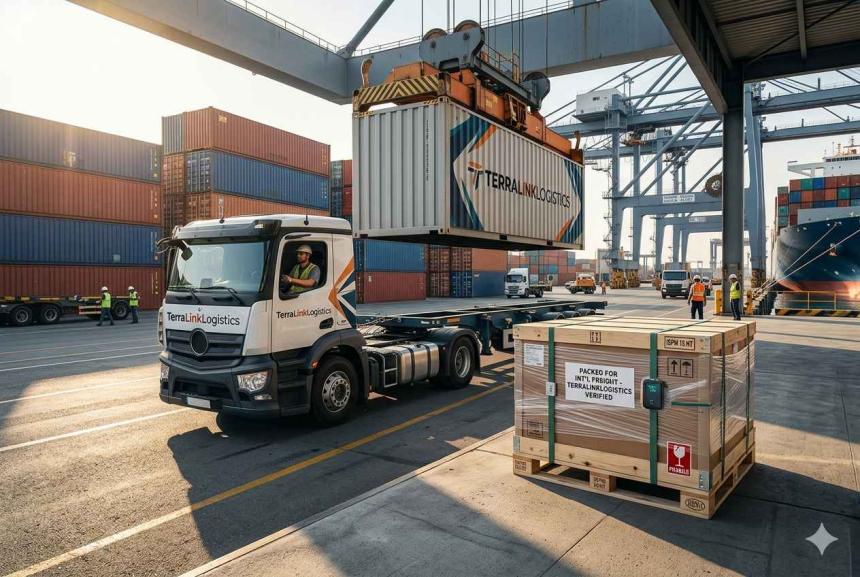

Overcoming Supply Chain Bottlenecks With Strategic Drayage Shipping From TerraLink Logistics
Supply chains rarely run exactly according to plan, and the true value of a logistics partner shows up when something goes wrong
Introduction
If you have moved cargo through a major port in the last few years, you already know the frustration. Containers sit stacked at terminals, chassis are nowhere to be found, and a shipment that should take a day to clear the port instead takes a week. These delays ripple through entire supply chains, driving up costs, straining customer relationships, and forcing companies to hold more safety stock than they would like. At the center of many of these headaches sits one often overlooked link in the chain: drayage, the short haul movement of containers between ports, rail yards, and warehouses.
Drayage may only cover a few miles, but it is frequently the piece that determines whether the rest of a shipment's journey runs smoothly or grinds to a halt. A poorly coordinated drayage move can undo the efficiency gained through weeks of careful planning on the ocean leg. This is why businesses that rely on international ocean freight forwarding are increasingly paying closer attention to how their containers get from the dock to their final destination, not just how they cross the ocean.
TerraLink Logistics has built its reputation by treating drayage as a strategic function rather than an afterthought. Rather than viewing the port-to-door leg as a simple trucking task, TerraLink Logistics integrates it into a broader freight strategy designed to reduce dwell time, avoid detention and demurrage charges, and keep goods moving even when ports are congested. In this article, we will look at why drayage has become such a critical pressure point in global trade, how strategic drayage planning helps businesses avoid costly bottlenecks, and what sets TerraLink Logistics apart as a partner for companies that need dependable, end to end freight solutions.
Why Drayage Has Become a Major Chokepoint in Global Trade
For a long time, drayage was treated as a commodity service, something to book at the last minute once a container cleared customs. That approach no longer works. Port volumes have grown substantially over the past decade, and infrastructure in many regions has not kept pace. Add in chassis shortages, driver capacity constraints, and unpredictable vessel schedules, and it becomes clear why the short haul segment of freight movement has turned into one of the most volatile parts of the supply chain.
Consider what happens when a vessel arrives late or a terminal experiences a backlog. Containers pile up, and the window to retrieve them before demurrage fees kick in shrinks fast. If a company has not lined up drayage capacity in advance, they are left scrambling to find an available truck and chassis, often at premium rates. Multiply this scenario across dozens or hundreds of containers a month, and the financial impact becomes significant.
There is also a coordination problem. Ocean carriers, terminal operators, rail providers, and trucking companies each operate on their own systems and timelines. Without a logistics partner actively managing the handoffs between these parties, shipments can sit idle simply because nobody was tracking the right window to move them. This is precisely where a company managing international ocean freight forwarding end to end has an advantage over a business juggling multiple disconnected vendors.
Businesses that treat drayage as a low priority afterthought tend to experience the same recurring issues: missed pickup windows, avoidable storage fees, inconsistent delivery times, and limited visibility into where their cargo actually is at any given moment. Strategic drayage planning addresses each of these issues directly, and it starts with treating the first and last mile of a container's journey with the same level of planning as the ocean voyage itself.
How Strategic Drayage Planning Reduces Delays and Costs
Strategic drayage is not about finding the cheapest truck available on short notice. It is about building a coordinated system where container movement is planned well before the vessel even docks. TerraLink Logistics approaches drayage with this mindset, and the results show up in fewer delays and lower overall freight costs for the businesses they serve.
Proactive scheduling based on vessel and terminal data. Rather than waiting for a container to be available and then searching for a truck, TerraLink Logistics monitors vessel arrival estimates and terminal release times closely. This allows drayage capacity to be reserved ahead of time, so containers move as soon as they are cleared instead of sitting and accumulating fees. This kind of forward planning is one of the simplest ways to avoid the detention charges that quietly eat into shipping budgets.
Chassis and equipment coordination. One of the most common causes of drayage delays is simply not having the right chassis available at the right terminal. TerraLink Logistics works to secure equipment in advance and maintains relationships with a network of carriers, reducing the odds that a container sits waiting because no chassis could be found.
Flexible routing between multiple terminals and rail ramps. When one terminal is congested, an experienced drayage provider can often reroute cargo through a nearby facility or rail ramp to keep things moving. This kind of flexibility requires both local knowledge and strong carrier relationships, both of which are central to how TerraLink Logistics operates.
Real time visibility for shippers. Not knowing where a container is or when it will arrive creates unnecessary stress for businesses trying to plan warehouse labor, retail restocking, or production schedules. By providing shippers with clear updates throughout the drayage process, TerraLink Logistics removes much of the guesswork that traditionally comes with the final leg of a shipment's journey.
When these elements come together, the effect on a supply chain is substantial. Containers move faster, fees drop, and businesses gain a level of predictability that is difficult to achieve when drayage is handled reactively.
Connecting Drayage to the Bigger Picture of Ocean Freight Forwarding
Drayage does not exist in isolation. It is one piece of a much larger process that begins the moment cargo leaves a supplier's facility overseas and does not end until it reaches a warehouse, distribution center, or retail location. This is why the strongest drayage strategies are built by companies that also manage international ocean freight forwarding, rather than by standalone trucking operations with no visibility into the rest of the shipment's journey.
When a single provider manages both the ocean leg and the inland drayage, information flows in a way that simply cannot happen when multiple disconnected vendors are involved. TerraLink Logistics coordinates documentation, customs clearance timing, and drayage scheduling as part of one continuous process. This means a container is not just sitting at a port waiting for someone to notice it has cleared. Instead, the drayage move is already planned before the vessel even arrives, based on real time updates from the ocean freight side of the operation.
This kind of integration matters most during periods of disruption. A rerouted vessel, a customs hold, or a sudden equipment shortage can all trigger a chain reaction of delays if nobody is watching the full picture. Companies that specialize in international ocean freight forwarding and pair it with strategic drayage, like TerraLink Logistics, are positioned to catch these issues early and adjust before they become expensive problems.
There is also a cost benefit to this integration. When ocean freight and drayage are managed together, businesses often gain better negotiating leverage, more predictable pricing, and fewer surprise charges. Instead of receiving separate invoices from a freight forwarder and a trucking company, each with their own fee structures, shippers working with TerraLink Logistics benefit from a more streamlined and transparent cost structure across the entire shipment lifecycle.
For businesses that import regularly, this connected approach to ocean freight forwarding and drayage is not just a convenience. It is a competitive advantage that shows up directly in on time delivery rates and total landed cost.
What Sets TerraLink Logistics Apart
The logistics industry is full of companies claiming to offer reliable service, so it is fair for businesses to ask what actually makes a difference when choosing a partner. A few things consistently stand out about how TerraLink Logistics approaches drayage and broader freight management.
Local market expertise at every major gateway. Port congestion, chassis availability, and trucking capacity vary significantly from one region to another. TerraLink Logistics builds relationships with carriers and terminal contacts in each market it serves, allowing the company to respond quickly to local conditions rather than applying a one size fits all strategy across every port.
A dedicated focus on communication. Many of the worst supply chain surprises come from a simple lack of communication. TerraLink Logistics prioritizes keeping shippers informed at every stage, from vessel departure through final delivery, so businesses are never left wondering where their cargo stands.
Scalable solutions for growing businesses. Whether a company is shipping a handful of containers a month or managing high volume, consistent import programs, TerraLink Logistics structures its drayage and ocean freight forwarding services to scale alongside the business, without sacrificing the personal attention that smaller shippers often lose when working with larger, less flexible providers.
A problem solving mindset. Supply chains rarely run exactly according to plan, and the true value of a logistics partner shows up when something goes wrong. TerraLink Logistics is built around anticipating these disruptions and having contingency options ready, rather than treating every delay as someone else's problem to solve.
Together, these strengths explain why businesses managing complex import operations increasingly turn to TerraLink Logistics not just for ocean freight, but for the strategic drayage planning that keeps the entire supply chain moving.
Conclusion
Supply chain bottlenecks rarely announce themselves in advance. They build up quietly, through missed pickup windows, mounting detention fees, and containers that sit at the port longer than they should. Drayage, though it covers only a short distance, has become one of the clearest indicators of whether a supply chain is running smoothly or fighting against friction at every turn.
Companies that treat drayage as a strategic priority, planned in coordination with the rest of their international ocean freight forwarding process, consistently see fewer delays, lower costs, and more predictable delivery timelines. This is the approach TerraLink Logistics has built its services around, combining proactive scheduling, strong carrier relationships, and clear communication to keep cargo moving even when conditions at the port are far from ideal.
Tandem Press Brakes: Powerful Forming for Long and Large Workpieces
<p>A tandem press brake combines two synchronized press brakes to create a forming solutio...



Unlock 99 OVR Cam Schlittler in MLB The Show 26 With U4GM
MLB The Show 26's 99 OVR Cam Schlittler is a strong addition to the 2026 Finest 1 Program,...
Meowdoku: use the fixed cat before making a guess
A practical introduction to cat-placement logic, region candidates and notes in an indepen...
