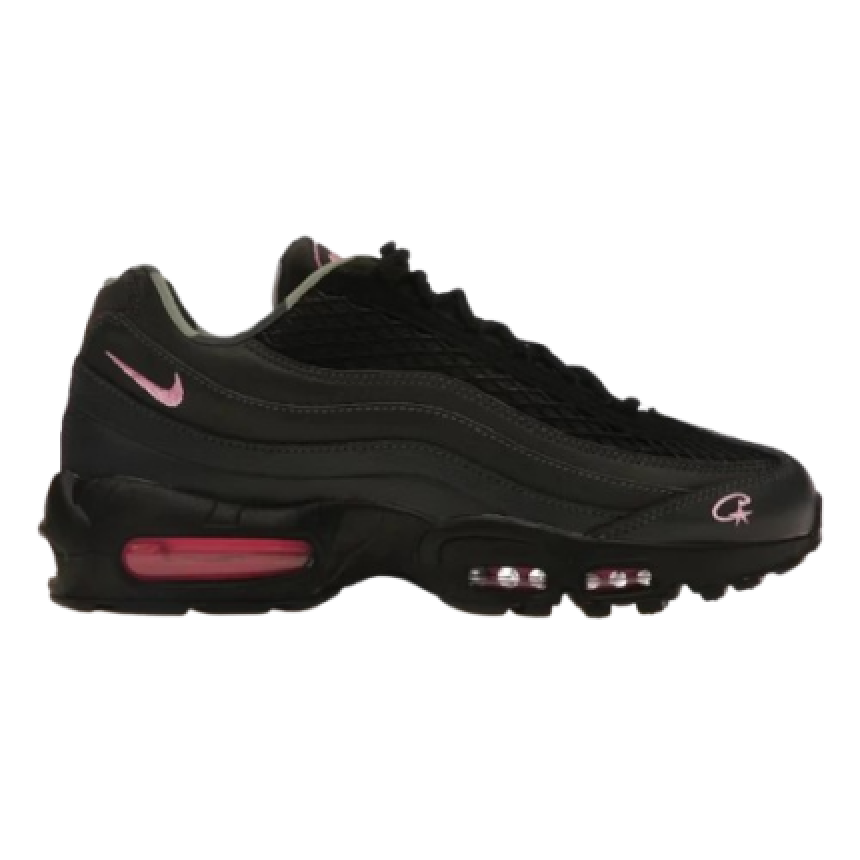

Nike Air Max 95 and Air Max 90: Icons of Sneaker Culture
The Air Max 95 blends iconic style with supreme comfort, featuring layered design, visible Air cushioning, and a bold look inspired by the human anatomy.
The Nike Air Max line has consistently redefined sneaker culture and athletic footwear since its inception in 1987. Two of its most celebrated silhouettes—the Air Max 95 and the Air Max 90—have stood the test of time, transcending their original performance roots to become global fashion statements. While each shoe has its own distinct personality and cultural following, together they exemplify the innovation and creativity that has kept the Air Max brand relevant for decades.
Origins and Design of the Air Max 90Released in 1990 and originally called the Air Max III, the Air Max 90 was a follow-up to the Air Max 1 and Air Max Light. Designed by Tinker Hatfield, the mastermind behind many of Nike’s most iconic silhouettes, the Air Max 90 brought boldness to the line through both its technological features and its aesthetics.
The most notable upgrade was the larger visible Air unit in the heel, offering enhanced cushioning and drawing more attention to the sole than ever before. Combined with sharp lines, multilayered panels, and a striking use of color—especially in the original “Infrared” colorway—the shoe quickly became a fan favorite. The Air Max 90 stood out not only as a running shoe but as a lifestyle essential, embraced by hip-hop communities, streetwear enthusiasts, and sneakerheads alike.
Air Max 95: A Radical DepartureWhen the Air Max 95 launched in—you guessed it—1995, it represented a massive shift in design philosophy. Created by Sergio Lozano, a designer with a background in ACG (All Conditions Gear) and outdoor products, the 95 took inspiration from human anatomy. The layered upper mimicked muscle fibers and skin, while the midsole represented the spine. For the first time, Nike placed visible Air units not only in the heel but also in the forefoot, signaling a leap forward in comfort and technology.
At launch, the Air Max 95’s gradient gray colorway with neon green accents—now known as “Neon”—was polarizing. It didn’t feature a prominent Swoosh on the side, and its aggressive look diverged sharply from previous Air Max models. But that was precisely its appeal. The 95 wasn’t just a shoe; it was a statement.
Performance Meets StyleBoth the Air Max 90 and 95 began as performance runners, but their real impact came in the realm of street style and fashion. In the early 2000s, the Air Max 90 became a staple in European streetwear scenes, especially in the UK. Its sleek yet bold design lent itself well to both minimalist and maximalist outfits, and the abundance of colorways made it highly customizable to personal taste.
Meanwhile, the Air Max 95 found a home in hip-hop and urban subcultures across the globe. From New York to Tokyo, its futuristic silhouette and unique construction appealed to those who wanted to stand out. It was particularly popular in the UK grime scene, where the “95s” became almost synonymous with street credibility and fashion-forward thinking.
Evolution Through CollaborationsThe longevity of both models can be attributed, in part, to Nike’s strategic collaborations and reinventions over the years. The Air Max 90 has seen partnerships with Off-White, Patta, DQM, and The Basement, offering refreshed aesthetics while maintaining the integrity of the original design. Virgil Abloh’s deconstructed take on the 90, part of "The Ten" collection, introduced the shoe to an entirely new generation of sneaker enthusiasts.
Likewise, the Air Max 95 has been revitalized through collaborations with COMME des GARÇONS, atmos, Carhartt WIP, and Supreme. The shoe’s anatomical design lends itself to experimental interpretations, and each collab pushes the boundaries of what the 95 can represent—be it luxury fashion, rugged utility, or abstract art.
Air Max Day and Cultural ImpactIn 2014, Nike introduced Air Max Day, an annual celebration every March 26 to commemorate the birth of the original Air Max 1. Each year, the event brings re-releases, new colorways, and exclusive drops from across the Air Max lineage. Naturally, both the 90 and 95 are regularly spotlighted, reflecting their iconic status.
Their cultural relevance isn’t limited to sneakerheads. The Air Max 90 and 95 have appeared in films, music videos, and on the feet of celebrities ranging from Kanye West to Bella Hadid. They’ve become a unisex favorite, a staple for collectors, and a go-to for those who simply appreciate a great-looking and comfortable pair of sneakers.
Design Language: Then and NowWhat sets the 90 and 95 apart—yet keeps them united—is how they embody different design philosophies. The Air Max 90 celebrates bold color blocking and modularity. Its panels allow for a wide range of materials and colors, making it a playground for customizers. It’s clean, sharp, and distinctly retro.
The Air Max 95, in contrast, is organic, layered, and technical. Its wavy lines and gradient shades evoke motion and strength. It feels futuristic—even today—and its design encourages innovation without losing its DNA.
Enduring LegacyMore than 30 years after its debut, the Air Max 90 remains one of Nike’s most beloved silhouettes, consistently ranking high in sales and cultural relevance. The Air Max 95, now approaching 30 years, maintains its edge, often celebrated for how ahead of its time it was upon release.




Small Business CFO in Calgary: Finance Leadership Sized for Owner-Run...
Small Business CFO in Calgary: Finance Leadership Sized for Owner-Run Companies

Como Escolher as Melhores Consultoria de Compliance para Sua Empresa
Como Escolher as Melhores Consultoria de Compliance para Sua Empresa