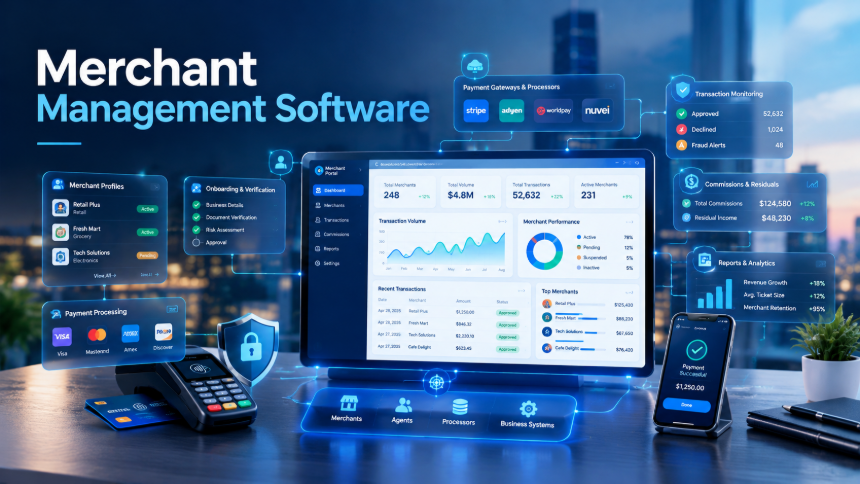

Modernizing Merchant Operations Through Connected Business Technology
Discover how modern merchant management solutions simplify account administration, automate onboarding, improve reporting, and streamline business workflows. Learn how secure data migration and system integration help payment service providers enhance efficiency and support sustainable growth.
Introduction
Merchant service providers operate in a demanding business environment where efficient account management, accurate reporting, and responsive customer support are essential. Independent sales organizations (ISOs), payment processors, and merchant service companies must coordinate sales activities, onboarding procedures, payment-related information, equipment records, and ongoing client relationships. Managing these responsibilities through disconnected applications can lead to duplicated work, inconsistent records, and delays in resolving merchant requests.
Digital business platforms offer a practical way to organize these activities within a coordinated environment. By improving access to information and standardizing everyday workflows, businesses can reduce administrative complexity and strengthen collaboration across departments. Adopting the right technology also helps organizations understand operational performance, maintain consistent service quality, and prepare for future expansion. Successful modernization begins with identifying business needs and choosing systems that support both current operations and long-term objectives.
Understanding the Challenges of Merchant Administration
Merchant service organizations manage relationships that continue well beyond the initial sales process. Each account may involve application reviews, document verification, account activation, equipment allocation, service inquiries, and periodic performance assessments. Employees need reliable information to complete these activities accurately and communicate effectively with merchants.
When departments use separate spreadsheets or databases, information can become fragmented. Sales representatives may record updates that customer support cannot access, while managers may struggle to determine which applications remain incomplete. Manual processes also make it harder to maintain consistent records as the number of merchant accounts increases. A centralized operational approach helps businesses reduce these difficulties by creating shared processes and improving information visibility. This allows employees to coordinate responsibilities more effectively and respond to merchant requirements with greater confidence.
Improving Merchant Relationships and Daily Workflows
Centralized Account Information
Maintaining accurate account records is fundamental to effective merchant relationship management. A centralized business platform can organize contact information, account status, communication history, onboarding documents, service preferences, and relevant operational notes. Authorized employees can retrieve these details when responding to questions or managing account changes.
Consistent documentation also supports continuity when responsibilities move between team members. Employees can review previous interactions instead of relying on personal notes or asking merchants to repeat information. Account managers can monitor outstanding requests, schedule follow-ups, and identify relationships that may require additional attention. These capabilities improve internal coordination and help businesses deliver more personalized service. Over time, better recordkeeping can strengthen customer trust while reducing the administrative effort required to maintain a growing portfolio of merchant accounts.
Sales Pipeline and Onboarding Automation
A clearly defined sales pipeline helps organizations monitor prospects from initial contact through qualification, application, approval, and activation. Teams can review opportunity progress, assign follow-up responsibilities, and identify applications that need additional information. Managers can also evaluate sales activity and use pipeline data to support resource planning.
Automated onboarding workflows can make these processes more consistent by coordinating document requests, approval tasks, status notifications, and internal handoffs. For example, a system may notify an employee when an application remains incomplete or requires review. Automation reduces dependence on manual reminders and helps teams manage workloads more effectively. Since verification and onboarding requirements vary by provider and merchant category, businesses should configure workflows around their specific operational procedures and applicable compliance obligations.
Strengthening Reporting and Business Intelligence
Reliable reporting gives management a clearer understanding of business performance. When information is recorded consistently, organizations can examine onboarding progress, sales activity, account changes, support requests, and other operational indicators. Visual dashboards make important trends easier to recognize and help teams investigate delays or recurring service issues.
Reporting can also improve collaboration between sales, finance, operations, and customer support. Instead of comparing conflicting spreadsheets, employees can work from consistent information and shared definitions. Businesses that manage agent performance or residual commissions may also benefit from connected reporting capabilities when their systems support the necessary data. Regular reviews help managers assess whether operational processes are meeting expectations and where improvements are needed. Accurate business intelligence supports more informed decisions, better resource allocation, and a clearer understanding of opportunities for sustainable growth.
Selecting the Right Technology and Planning Implementation
Choosing a suitable Merchant Management Software solution requires an understanding of existing workflows, business priorities, and future growth expectations. Organizations should evaluate account management features, reporting capabilities, workflow automation, integration compatibility, access controls, scalability, and vendor support. The platform should address practical business requirements rather than introduce unnecessary complexity.
Implementation planning should involve representatives from sales, operations, finance, customer support, and IT. These stakeholders can identify existing challenges, define measurable objectives, and establish a realistic budget and timeline. Businesses should also determine which applications will remain in use and how information will move between systems. A phased rollout can reduce disruption by introducing essential capabilities first, allowing employees to become familiar with new processes before additional workflows are introduced.
Managing Data Migration and System Integration
Preparing Records for Migration
Moving information from spreadsheets, legacy databases, or older applications requires careful preparation. Merchant profiles, contact details, account histories, documents, and relevant operational records should be reviewed before transfer. Duplicate entries, inconsistent formatting, outdated information, and missing fields can undermine the reliability of the new system if they are overlooked.
The migration team should map source fields to the appropriate destination fields and preserve relationships between merchants, contacts, and associated accounts. A pilot migration helps identify mapping problems and compatibility issues before the complete transfer begins. Following migration, employees should verify record counts, inspect sample records, and reconcile critical information against the original sources. Secure backups and documented recovery procedures provide additional protection if unexpected errors occur during implementation.
Connecting Essential Business Applications
Merchant service organizations may rely on payment gateways, processing platforms, accounting applications, document repositories, and customer support systems. Connecting these applications can reduce repeated data entry and make relevant information easier to access. However, integration should be planned around actual business requirements and supported technical capabilities.
Before connecting systems, businesses should evaluate application programming interfaces (APIs), synchronization frequency, data formats, error handling, and vendor limitations. Clear rules should define which application controls particular information to prevent conflicting updates. Integration testing should confirm that records transfer correctly and that failures can be detected and resolved. Organizations must also understand that connecting a management platform to payment infrastructure does not automatically provide payment authorization or settlement functionality; those capabilities depend on the relevant processor and payment systems.
Protecting Merchant Data and Meeting Compliance Requirements
Merchant service operations may involve confidential business records and sensitive payment-related information. Organizations should establish appropriate access controls, strong authentication, encryption where supported, secure backups, and regular permission reviews. Employees should only access information necessary for their assigned responsibilities, reducing the likelihood of accidental disclosure or unauthorized changes.
Businesses should also assess vendor security practices, incident response procedures, data retention policies, and third-party integration risks. Applicable privacy regulations and payment industry standards depend on the organization's role and the information it handles. Qualified compliance professionals can help determine relevant obligations and evaluate whether the chosen systems provide appropriate safeguards. Regular employee training reinforces responsible data handling, while periodic security reviews help organizations respond to changing operational and regulatory requirements.
Testing, Implementation Challenges, and Best Practices
Testing Before Deployment
Testing helps confirm that the new system supports business requirements before it becomes part of everyday operations. Teams should examine account creation, record updates, onboarding workflows, reporting accuracy, notifications, user permissions, and data synchronization. They should also test incomplete records, duplicate submissions, integration failures, and unexpected system responses.
User acceptance testing allows employees to evaluate whether workflows are practical and easy to follow. Their feedback may reveal confusing processes or missing information that technical testing alone does not identify. Businesses should document test results, resolve significant defects, and repeat relevant tests before launch. After deployment, ongoing monitoring helps identify performance issues and confirms that critical workflows continue to function reliably.
Addressing Common Implementation Difficulties
Organizations may face inconsistent historical data, integration limitations, budget pressures, employee resistance, and unclear project responsibilities. Training requirements and workflow adjustments can also take longer than expected. Without careful preparation, these challenges may delay implementation and reduce the benefits of the new technology.
A structured approach can minimize disruption. Management should explain the purpose of the transition, involve employees in process decisions, and provide practical training for different roles. Assigning internal administrators and establishing a reliable support process can make problem resolution easier. Regular reviews of progress, user feedback, and operational metrics help teams identify weaknesses and refine workflows. Maintaining clear responsibilities and realistic expectations is essential for long-term adoption.
Benefits for Efficiency and Sustainable Growth
A centralized merchant operations environment can reduce manual administration, improve record accuracy, and make collaboration more consistent. Employees can access relevant information more quickly, while managers gain better visibility into sales activity, onboarding progress, and service performance. These improvements can support faster responses, more effective planning, and stronger merchant relationships.
Standardized workflows and automation also help businesses manage growing account portfolios without increasing administrative effort at the same rate. Employees can spend more time assisting merchants, resolving problems, and developing business opportunities instead of repeatedly searching for information. These benefits depend on reliable data, appropriate system configuration, employee adoption, and ongoing maintenance. Reviewing performance regularly ensures that business processes and technology continue to support changing organizational needs.
Conclusion
Modern merchant operations require reliable information, coordinated workflows, secure records, and consistent communication. The right digital platform can help service providers organize account information, streamline onboarding, improve reporting, and strengthen collaboration between departments.
Achieving these improvements requires careful implementation planning, accurate data migration, dependable integrations, thorough testing, and appropriate security measures. Businesses should also invest in employee training and review performance after deployment. By combining practical technology with clear procedures and continuous improvement, merchant service organizations can reduce operational complexity, improve the merchant experience, and build a stronger foundation for long-term business growth.
Reading a Ballistics Chart: Velocity, Energy, Drop and Wind Without Ge...
Ballistics charts look like a wall of numbers. Four columns carry most of the meaning, and...

Eight Mistakes Buyers Make With Mainstream Rifle Ammunition
Eight Mistakes Buyers Make With Mainstream Rifle Ammunition
Twist Rate, Barrel Length and Bullet: Setting Up a Rifle for the Load
A bullet only flies true if the barrel spins it fast enough. Here is how twist rate, bulle...