
Microsoft Dynamics 365: Future-Ready Business Cloud Solutions
Discover how Microsoft Dynamics 365 helps businesses streamline operations, improve customer relationships, automate workflows, and drive digital transformation.
Introduction
Organizations across every industry are experiencing rapid digital transformation. Customer expectations continue to rise, business operations are becoming more complex, and competition is increasing in both local and global markets. To remain competitive, companies need technology that helps them simplify operations, improve collaboration, and make informed decisions using real-time data. Traditional business software often operates in isolation, forcing employees to switch between multiple applications and manually transfer information, which can reduce productivity and increase operational costs.
Modern cloud-based business platforms eliminate these challenges by connecting departments, automating workflows, and providing a centralized view of business information. Whether a business wants to improve customer engagement, optimize financial management, streamline supply chain operations, or enhance employee productivity, an integrated solution creates a strong foundation for sustainable growth. Investing in intelligent business applications enables organizations to respond quickly to market changes while delivering consistent customer experiences.
Why Modern Businesses Need Integrated Business Applications
Every business generates valuable information through sales, finance, customer service, marketing, procurement, and operations. When these departments rely on separate systems, important data becomes fragmented, making collaboration difficult and slowing business processes.
An integrated business platform brings together people, processes, and information into a single environment. Employees can access accurate data whenever needed, managers gain complete visibility into operations, and executives can make strategic decisions with confidence. This connected approach reduces manual work, eliminates duplicate records, and improves communication across departments.
Organizations that embrace integrated technology also benefit from increased operational efficiency, improved compliance, and stronger customer relationships.
Key Features of Intelligent Cloud Solutions
Modern business applications offer capabilities that go far beyond traditional software.
Centralized Data Management
A unified database ensures every department works with the same accurate information, reducing inconsistencies and improving collaboration.
Workflow Automation
Routine processes such as approvals, notifications, invoice generation, and customer follow-ups can be automated to save time and reduce errors.
Real-Time Reporting
Interactive dashboards allow business leaders to monitor financial performance, sales pipelines, inventory levels, and operational efficiency from one location.
Flexible Scalability
Cloud-based platforms grow alongside the organization, allowing businesses to add new users, applications, and capabilities without significant infrastructure investments.
Enterprise Security
Advanced security features help organizations protect sensitive business information while supporting industry compliance requirements.
Building a Connected Digital Workplace
Successful organizations depend on collaboration. Employees need quick access to customer information, financial records, operational reports, and project updates to perform their responsibilities effectively.
A connected workplace improves communication by integrating multiple business functions into one digital ecosystem. Teams spend less time searching for information and more time focusing on innovation, customer service, and strategic growth initiatives.
Cloud collaboration also supports remote and hybrid work environments, ensuring employees remain productive regardless of location.
Understanding Microsoft Dynamics 365
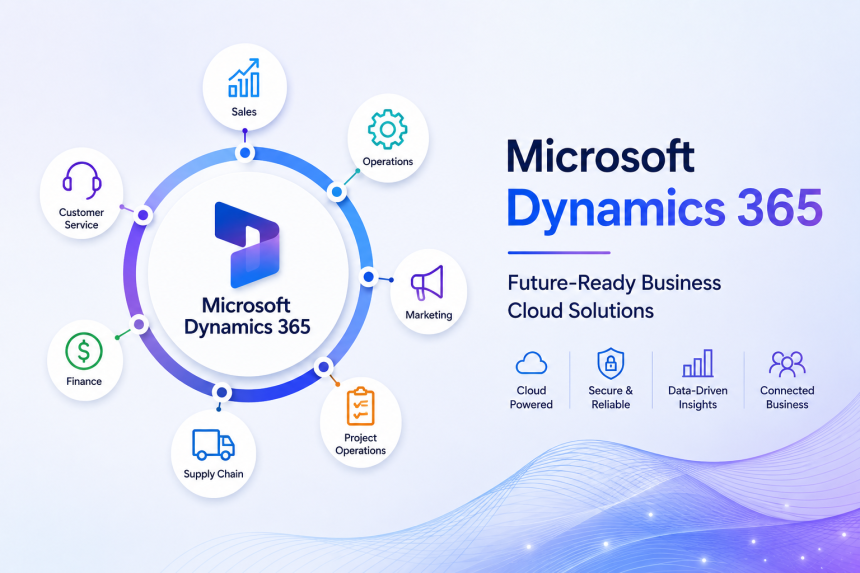
Businesses looking for an intelligent business management solution increasingly choose Microsoft Dynamics 365 because it combines Customer Relationship Management (CRM) and Enterprise Resource Planning (ERP) capabilities into one comprehensive cloud platform. Instead of managing multiple disconnected applications, organizations can oversee sales, finance, customer service, marketing, supply chain, project operations, and commerce through a single connected ecosystem.
One of the platform's greatest strengths is its modular architecture. Businesses can implement only the applications they currently require and expand functionality as their needs evolve. Because all applications share the same data environment, departments collaborate more effectively while maintaining consistent business information.
The platform integrates seamlessly with Microsoft 365, Microsoft Teams, Outlook, Excel, Power BI, Azure, Power Apps, and Power Automate. These integrations enable businesses to automate workflows, improve reporting, enhance collaboration, and simplify day-to-day operations without disrupting existing business processes.
Core Capabilities That Drive Growth
Sales Management
Sales teams can track leads, manage customer relationships, forecast revenue, monitor sales opportunities, and automate routine follow-up activities to improve conversion rates.
Customer Service
Support teams can resolve customer issues faster through case management, knowledge bases, omnichannel communication, and AI-assisted service recommendations.
Financial Management
Finance professionals can automate accounting, budgeting, invoicing, expense management, compliance reporting, and financial forecasting while maintaining complete visibility into organizational performance.
Marketing Automation
Marketing departments can create personalized campaigns, nurture leads, segment audiences, monitor engagement, and evaluate campaign effectiveness through intelligent analytics.
Supply Chain Management
Organizations gain better control over procurement, inventory, warehouse operations, logistics, supplier collaboration, and demand planning, improving operational efficiency.
Project Operations
Businesses delivering projects can efficiently manage planning, resources, timelines, budgets, billing, and profitability from a centralized platform.
Business Benefits Across Industries
Integrated cloud applications deliver measurable value across multiple sectors.
Manufacturing
Improve production scheduling, inventory management, equipment maintenance, and supplier collaboration.
Retail
Enhance customer engagement, inventory visibility, order management, and omnichannel shopping experiences.
Healthcare
Streamline patient administration, financial operations, appointment scheduling, and service coordination.
Professional Services
Optimize project planning, resource allocation, client communication, billing accuracy, and profitability.
Financial Services
Strengthen compliance, customer relationship management, financial reporting, and operational transparency.
Artificial Intelligence and Business Intelligence
Artificial intelligence is transforming modern organizations by enabling smarter decision-making and greater automation.
Businesses can leverage intelligent capabilities such as:
- Predictive sales forecasting
- Customer behavior analysis
- Automated workflow management
- AI-powered customer support
- Demand forecasting
- Business performance analytics
- Intelligent recommendations
These capabilities help organizations improve efficiency while enabling employees to focus on innovation and strategic growth.
Best Practices for Successful Implementation
Businesses can maximize their return on investment by following a structured implementation approach.
- Define clear business objectives.
- Evaluate existing operational processes.
- Prepare clean and organized business data.
- Train employees thoroughly.
- Customize workflows where appropriate.
- Monitor system performance regularly.
- Continuously optimize processes using analytics.
A well-planned implementation ensures higher user adoption and long-term business success.
Conclusion
Modern organizations require technology that connects departments, improves collaboration, and supports informed decision-making. Integrated cloud platforms provide businesses with the flexibility, intelligence, and scalability needed to compete in today's fast-changing marketplace.
By combining CRM, ERP, artificial intelligence, automation, analytics, and cloud technology into one connected ecosystem, Microsoft Dynamics 365 empowers organizations to streamline operations, strengthen customer relationships, improve productivity, and accelerate digital transformation. Whether supporting a growing business or a large enterprise, it provides the tools necessary to achieve sustainable growth, operational excellence, and long-term business success.
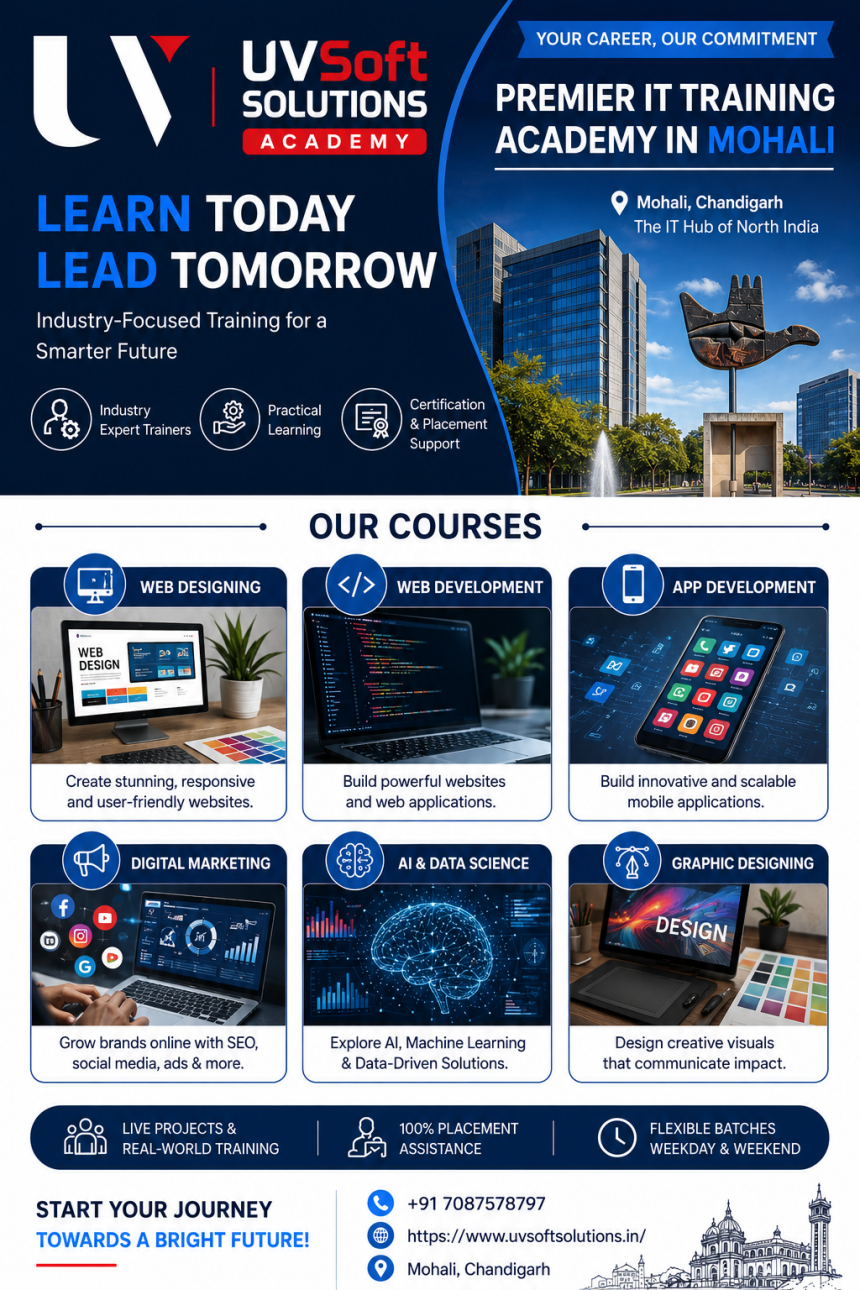
Best Web Development Course in Mohali | UVSoft Solutions Academy



Sex Trips, Sex Vacation in USA, Vacation Sex Resort and Colombia Adult...