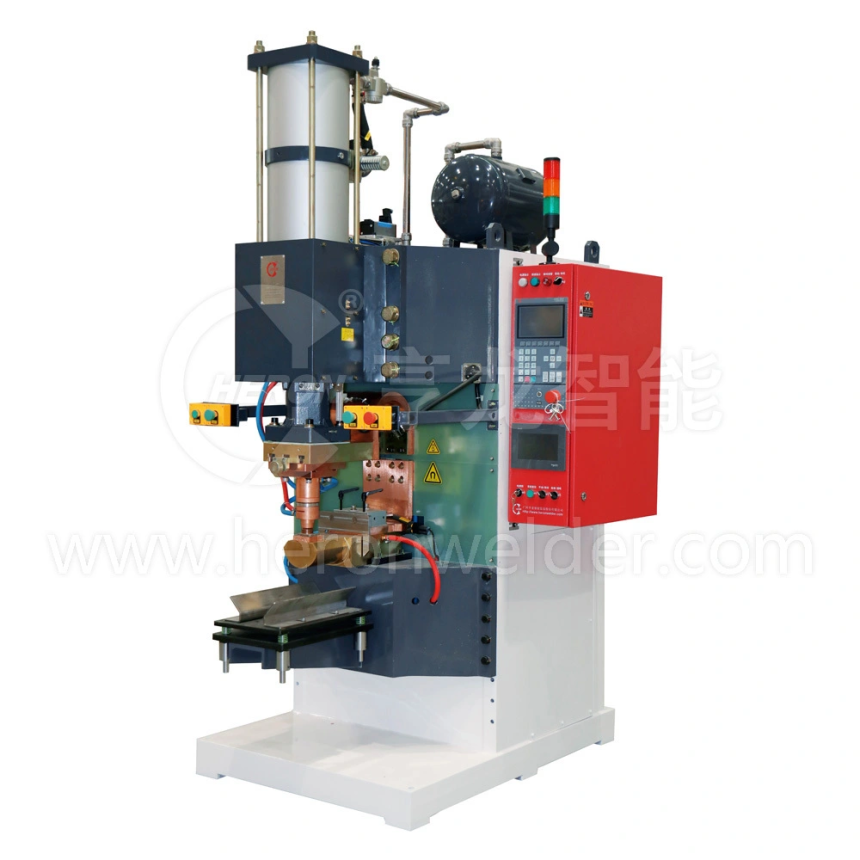
Mastering Resistance Spot Welding: Principles, Applications, and Best Practices
At Heron Welder, we specialize in advanced resistance welding machines and automated production solutions that help manufacturers achieve optimal weld quality, throughput, and cost-effectiveness.
Resistance spot welding (RSW) is a cornerstone of modern industrial manufacturing, offering fast, reliable, and repeatable metal-joining solutions for automotive, aerospace, electronics, and heavy machinery sectors. As global production demands increase, understanding the principles, applications, and best practices of resistance spot welding has become essential for engineers, OEMs, and factory decision-makers seeking precision and efficiency.
At Heron Welder, we specialize in advanced resistance welding machines and automated production solutions that help manufacturers achieve optimal weld quality, throughput, and cost-effectiveness.
What is Resistance Spot Welding?
Resistance spot welding is a fusion welding process in which two or more metal sheets are joined by applying heat generated through electrical resistance and simultaneous pressure from electrodes. Unlike traditional arc welding, spot welding relies on localized heat and mechanical pressure rather than filler materials.
Key components of a resistance spot welding system include:
- Electrodes: Copper alloy tips that conduct current and apply pressure.
- Transformer or MFDC power source: Provides the electrical energy required to create the weld nugget.
- Control system: Ensures precise timing, current, and force for consistent welds.
During the process, a high current passes through the electrodes, generating heat at the contact surfaces. The metal melts locally to form a weld nugget, which solidifies under pressure to produce a strong, high-quality joint.
How Resistance Spot Welding Works: The Science Behind the Process
Resistance spot welding efficiency is influenced by several critical parameters:
- Current: Higher current increases heat generation, but excessive current can damage the metal or electrodes.
- Electrode force: Proper pressure ensures good contact and controls the weld nugget size.
- Weld time: Duration of current flow must be optimized based on material thickness and type.
- Material properties: Conductivity, thickness, and alloy composition affect heat generation and weld quality.
By controlling these variables, manufacturers can achieve repeatable welds with minimal defects, making RSW ideal for high-volume production lines.
Applications of Resistance Spot Welding
Resistance spot welding is widely used across industries where metal sheet joining is frequent. Key applications include:
Automotive IndustryRSW is a standard in automotive assembly, joining steel, stainless steel, and aluminum panels for car bodies, chassis, and structural components. High-speed spot welding systems enhance throughput and reduce production costs.
Electronics and AppliancesIn the electronics and home appliance sectors, spot welding is used to assemble battery packs, small enclosures, and conductive components, where precision and minimal heat distortion are crucial.
Heavy Machinery and AerospaceFor large-scale industrial equipment and aircraft structures, RSW provides consistent, strong joints without compromising material integrity, especially when paired with automated welding systems.
Resistance Spot Welding vs. Other Welding Methods
Understanding how RSW compares with other welding techniques helps engineers choose the best solution:
Welding MethodAdvantagesLimitationsResistance Spot WeldingFast, high repeatability, minimal filler material, suitable for automationLimited to sheet thickness, requires conductive materialsArc Welding (MIG/TIG)Strong joints, versatile materialsSlower, more skill-dependent, filler materials requiredLaser WeldingPrecise, low heat inputHigh equipment cost, complex setupRSW stands out in high-volume production where consistency, speed, and automation compatibility are priorities.
Best Practices for Optimized Resistance Spot Welding
To maximize weld quality and machine efficiency, manufacturers should consider the following best practices:
- Regular electrode maintenance: Worn electrodes reduce current flow and weld quality. Polishing or replacing electrodes regularly maintains performance.
- Process parameter optimization: Adjust current, pressure, and weld time based on material thickness and type.
- Proper cooling systems: Effective water cooling prevents overheating of electrodes and ensures consistent welds.
- Automation integration: Robotic spot welding systems reduce human error and increase production speed.
- Quality monitoring: Use real-time monitoring systems to detect defects like expulsion, weak nuggets, or misalignment.
Implementing these practices ensures long-term reliability and consistent weld strength, critical for industrial manufacturing standards.
Heron Welder: Your Partner in Resistance Spot Welding Solutions
At Heron Welder, we offer a full spectrum of resistance welding machines including spot, projection, seam, MFDC, and capacitor discharge systems. Our expertise extends to automated welding lines, controllers, and welding guns that optimize production efficiency while maintaining stringent quality standards.
Whether you are designing a new production line or upgrading existing equipment, Heron’s team provides customized solutions tailored to your material types, product volumes, and automation needs.
FAQs About Resistance Spot Welding
1. What materials can be welded using RSW?
RSW is ideal for mild steel, stainless steel, and aluminum sheets. Advanced systems can handle coated and alloyed metals.
2. Can RSW be automated?
Yes, robotic and automated resistance spot welding systems enhance production speed, repeatability, and safety, especially in automotive and electronics manufacturing.
3. How is weld quality measured in spot welding?
Common methods include destructive peel and tensile tests, as well as nugget size inspection using ultrasonic or optical techniques.
4. What is MFDC spot welding?
MFDC (Medium Frequency Direct Current) spot welding provides precise current control and higher efficiency, ideal for thin or sensitive metals.
5. How often should electrodes be maintained?
Electrodes should be inspected and replaced as needed, depending on material type, weld frequency, and production volume.
Conclusion: Invest in Reliable Resistance Spot Welding Solutions
Resistance spot welding is an efficient, high-speed, and reliable method for joining sheet metals in high-volume manufacturing. By selecting the right equipment, optimizing parameters, and integrating automation, manufacturers can achieve superior weld quality and reduce production costs.
Heron Welder is your expert partner for industrial welding solutions, offering state-of-the-art resistance spot welding machines, automated production lines, and consulting services.
Request a quote or consult with Heron today to discover how our tailored welding solutions can elevate your manufacturing efficiency and product quality.




A Complete Guide to Understanding PK68 and Its Growing Popularity
A Complete Guide to Understanding PK68 and Its Growing Popularity


England vs Argentina Tickets: England Eyes FIFA World Cup 2026 Final i...