Mastering Personal Injury Law Billing: A Guide to Contingency Fees and Case Costs
Case costs are the lifeblood of a personal injury case, but they are also a firm's primary financial burden under a contingency fee structure.
Billing in the legal world is often complex, but for personal injury law, it operates on a unique and crucial foundation: the contingency fee. This model, which allows clients to access legal representation without upfront costs, is a cornerstone of the practice. However, it also presents a distinct set of challenges for law firms. Managing contingency fees and case costs effectively is paramount to a firm’s financial health. This is where a specialized Legal Billing Software becomes not just a convenience, but an essential tool.
A contingency fee agreement is a powerful mechanism. It means that the client pays their lawyer nothing unless and until they win their case, either through a settlement or a favorable court verdict. When a recovery is made, the attorney takes a pre-agreed-upon percentage, typically ranging from 33% to 40% of the total amount. This system levels the playing field, giving everyday people the ability to fight against well-funded insurance companies and corporations.
However, for the law firm, this creates a significant financial risk. The firm advances all case costs, from filing fees and medical record retrieval to expert witness and deposition fees. These expenses can quickly add up to thousands of dollars, and if the case is lost, the firm may not be reimbursed for any of them, depending on the agreement. This inverted cash flow model means that a firm's profitability hinges on its ability to manage these advanced costs and track them meticulously.
Case costs are the lifeblood of a personal injury case, but they are also a firm's primary financial burden under a contingency fee structure. Tracking these expenses accurately is critical for several reasons:
- Reimbursement: When a case is won, the firm is reimbursed for the advanced costs before the contingency fee is calculated. An accurate record ensures the firm recovers every dollar it spent.
- Transparency: A clear and detailed accounting of all costs builds trust with the client. It shows them exactly where their settlement money is going, from the lawyer's fee to the costs of pursuing justice on their behalf.
- Financial Forecasting: By tracking costs on a per-case basis, firms can better predict their cash flow and evaluate the financial viability of taking on new cases.
Without a system in place, managing these costs can be a logistical nightmare, leading to human error, lost revenue, and strained client relationships.
This is where a modern Legal Billing Software proves its worth. Designed to handle the unique demands of personal injury billing, these platforms go far beyond simple invoicing.
- Centralized Case Management: A good software solution centralizes all case-related information, from client contact details and medical records to every single expense incurred. This eliminates the need for fragmented spreadsheets and ensures nothing falls through the cracks.
- Automated Expense Tracking: The best platforms offer automated tools to log expenses. With a few clicks, you can record a filing fee, a deposition transcript cost, or an expert witness retainer and associate it directly with the client's file.
- Seamless Reporting: At the conclusion of a case, a specialized software can instantly generate a comprehensive, itemized report. This report clearly outlines the total settlement amount, the advanced case costs, the firm's contingency fee, and the final disbursement to the client. This level of transparency is invaluable for both the firm and the client.
- Compliance and Trust Accounting: For personal injury firms, managing client trust accounts (IOLTA) is a major responsibility. A robust billing software provides features for compliant trust accounting, ensuring funds are handled correctly and ethically.
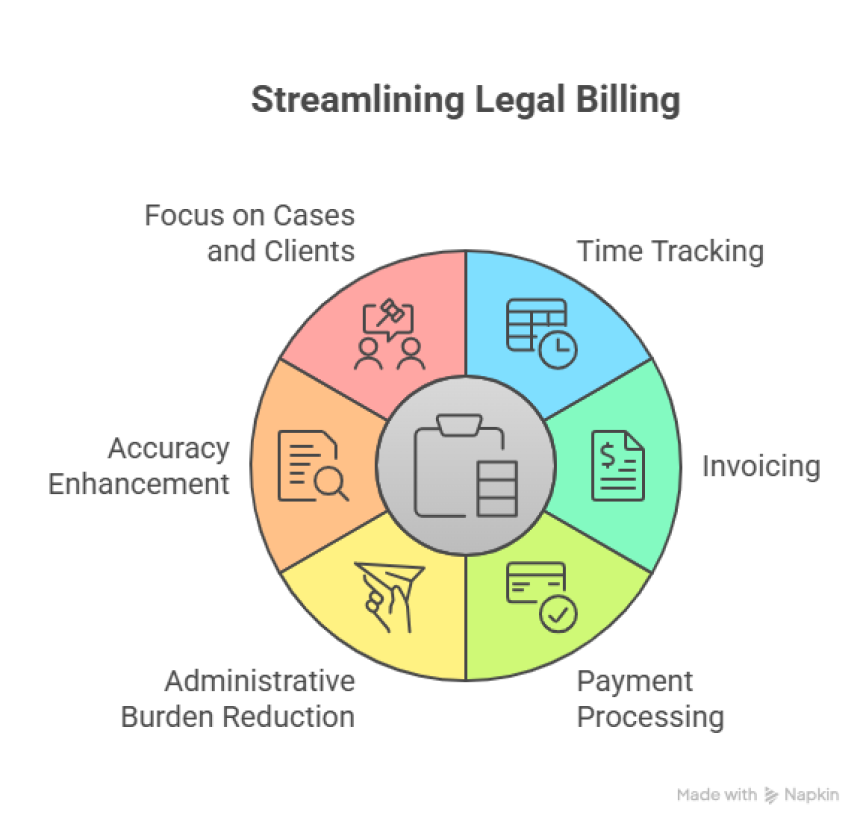
For personal injury firms, managing billing is not just about sending invoices; it's about navigating a high-stakes financial model where the firm takes on the risk for its clients. By leveraging a comprehensive Legal Billing Software, firms can streamline their operations, ensure financial accuracy, and maintain the trust and transparency that are so vital to the attorney-client relationship.