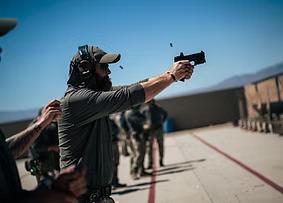

Master critical safety protocols during expert-led firearm training courses.
Defensive pistol training courses help individuals develop responsible firearm handling skills while emphasizing safety at every stage. These programs are designed to teach participants how to operate firearms correctly, understand potential risks, and build confidence through structured instruction. Safety remains the foundation of all professional training environments. Students learn that proper habits and disciplined decision-making are just as important as technical shooting skills. Expert-led courses provide a controlled setting where safety principles are consistently reinforced.
Understanding the Core Safety Rules
Every defensive pistol course begins with fundamental firearm safety rules. Participants are taught to treat every firearm as if it is loaded, keep the muzzle pointed in a safe direction, maintain trigger discipline, and identify their target along with what lies beyond it. These principles help reduce the risk of accidents and encourage responsible behavior. Repeated practice ensures that safety procedures become automatic habits rather than occasional considerations.
Learning Through Professional Instruction
Experienced instructors play a vital role in helping students understand and apply safety protocols correctly. They provide clear demonstrations, supervise practical exercises, and correct mistakes before unsafe habits develop. Professional guidance allows participants to learn in a structured environment where safety standards are consistently maintained. Instructors also explain the reasoning behind each protocol, helping students appreciate the importance of following established procedures at all times.
Practicing Safe Range Procedures
Range safety is a key component of defensive pistol instruction. Students learn how to follow commands, handle firearms during loading and unloading procedures, and move safely within designated training areas. Eye and hearing protection are typically required to minimize potential hazards. Adhering to established range rules promotes a secure learning environment where participants can focus on skill development while reducing unnecessary risks.
Building Responsible Long-Term Habits
The lessons learned during professional training should continue long after the course ends. Safe storage practices, regular equipment inspections, and ongoing education help reinforce responsible firearm ownership. Consistent attention to safety ensures that proper handling techniques remain second nature. Developing these habits supports both personal responsibility and the well-being of others in the community.
Bottom-Line
Expert-led defensive pistol training courses place safety at the center of every lesson and exercise. By learning core safety rules, practicing situational awareness, and following professional guidance, participants can develop responsible firearm handling habits.