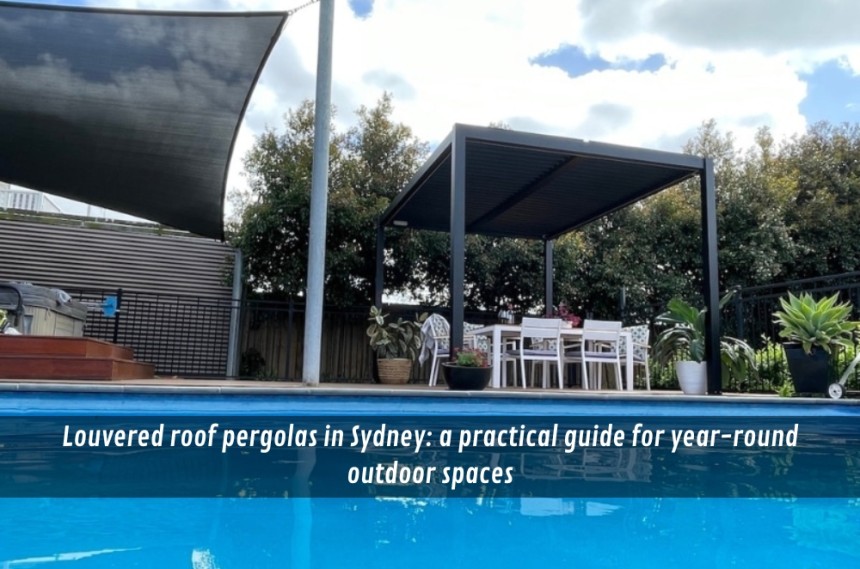

Louvered roof pergolas in Sydney: a practical guide for year-round outdoor spaces
Outdoor living is a big part of life around Sydney, from the Inner West to the Northern Beaches, and down to Wollongong or up toward the Central Coast and Newcastle.
But our weather doesn’t always play nice.
A bright morning can turn into a windy, wet afternoon, and summer sun can be harsh enough to push everyone back inside.
That’s why more property owners are looking closely at louvered roof pergolas: pergolas with adjustable slats (louvers) that can open for light and airflow, or close to help block rain and sun.
This guide breaks down how louvered roofs work, what they’re good at (and what they’re not), and how to decide if they suit your space and your budget.
What a louvered roof pergola actually isA louvered roof pergola is a covered outdoor structure where the roof is made of slats that rotate.
Those slats can be:
- Manually adjusted with a simple mechanism, or
- Motorised, using a remote or wall switch (and sometimes sensors)
When the louvers are open, you get filtered light and breezes.
When they’re closed, the roof forms a more continuous surface, which helps manage sun exposure and rain.
It’s not the same as a fixed roof.
The whole value is control.
Why do they suit Sydney and the surrounding regionsSydney’s climate has plenty of “in-between” days: warm but not scorching, bright but humid, breezy in the late afternoon.
The same is true in coastal areas like the Central Coast and Newcastle, where salt air and wind can be a factor.
And in Wollongong, you can get strong coastal weather shifts, plus those weeks where rain seems to arrive sideways.
A louvered roof can make a space more usable across all of that, because you can adapt the roof to conditions instead of accepting whatever the day throws at you.
One small change to the roof angle can be the difference between “we’ll eat inside” and “let’s stay out here”.
The main benefits people notice in real lifeSun control without feeling boxed inA fixed roof often gives shade, but it can also make the area feel darker than you expected.
Louvers let you dial in light levels.
On a mild day, you can crack them open and still feel like you’re outdoors, not sitting under a big lid.
Rain management, you can plan aroundWhen louvers are closed, many systems direct water toward a gutter and downpipes.
That can keep furniture drier and help the area stay functional even when there’s light-to-moderate rain.
Still, it’s worth being realistic: wind-driven rain can find ways in, especially on exposed sites.
Better airflow on humid daysSydney's humidity is no joke.
Opening the roof lets heat escape upward and helps air move through the space, especially when paired with a thoughtful layout (like leaving at least one side open or using screens that don’t block all airflow).
A cleaner look than some add-on coversFor many homes and small commercial spaces, a louvered roof can look more integrated than temporary shade sails or patchwork coverings.
That’s not about “fancy”.
It’s about making something you’ll still be happy looking at in five years.
Operator experience momentAfter years of seeing outdoor spaces get built and then underused, the pattern is usually the same: people underestimate how often the weather changes mid-use. You’ll hear it in casual comments like, “We love it… we just don’t use it as much as we thought.” The best setups aren’t the most expensive ones—they’re the ones that are easiest to adjust when the conditions shift.
What to think about before you choose a louvered roof1) Your site exposure: wind, salt, and tree debrisA louvered roof works best when it’s installed with the site in mind.
- High wind zones or very exposed blocks may need stronger engineering and careful anchoring.
- Coastal air can be tough on finishes if materials aren’t suited.
- Trees overhead can mean more leaf litter, which affects drainage and cleaning frequency.
If you’re near the water, or you cop strong gusts in certain seasons, factor that in early.
2) How you’ll use the space (be specific)“Outdoor entertaining” can mean a lot of things.
Is it:
- Weekend lunches with mates
- A kids’ play zone that needs shade,
- A quiet spot for coffee and laptop time,
- Or a small business area for staff breaks or client seating?
Different uses change the best choice for roof size, lighting, privacy screens, and whether motorisation is worth it.
3) Manual vs motorised: comfort vs complexityManual systems can be straightforward and cost-effective.
Motorised systems can be easier day-to-day, especially for larger spans.
If the roof is big and you’ll adjust it often, motorisation can be the difference between using the feature and ignoring it.
But motorised also adds components that may require servicing down the track.
A simple rule: if you’ll tweak the roof weekly (or more), make it easy to do.
4) Water runoff and drainage pathsWhen closed, louvered roofs generally rely on built-in gutters and downpipes to move water away.
That means you need a plan for where the water goes.
Look around your yard or paved area:
- Will the runoff pool be near a doorway?
- Is there an existing stormwater point nearby?
- Will you need additional drainage?
It’s not glamorous, but it matters.
A lot.
5) Council approvals and strata considerations (NSW)In NSW, approvals can vary depending on the size, height, location, and how the structure attaches.
If you’re in a strata property, you may also need additional permissions even before the council gets involved.
This is one of those “check early” items because it can affect design choices and timelines.
Step 1: Compare pergola roof options in plain EnglishIf you’re weighing up pergola roof options, here’s a practical comparison:
- Fixed roof (solid): strong weather protection, but less control over light and airflow.
- Polycarbonate or similar: lets light through, can reduce rain impact, but heat and glare can be issues depending on placement.
- Shade solutions (sails/umbrellas): flexible and cheaper, but not ideal in wind and often less durable long-term.
- Louvered roof: best for adjustability and mixed conditions, with more moving parts to maintain.
If your main problem is “too much sun, but we still want the breeze,” louvres usually make more sense than a fully solid roof.
If your main problem is “we want a fully sealed outdoor room,” a louvered roof may not deliver that on its own.
Step 2: A quick decision framework that keeps you honestWalk through these questions:
- How often will you adjust the roof?
- If the answer is “constantly,” prioritise ease of use.
- How exposed is the site to wind-driven rain?
- If it’s very exposed, think about screens, orientation, and realistic expectations.
- Do you want bright filtered light, or a darker covered zone?
- Louvers can do both, but placement matters.
- Is low maintenance essential?
- Louvers are not high-maintenance, but they aren’t “set and forget” either.
Here are three prioritisation opinions (take them or leave them):
Choose site suitability over fancy add-ons.
Get drainage right before you worry about lighting.
If you won’t adjust it easily, you won’t use it.
Australian SMB mini-walkthrough: a small hospitality space in NewcastleImagine a small café near a breezy strip in Newcastle with two outdoor tables.
Start by mapping sun and wind: morning glare vs afternoon gusts.
Pick a louvered roof size that shades the tables at peak times, not just midday.
Add a simple side screen on the worst-weather side to reduce wind-driven rain.
Plan the downpipe to run away from the footpath so puddles don’t form at the entry.
Keep furniture choices practical: quick-dry cushions, stackable chairs, wipe-down surfaces.
Now the outdoor area works more days per year, without turning it into a sealed room.
Maintenance: what “low effort” really looks likeMost people don’t mind light maintenance if it’s predictable.
With louvered roofs, that usually means:
- Rinsing or wiping down louvers occasionally (more often near the coast)
- Clearing gutters after storms or heavy leaf drop
- Checking moving parts if the roof starts sounding different or moving unevenly
A good setup shouldn’t demand constant attention.
But it will reward you if you give it basic care.
Design details that make the space feel betterA louvered roof is only part of the comfort equation.
A few simple additions can change how the area feels:
- Lighting that suits the mood (not just a single bright point)
- A fan for still, humid evenings
- Privacy screening helps, but not everywhere
- Furniture layout that keeps walking paths clear
It’s worth thinking about these early, because wiring and placement are easier to plan before everything is fixed in place.
How to talk about it with a provider without getting overwhelmedIf you’re comparing options online, it’s easy to get lost in feature lists.
Bring the conversation back to outcomes:
- “We want lunch outside without glare.”
- “We want to keep light rain off the table.”
- “We want airflow on humid days.”
- “We want it to look tidy from the street.”
If you want a deeper explanation of the “why” behind this roof style, including the practical trade-offs, you can read Unique Pergolas’ overview on choosing a louvered roof.
And if you’ve come across the phrase “Unique Pergolas Online” while researching, treat it like any other research step: gather options, check materials and inclusions, and make sure the design suits your specific site.
A final word on expectationsA louvered roof pergola can make outdoor living easier.
It can also stop a lot of the “we’ll do it another day” decisions that happen when the weather is uncertain.
But the best results come from matching the design to the block, not forcing the block to match the design.
That’s the difference between an outdoor space you admire and one you actually use.
Key Takeaways- Louvered roof pergolas give you control over sun, shade, and airflow—useful for Sydney’s changing conditions.
- Site exposure (wind, salt air, leaf debris) should drive material and design decisions.
- Motorised options can improve day-to-day usability, especially for larger roofs, but add components to maintain.
- Drainage planning and realistic rain expectations matter as much as the roof itself.
- A great outdoor area is a system: roof + layout + comfort add-ons, not just one feature.
Usually, you’ll know after a simple “worst day” check: where does the wind hit hardest, where does rain blow in, and where does sun glare land at peak times. A practical next step is to stand outside at two different times of day (one calm, one breezy) and note what changes. In coastal NSW areas, salt air and gusts can be a bigger factor than people expect.
What’s a realistic budget range once you include the extras people forget?It depends on size and whether you go manual or motorised, but the surprises are often the extras: drainage paths, electrical work for lighting, and screens for exposure. The next step is to list “must-haves” (shade, rain cover, airflow) and separate them from “nice-to-haves” (automation, sensors, heaters). Around Sydney and nearby regions, site access and slope can also affect installation complexity.
How quickly do we need to maintain it to keep it looking good?In most cases, light maintenance every few weeks (or after storms) is enough: clear gutters, remove leaf litter, and rinse off grime. The next step is to set a reminder aligned to your local conditions—coastal areas often need a bit more rinsing due to salt. If you wait until things look dirty, it’s usually harder work.
Should we prioritise screens, lighting, or heating first?Usually, screens come first if the site is exposed, because wind-driven rain and glare can make the space unusable. The next step is to choose one “comfort upgrade” that matches your actual use—lighting for evenings, a fan for humidity, or heating if you’ll use it in winter. In NSW, it’s common to get the roof right and then stage the add-ons over time.
How WhatsApp Automation Helps Coaches Manage Leads and Grow Their Busi...
WhatsApp automation for business helps coaches manage leads, automate follow-ups, schedule...

Halo Ring Ideas for Couples Shopping on a Budget
Explore engagement rings under 2000 with beautiful halo settings, thoughtful designs, and...

Laser Hair Removal Consultation at Glamorous Islamabad
Laser Hair Removal in Islamabad Pakistan for smooth, hair-free skin with safe laser techno...
Os Métodos de Pagamento Mais Utilizados e Como Garantir Transações Seg...
Os Métodos de Pagamento Mais Utilizados e Como Garantir Transações Seguras
Professional English Speaking Course Online Free With Certificate
Explore a Professional English Speaking Course Online Free With Certificate from Treecampu...