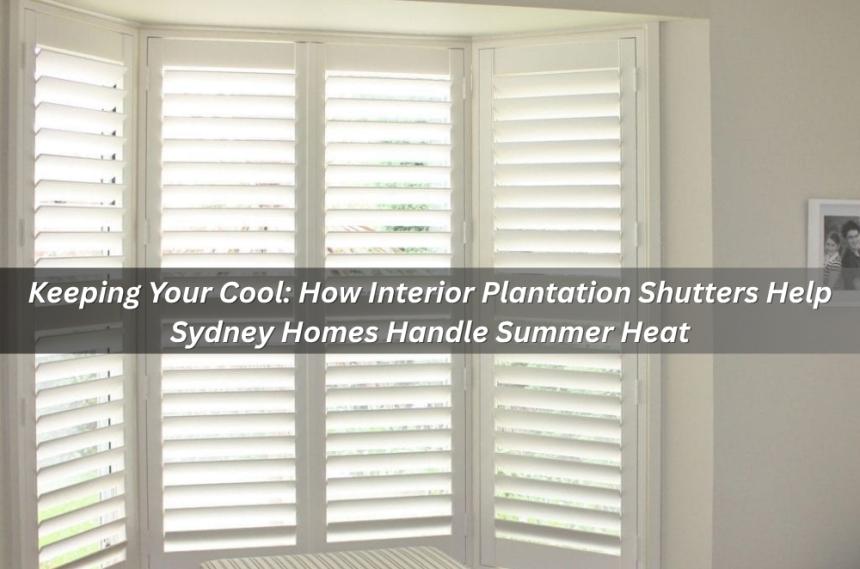

Keeping Your Cool: How Interior Plantation Shutters Help Sydney Homes Handle Summer Heat
This blog explains how interior plantation shutters can help Sydney homes stay cooler during summer by reducing solar heat, improving airflow, and supporting passive cooling. It covers shutter design features, material choices, common mistakes, and maintenance tips for long-term comfort and energy efficiency.
Sydney’s sea breezes can feel glorious on Bondi or Manly, yet inside a brick veneer home the same sunshine often pushes temperatures well above comfort level. Many households still rely on ceiling fans and air-con, but choosing the right window treatment can quietly slash afternoon heat without running costs. Below, we unpack how interior plantation shutters work, why they’re different from heavy drapes and what to consider when selecting a setup that genuinely cools your rooms.
1. Why Heat Management Matters Inside Sydney HomesWith average summer highs nudging 27 °C—and west of Parramatta often hotter—unshaded glass quickly radiates warmth indoors. According to the Australian Government’s YourHome guide to passive cooling, up to 87 % of unwanted summer heat can enter through windows if they’re untreated. That extra load means air conditioners work harder, power bills spike and rooms still feel stuffy.
Plantation shutters tackle the problem in two ways: by blocking direct solar gain and by enabling controlled ventilation once the sea breeze finally kicks in. That one-two punch can make the difference between a tolerable 25 °C lounge and a sweltering 30 °C space.
2. How Plantation Shutters Block, Reflect and Ventilate HeatWell-designed shutters aren’t just decorative slats. Three engineering details go to work the moment the sun hits the glass:
2.1. Angled Louvres Disrupt Radiant HeatTilting the louvres upward during peak sun hours forces rays to bounce back toward the exterior rather than travelling straight into the room. Unlike curtains, the air gap between shutter and glass also slows conductive heat.
2.2. Insulative Frame and MaterialQuality timber or composite frames act as a thermal break. Aluminium-core PVC options can be useful in high-humidity kitchens but should include thermal inserts to avoid acting like mini radiators.
2.3. Cross-Flow Ventilation on DemandOnce late-afternoon shade arrives, louvres can be opened to capture cooler air, flushing out heat trapped near ceilings. Heavy drapes simply can’t pivot—air stays stagnant behind fabric.
Pro tip: For street-level windows, many homeowners angle the louvres downwards during daylight. You’ll still enjoy privacy while reflecting direct sun upward and out.
3. Shutters, Drapes or Roller Blinds? A Cool-Climate ComparisonDifferent coverings solve different problems. The quick matrix below highlights how each option deals with common Sydney heat realities.
FeatureInterior Plantation ShuttersHeavy DrapesRoller BlindsSolar heat blockingHigh – adjustable louvres reflect raysModerate – relies on fabric densityLow-Moderate – depends on backingAirflow controlExcellent – tilt for breezePoor – must pull aside completelyPoor – must raise fullyDaytime privacy while coolingYesNo – open drapes remove privacyLimited – light-filtering onlyMaintenance in coastal humidityWipe-clean; resistant finishesFabric can absorb salt moistureFabric can curl or fadeLifespan & resale appeal10–20 yrs; adds property value5–8 yrs; style-sensitive3–6 yrs; lower perceived valueWhile drapes and blinds offer quick colour changes, shutters pull double duty: passive cooling plus long-term asset boost.
4. Finding the Right Shutter Specs for Sydney’s SummerNot all shutters are created equal. Keep these points front of mind before placing an order for quality window shutters that truly tame the heat:
- Louvre width: 89 mm louvres strike a balance between view, airflow and light control for most suburban blocks. Narrow 63 mm versions suit small heritage sashes but restrict breeze.
- Finish colour: Lighter paints reflect more infrared heat. Brilliant white may look stark against warm brick, so off-whites like Snow Gum or Antique Pearl feel softer.
- Moisture resistance: Kitchens and bathrooms need moisture-stable composites or specially sealed hardwoods to prevent warping.
- Frame depth: Deeper Z-frames create a better seal around the reveal, limiting heat tunnels on older timber windows.
- Bushfire zone compliance: If your property sits in BAL-rated areas near the fringe of the National Park, verify material suitability and fitting method before council inspection.
Even a premium product won’t help if planning is rushed. Readers comparing options may find this planning guide for interior plantation shutters useful before locking in measurements. Below are missteps we still see across Sydney renovations:
5.1 Treating Every Window the SameNorth-facing living rooms need wider louvres and tighter closure than shaded southern bedrooms. Tailor each room.
5.2 DIY Measuring in Millimetre-Tight Cavity WindowsAn 8 mm measuring error can cause side light-leak, letting heat sneak through. Professional templates prevent “triangle gaps” and costly refits.
5.3 Forgetting Cross-Vent PathsInstalling shutters but leaving security screens or clutter behind them kills airflow. Plan window furniture layout holistically.
5.4 Overlooking Child Safety RegulationsOpt for hidden tilt rods or tensioned mechanisms to reduce choke hazards identified in the ACCC’s mandatory standard for window coverings.
6. Maintenance Tips to Keep Shutters Performing Year After Year• Quarterly dust-down: Use a microfibre cloth or soft brush attachment.
• Hinge check: Salt air can seize hinges—add a dab of silicon spray annually.
• Re-seal as needed: Painted timber versions may require a light top-coat every 7–10 years, especially in coastal zones like Cronulla.
• Avoid harsh chemicals: Ammonia cleaners degrade UV-protective finishes; mild detergent is plenty.
A five-minute wipe keeps reflective efficiency high, so louvres continue bouncing sunlight back where it came from.
Final ThoughtsSydney’s climate rewards smart passive-cooling choices. Interior plantation shutters stand out because they cut solar gain, invite breezes and stay stylish long after fabrics fade. When sized and finished correctly, they become a working feature—lowering summer temps without blocking the harbour light we all love. For households weighing up next steps, understanding these principles ensures any investment in shutters delivers comfort, energy savings and enduring street appeal rather than another season battling the heat.
NBA 2K27 Lightning Launch Guide for Beginners by U4gm
Lightning Launch in NBA 2K27 is about the first move from the perimeter: it helps a ball h...
Deburring and Surface Finishing with a Magnetic Polishing Machine
Every cutting operation leaves an edge. Sometimes the result is a visible curl of metal at...

Selecting the Right Magnetic Polishing Machine for Precision Component...
Buying finishing equipment looks simple until the first batch arrives. A machine that prod...
How a Magnetic Polishing Machine Works in Precision Surface Finishing
Precision metal parts almost always leave the machine shop with problems that drawings do...
How Can Scalable Web Applications Support Long-Term Business Growth?