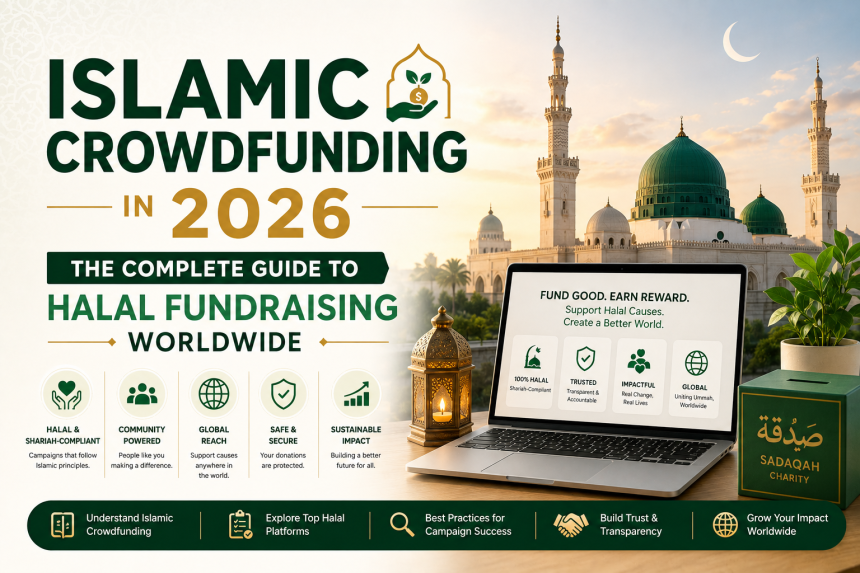

Islamic Crowdfunding in 2026: The Complete Guide to Halal Fundraising Worldwide
Islamic crowdfunding has become an increasingly important fundraising method for individuals, nonprofits, charities, educational institutions, humanitarian organizations, and community projects seeking Shariah-compliant financial support. As digital fundraising continues to expand globally, Islamic crowdfunding platforms provide Muslims with a way to raise and contribute funds while adhering to Islamic principles.
Islamic crowdfunding has become an increasingly important fundraising method for individuals, nonprofits, charities, educational institutions, humanitarian organizations, and community projects seeking Shariah-compliant financial support. As digital fundraising continues to expand globally, Islamic crowdfunding platforms provide Muslims with a way to raise and contribute funds while adhering to Islamic principles.
In 2026, halal fundraising is no longer limited to local communities. Organizations can connect with donors across multiple countries, making it easier to support charitable initiatives, educational programs, healthcare projects, mosque development, emergency relief efforts, orphan care, water projects, and other causes that benefit society.
However, many people still have questions about how Islamic crowdfunding works, whether it complies with Shariah requirements, and how to choose a trustworthy platform. This guide explains the fundamentals of Islamic crowdfunding, the principles that make fundraising halal, and the factors organizations should consider when launching a campaign.
What Is Islamic Crowdfunding?Islamic crowdfunding is a fundraising model that allows individuals or organizations to collect financial contributions from a large number of supporters while following Islamic financial principles.
Like conventional crowdfunding, campaign organizers create an online fundraising page that explains their cause, funding goals, and expected impact. Donors then contribute funds to support the campaign.
The key difference is that Islamic crowdfunding operates according to Shariah guidelines. Fundraising activities must avoid prohibited elements such as riba (interest), gharar (excessive uncertainty), and investments connected to non-halal industries.
Islamic crowdfunding can support both charitable and non-charitable initiatives, provided they comply with Islamic values and ethical standards.
Why Islamic Crowdfunding Is Growing WorldwideSeveral factors have contributed to the growth of Islamic crowdfunding across the world.
First, digital fundraising technology has made it easier for Muslims to support causes regardless of geographic location. A donor in Canada can contribute to a water project in Africa, an educational initiative in Asia, or an emergency relief campaign in the Middle East within minutes.
Second, many Muslims prefer financial transactions that align with their religious beliefs. Shariah-compliant crowdfunding platforms provide reassurance that donations and fundraising activities follow Islamic principles.
Third, humanitarian needs continue to increase globally. Crowdfunding enables communities to respond quickly to emergencies, healthcare needs, educational challenges, and social development projects.
Core Principles of Halal FundraisingTo understand Islamic crowdfunding, it is important to understand the principles that guide halal fundraising.
Avoiding Riba (Interest)One of the most important principles in Islamic finance is the prohibition of riba.
Fundraising campaigns should avoid structures that involve interest-based financing or interest-bearing transactions. Contributions are generally made as donations, charitable giving, or permissible investments depending on the fundraising model.
Supporting Halal CausesCampaigns should focus on activities that are permissible under Islamic teachings.
Examples include:
- Charity projects
- Educational initiatives
- Healthcare assistance
- Community development
- Humanitarian aid
- Mosque construction
- Water projects
- Orphan support
- Disaster relief
Projects connected to gambling, alcohol, interest-based businesses, or other prohibited activities are generally not considered Shariah-compliant.
Transparency and AccountabilityIslam encourages honesty and trustworthiness in financial dealings.
Campaign organizers should clearly explain:
- Fundraising goals
- Use of funds
- Project timelines
- Expected outcomes
- Progress updates
Transparency helps donors make informed decisions and strengthens confidence in the fundraising process.
Ethical Fund ManagementFunds should be managed responsibly and used according to the stated purpose of the campaign.
Regular reporting and communication can help demonstrate accountability to supporters.
Common Types of Islamic Crowdfunding CampaignsIslamic crowdfunding supports a wide range of causes and initiatives.
Charity and Sadaqah CampaignsMany fundraising campaigns focus on providing assistance to individuals and communities in need.
These campaigns often support:
- Food distribution
- Shelter assistance
- Medical aid
- Community support programs
Many organizations use crowdfunding platforms to collect and distribute Zakat according to Islamic guidelines.
Transparency is particularly important because Zakat funds must be distributed to eligible recipients.
Mosque and Islamic Center ProjectsCommunities frequently use crowdfunding to finance:
- Mosque construction
- Mosque renovations
- Islamic schools
- Community centers
- Religious education programs
Natural disasters, conflicts, and humanitarian crises often require rapid fundraising efforts.
Crowdfunding allows organizations to mobilize support quickly and provide assistance where it is needed most.
Education FundraisingEducational campaigns may support:
- Student scholarships
- School development
- Learning resources
- Islamic education programs
Healthcare campaigns can help cover:
- Medical treatments
- Hospital expenses
- Medical equipment
- Community healthcare initiatives
Islamic crowdfunding offers several advantages for both donors and campaign organizers.
Global ReachFundraising campaigns can connect with supporters across different countries and regions.
This expanded reach increases the potential donor base and creates opportunities for greater impact.
AccessibilityOrganizations can launch campaigns without requiring significant technical expertise or large marketing budgets.
Community ParticipationCrowdfunding allows many people to contribute small amounts toward a shared goal.
Collective participation often helps projects achieve funding objectives more efficiently.
Faster FundraisingOnline fundraising platforms simplify the donation process and make it easier for supporters to contribute immediately.
Increased AwarenessCampaigns often attract attention through social media, email marketing, and community networks, helping organizations raise both funds and awareness.
How to Choose an Islamic Crowdfunding PlatformNot all fundraising platforms are designed with Islamic fundraising needs in mind.
Organizations should evaluate several factors before selecting a platform.
Shariah ComplianceThe platform should support fundraising activities that align with Islamic principles and ethical standards.
SecuritySecure payment processing and donor data protection are essential for maintaining trust.
Transparency ToolsLook for features that help organizations communicate fundraising progress and project updates.
Global AccessibilityInternational donation support can help campaigns reach Muslim communities worldwide.
Ease of UseA simple fundraising process benefits both campaign organizers and donors.
Why Trust Matters in Islamic FundraisingTrust plays a central role in Islamic charitable giving.
Donors want confidence that their contributions will be used appropriately and that fundraising campaigns operate with integrity.
Organizations can strengthen trust by:
- Providing regular updates
- Sharing financial information
- Demonstrating project outcomes
- Communicating openly with supporters
- Maintaining accurate fundraising records
These practices align with Islamic values of honesty, accountability, and responsible stewardship.
The Role of Online Platforms in Islamic FundraisingModern fundraising platforms have transformed how Islamic charities and community organizations operate.
Platforms such as Madinah help connect donors with causes that matter while providing the digital tools necessary to manage fundraising campaigns effectively.
From emergency relief efforts and educational projects to mosque development and healthcare assistance, online fundraising platforms continue to expand opportunities for halal fundraising worldwide.
As more donors embrace digital giving, organizations that adopt effective crowdfunding strategies can reach broader audiences and generate sustainable support for their missions.
Frequently Asked QuestionsWhat is Islamic crowdfunding?Islamic crowdfunding is a fundraising method that allows individuals and organizations to raise money online while following Shariah-compliant financial principles.
Is crowdfunding halal in Islam?Crowdfunding can be halal when the fundraising activity, use of funds, and financial structure comply with Islamic principles and avoid prohibited elements such as riba.
Can Zakat be collected through crowdfunding platforms?Yes. Many Islamic organizations use crowdfunding platforms to collect and distribute Zakat, provided funds are managed according to Islamic guidelines.
What types of projects can use Islamic crowdfunding?Common projects include charitable causes, mosque development, educational initiatives, healthcare assistance, water projects, orphan support programs, and humanitarian relief efforts.
How can donors verify a fundraising campaign?Donors should review campaign details, organizational information, fundraising goals, project updates, and platform credibility before contributing.
ConclusionIslamic crowdfunding continues to create new opportunities for halal fundraising in 2026. By combining modern technology with Islamic financial principles, organizations can connect with supporters worldwide and fund projects that create meaningful social impact.
Whether supporting Zakat distribution, Sadaqah initiatives, mosque construction, educational programs, healthcare assistance, emergency relief efforts, or community development projects, Islamic crowdfunding provides a practical and accessible fundraising solution for today's digital world.
As global demand for Shariah-compliant fundraising grows, platforms such as Madinah help organizations and donors participate in ethical, transparent, and purpose-driven fundraising that aligns with Islamic values while reaching communities across the world.



Insecticide Manufacturing Plant Report 2026: Raw Materials, Machinery...

Sandwich Flag Toothpick: How to Make Them & Why Every Kitchen Needs Th...

Perché un grande presepe di Natale unisce tutta la famiglia?
Ogni anno, in molte case, arriva il momento in cui si tirano fuori gli scatoloni delle dec...


OEM Manufacturing Companies in India: How to Choose the Right Manufact...