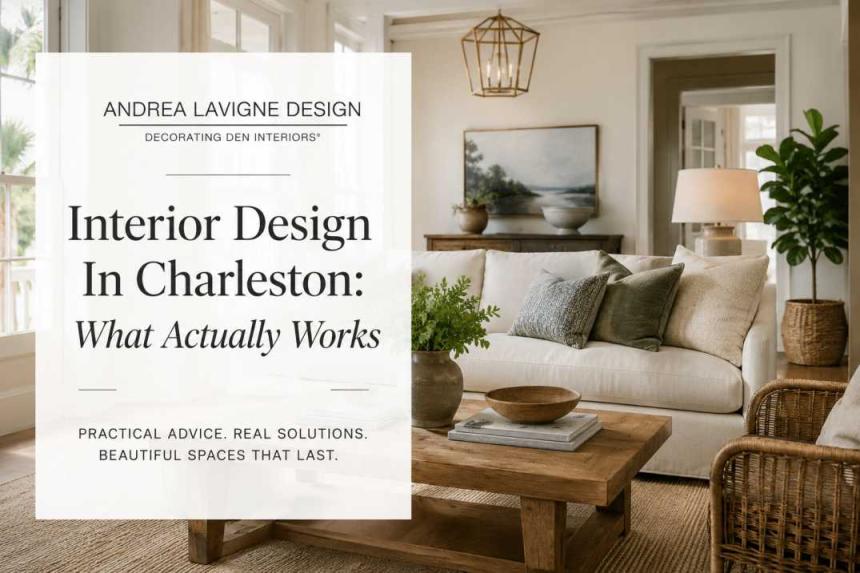

Interior Design In Charleston: A Local's Honest Take
What homeowners get wrong with interior design in Charleston — from awkward layouts to lighting that fails at night — and how to fix it.
Interior Design In Charleston: What Actually Works
You know that feeling when a room is technically furnished but still feels wrong somehow? I get calls about this constantly. Someone bought the rug, hung the art, picked a nice paint color and the space still doesn't sit right. Interior design in Charleston runs into this a lot, honestly, because the houses here weren't built for the way we live now. Old bones, narrow lots, humid air that does weird things to wood and fabric. Pretty house, stubborn floor plan.
Most homeowners think the problem is taste. It almost never is. Nine times out of ten it's the layout, or the lighting, or furniture that's just... the wrong size for the room. Once you see it that way, it stops being so overwhelming.
Old Charleston homes were built for a totally different way of living than what most families need today. Narrow shotgun houses. Hallways that go nowhere. A kitchen addition from the 90s that doesn't quite line up with the original footprint of the house. You end up with a dozen tiny disconnects nobody can really put their finger on.
There was a project near Hampton Park dining room and living room technically connected, but barely. The flow was so off that the family just ate dinner in the kitchen for two years straight. Two years! Nobody had ever told them the furniture was working against the architecture, not with it. We rotated the traffic pattern, pulled the sofa off the wall, moved one console table about four feet. That was basically it. The whole house exhaled.
Open floor plans cause a different version of the same headache. They look great on paper. In real life they can feel like one big undefined room, no anchor anywhere, furniture just sort of floating. That's usually where things start feeling off, even when every single piece is nice on its own.
This one gets almost everybody. A room looks incredible at 2pm tall windows, that soft Charleston light bouncing around and then turns into a cave the second the sun drops. I've had clients call me, genuinely frustrated, asking what happened to their "perfect" living room after dark.
It's almost always one overhead fixture trying to do all the work alone. Layered lighting fixes it, but nobody thinks about lighting layers until they're sitting in a dim room at 8pm wondering where it all went wrong. Lamps at different heights. Warmer bulbs, not the blue-white ones. A sconce in the right spot. Not glamorous work, but it changes how livable a room feels once the sun's gone.
Here's what usually happens — and I mean usually, this is not rare. Someone walks into a furniture showroom, falls for a giant sectional, gets it delivered, and suddenly their open-concept living room looks like it's wearing a coat two sizes too small. Showrooms are huge spaces. Most living rooms are not.
I see this a ton with second homes and vacation properties out toward the islands, where people furnish fast between renovation and rental turnover and there's no real time to sit with the room first. Measure twice. Then measure again, honestly, because I've watched plenty of beautiful pieces get returned because nobody checked if it would even clear the hallway.
Humidity is no joke in this part of the Lowcountry, and it's brutal on the wrong materials. Unsealed solid wood warps. Certain fabrics mildew faster than people expect, especially near windows that catch salt air off the water. A linen sofa that looked gorgeous in May can smell musty by August seen it happen more than once.
What holds up: performance fabrics, properly sealed woods, woven natural fibers that can take a little moisture without falling apart. Not the most exciting part of the job, but it's the part that keeps people from redoing a room they just finished paying for.
A few patterns keep showing up, project after project:
- Storage planning gets pushed to "later," then there's nowhere to retrofit it
- Paint colors get chosen under one light and never tested at night
- Statement furniture goes in before the layout underneath it actually gets solved
- Open floor plans get left to "figure themselves out," which they don't
None of these are huge mistakes on their own. They're just easy to miss when you're excited and trying to move fast.
Whether it's a historic place downtown, something newer out in Mount Pleasant, or a second home you only get to a few months out of the year, the same basics apply. Layout first. Lighting second. Furniture scale third. Skip a step and you'll probably feel it later, even if you can't say exactly why.
A lot of homeowners reach out to interior decorators in Charleston SC only after they've already tried the DIY route and hit a wall and that's a completely normal starting point, not a failure. That's usually where working with someone like Andrea Lavigne Design takes some of the guesswork out, mostly because a lot of these issues are easier to spot from the outside than from inside the house you live in every day.
Most people don't realize how much easier it all feels once the layout finally starts working with the way they actually live, not against it.