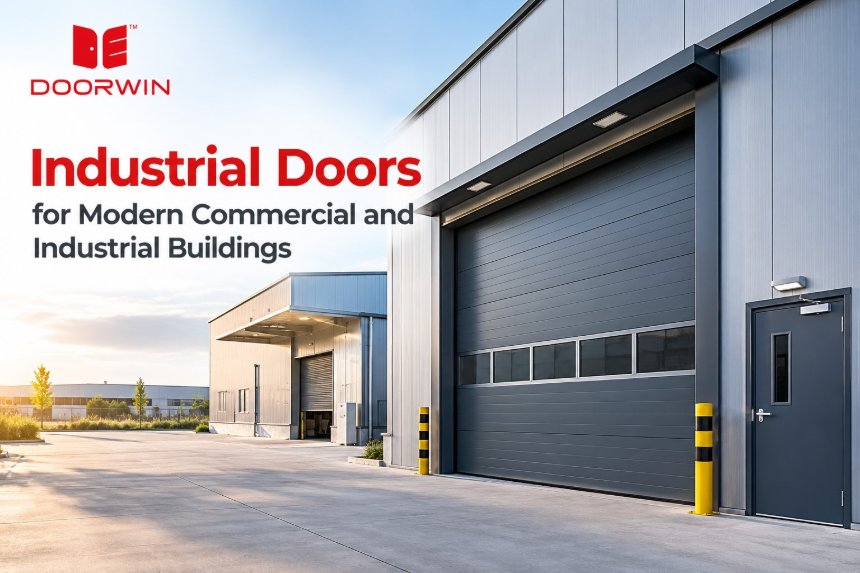

Industrial Doors for Modern Commercial and Industrial Buildings
Modern commercial and industrial buildings require door systems that support safety, security, efficient movement, and everyday operational needs. From manufacturing facilities and warehouses to commercial complexes and processing units, the right doors can improve accessibility, separate work areas, and help manage movement throughout a building. Choosing suitable industrial doors for modern commercial and industrial buildings involves more than selecting a design. Building owners must consider the application, opening dimensions, operating frequency, environmental conditions, security requirements, and applicable safety standards. A well-selected door system can support smoother operations while meeting the practical requirements of the facility. As industrial infrastructure continues to evolve, businesses need door solutions that align with their operational workflows, maintenance plans, and building specifications. Why Industrial Doors Are Important for Commercial and Industrial Buildings Industrial doors serve different purposes depending on the type of facility. They may control access to restricted areas, separate production zones, protect equipment, or provide convenient movement for employees and materials. Unlike ordinary residential doors, industrial door systems often need to withstand frequent use and demanding operating conditions. Their design should match the building’s function rather than relying on appearance alone. 1. Improved Workplace Safety Safety is a key consideration in factories, warehouses, workshops, and commercial facilities. Appropriate door systems can help separate work zones, manage access, and support designated movement routes. For example, fire-rated doors may help restrict the spread of fire and smoke when installed as part of a suitable fire protection strategy. However, their performance depends on the tested door assembly, correct installation, compatible hardware, and ongoing maintenance. Emergency exit doors must also support safe evacuation and comply with the applicable building and fire safety requirements. 2. Better Operational Efficiency Industrial buildings often experience frequent movement of employees, equipment, goods, and vehicles. Doors that match these movement patterns can help reduce unnecessary delays and improve workflow. For instance, a warehouse may require a large opening for material handling, while a production area may need a durable door between separate operational zones. Before choosing a system, assess the expected traffic, opening frequency, available space, and clearance requirements. 3. Reliable Access Control and Security Commercial and industrial facilities may contain machinery, inventory, tools, and confidential materials. Suitable door systems can help control access to these areas. The appropriate solution depends on the level of security required, the building’s layout, and the access control system in use. Strong materials, compatible locks, suitable hardware, and professional installation all contribute to a door’s overall performance. Different Types of Industrial Doors for Modern Buildings Every facility has different operational requirements. Understanding the available door types helps property owners and project managers select a solution that matches their application. 1. Fire Resistant Doors Fire resistant doors are designed and tested to provide a specified level of fire resistance under defined conditions. They are commonly considered for commercial buildings, industrial facilities, service corridors, stairwells, and other locations identified by the building’s fire safety design. These doors form part of a larger fire protection system and should be selected according to the required fire rating and applicable regulations. Important factors include: Required fire resistance rating. Door leaf and frame specifications. Compatible hinges, locks, closers, and seals. Installation quality and inspection requirements. Applicable fire safety approvals and documentation. A correctly specified and maintained fire door can help support compartmentation and safer evacuation when a fire occurs. 2. Emergency Exit Doors Emergency exit doors provide designated routes for people to leave a building during an emergency. They are important in factories, offices, warehouses, educational facilities, and other buildings where occupant safety is a priority. The door configuration should suit the intended escape route and comply with applicable requirements for clear opening width, direction of travel, hardware, accessibility, and emergency operation. When planning an emergency exit door, consider the number of occupants, the building layout, and the expected evacuation conditions. The exit route must remain accessible and free from obstructions. 3. Hollow Metal Pressed Steel Doors Hollow metal pressed steel doors are used in a variety of commercial and industrial environments where a robust door assembly is required. Depending on the specifications, they may be suitable for factories, utility rooms, service areas, offices, and equipment rooms. Their suitability depends on the steel gauge, internal construction, frame design, finish, hardware, and installation method. When comparing pressed steel doors, buyers should review the complete door assembly rather than considering the door leaf alone. The selected specifications should reflect the intended use and environmental conditions. 4. Clean Room Doors Clean room doors are designed for environments where contamination control and controlled access are important. Examples may include pharmaceutical facilities, laboratories, electronics manufacturing areas, and selected food processing environments. The door system should be compatible with the room’s cleanliness requirements, pressure conditions, cleaning procedures, and surrounding wall construction. Depending on the application, buyers may need to evaluate smooth surfaces, suitable seals, corrosion resistance, and compatibility with the facility’s environmental controls. 5. Acoustic Doors Acoustic doors can help reduce sound transmission between rooms or operational areas. They may be considered for industrial testing rooms, machinery enclosures, recording spaces, technical rooms, and commercial facilities where noise management is necessary. Acoustic performance depends on the complete door assembly, including the door leaf, frame, seals, threshold details, and installation quality. Before selecting an acoustic door, identify the required sound reduction performance and confirm that the proposed system has suitable test data for the intended application. 6. Industrial Windows and Specialised Door Systems Some commercial and industrial buildings also require specialised windows, glazed openings, or doors designed for particular environmental and operational conditions. The selection depends on visibility, daylight, security, hygiene, temperature, and other project-specific needs. For large industrial openings, the design team may also evaluate sliding or other space-saving door configurations where suitable. The final selection should account for available clearance, operating frequency, maintenance access, and safety provisions. How to Choose the Right Industrial Door for Your Facility Selecting a suitable door requires a clear understanding of the building and its daily operations. A structured assessment can help buyers compare products and avoid unnecessary costs. Evaluate the Intended Application Start by identifying where the door will be installed and what it needs to accomplish. A factory entrance may require a different system from a clean room, emergency exit, warehouse partition, or machinery room. Write on Medium Define the primary purpose, expected traffic, security level, environmental exposure, and any special performance requirements before requesting quotations. Select Suitable Materials Industrial doors may use steel and other materials depending on the application. Each option has different characteristics relating to strength, weight, maintenance, corrosion resistance, and cost. Steel doors can be suitable for many demanding environments, but the correct specification depends on the surrounding conditions. Areas exposed to moisture, chemicals, or aggressive cleaning processes may require particular finishes and corrosion protection. Review the product specifications and intended operating conditions before finalising the material. Consider Door Dimensions and Installation Space The size and configuration of the opening influence door selection. Buyers should measure the opening accurately and account for the frame, surrounding wall construction, hardware, and available clearance. For specialised doors, confirm whether the proposed assembly is compatible with the existing structure and whether additional preparation is required. Professional measurement and installation can help reduce alignment issues and operational problems. Check Standards and Documentation Some industrial applications require tested or certified door assemblies. Fire-rated doors, for example, should meet the applicable requirements for the specific project and installation. Ask the supplier for relevant test reports, certifications, product specifications, installation instructions, and maintenance guidance where applicable. Do not assume that a door meets a particular performance standard solely because it is described as heavy-duty, fire resistant, or industrial grade. Industrial Door Applications Across Different Industries Industrial door requirements vary according to the facility’s activities, equipment, and operating conditions. Manufacturing Plants Manufacturing facilities may need durable doors for production areas, maintenance rooms, storage sections, and restricted-access spaces. Door selection should consider the movement of materials, the possibility of impact, environmental exposure, and any separation requirements between work areas. Warehouses and Logistics Centres Warehouses depend on efficient movement of inventory, staff, and handling equipment. Door size, operating method, clearance, and traffic patterns should be evaluated to support daily operations. Access doors should also align with the site’s security procedures and emergency escape arrangements. Pharmaceutical and Food Processing Facilities These environments may require specialised door systems that support hygiene, cleaning, and contamination control. Material compatibility, sealing, surface finish, and maintenance procedures should be reviewed according to the facility’s documented requirements. Commercial Complexes and Office Buildings Commercial buildings may need a combination of secure access doors, fire-rated doors, service-area doors, and other specialised systems. Each door should serve its intended function while remaining compatible with the building’s access, safety, and maintenance plans. Common Mistakes to Avoid When Buying Industrial Doors Choosing a door based only on its initial price can create problems later. Buyers should consider the full operating requirements and expected service life of the selected system. Common mistakes include: Selecting a door without assessing its intended application. Ignoring the required fire rating or applicable safety provisions. Choosing unsuitable materials for the surrounding environment. Overlooking frame compatibility and installation requirements. Failing to confirm the performance of the complete door assembly. Ignoring routine inspection and maintenance needs. Assuming that every industrial door offers the same security or durability. Comparing specifications, documentation, installation arrangements, and maintenance requirements can help businesses make a more informed purchase. Maintenance Tips for Long-Term Door Performance Regular inspection and appropriate maintenance help industrial doors operate as intended. Maintenance frequency should reflect the manufacturer’s instructions, usage levels, environmental conditions, and applicable safety requirements. A practical maintenance programme may include: Inspecting door leaves, frames, hinges, and visible fixings. Checking locks, closers, handles, and other hardware. Looking for corrosion, impact damage, or misalignment. Keeping operating areas and designated exit routes clear. Checking seals and other performance-related components. Arranging qualified inspection and servicing when required. Maintaining records of inspections, repairs, and replacements. Fire-rated and emergency exit doors require particular attention because damage, incompatible modifications, or defective hardware may compromise their intended function. Conclusion: Choosing Industrial Doors for Modern Commercial and Industrial Buildings Selecting the right industrial doors for modern commercial and industrial buildings requires careful consideration of safety, security, durability, operational efficiency, and the facility’s specific requirements. From fire resistant doors and emergency exit doors to pressed steel, clean room, and acoustic door systems, each option serves a different purpose. Buyers should compare materials, dimensions, performance documentation, installation requirements, and maintenance needs before making a decision. For businesses evaluating industrial door solutions, Doorwin Engineering provides a starting point for exploring specialised door products for different building applications. Visit the official website to review available product information and discuss project requirements with the relevant team. A well-planned door selection process can help building owners choose systems that support daily operations, meet applicable requirements, and deliver dependable performance over time. Contact Doorwin Engineering 📞 +91 75750 93434 📧 [email protected] 🌐 https://doorwinengineering.com/industrial-doors-modern-buildings/


Maxentra Review: Benefits, Ingredients & How It Works
What Is Maxentra Male Enhancement? Maxentra Male Enhancement is a dietary supplement desi...


Open House Without Borders: How Virtual Tours Are Expanding the Proper...
Solvarex Review: Is It Worth Trying? Pricing, Results & Where to Buy
What Is Solvarex? Solvarex is a dietary supplement designed to support general wellness,...