
How to Organize Kitchen Cabinets Pots And Pans: Expert Tips
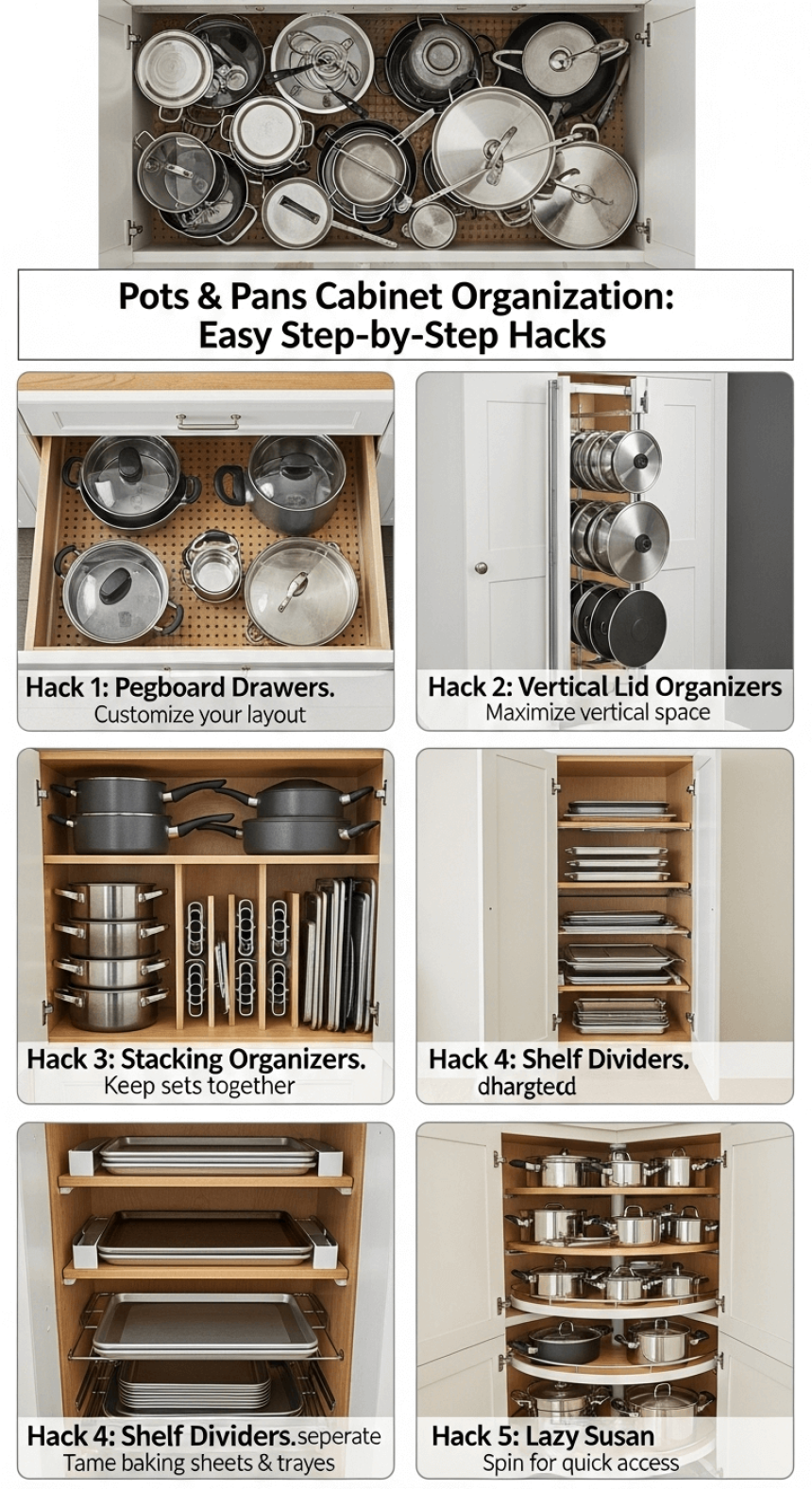
Pots and pans are the backbone of any kitchen. But here’s the thing—when they’re piled up in a cabinet, lids sliding everywhere, handles poking out, and you have to dig for the right size pan every time… cooking becomes frustrating. A messy cabinet wastes time and can even damage your cookware. The good news? With a few expert tricks, you can turn that cluttered chaos into a system where everything has its place. This guide will show you step by step how to organize your pots, pans, and lids so your kitchen feels bigger, cleaner, and way easier to use. Why Organizing Pots and Pans Matters Saves time: No more hunting for the matching lid. Protects cookware: Prevents scratches and dents from stacking poorly. Maximizes space: Smart systems free up room in small kitchens. Reduces stress: Cooking feels smoother when tools are easy to grab. ## Step 1: Declutter First Before organizing, pull everything out of your cabinet. Ask yourself: Do I really need 6 frying pans? Are any pots damaged, rusty, or missing handles? Which pans do I actually use weekly? 👉 Keep the essentials, donate duplicates, and toss anything unsafe. ## Step 2: Choose the Right Cabinet Not all cabinets work equally well for pots and pans. Ideally, use: Lower cabinets: Easier access for heavy cookware. Deep drawers: Great for stacking with dividers. Corner cabinets: Use pull-out racks or lazy Susans to maximize dead space. If your kitchen is small, you may need a mix of cabinets and wall-mounted solutions. ## Step 3: Stack Smart, Don’t Pile The most common mistake? Throwing pans into one big pile. Instead: Nesting: Place smaller pans inside larger ones, but add felt protectors to prevent scratches. Vertical dividers: Store pans upright like files for easy access. One lid, one pot rule: Keep matching lids close to each pot. ## Step 4: Tame the Lids Lids are the hardest part to control. Try these hacks: Lid racks: Mounted on the inside of cabinet doors. Tension rods: Create a simple DIY lid slot inside cabinets. Pull-out organizers: Slide trays with lid slots for quick access. 👉 If space is really tight, consider storing lids separately from pots but in a consistent spot. ## Step 5: Use Specialized Organizers Investing in organizers pays off big time. Options include: Pull-out shelves: Bring everything forward so nothing gets lost at the back. Pan racks: Hold pans vertically without stacking. Adjustable dividers: Fit to your exact cabinet size. Tiered racks: Great for frying pans of different sizes. These tools prevent the “tower of pans” problem that always collapses when you grab one. ## Step 6: Store by Frequency of Use Keep your go-to pans at the front or middle shelf: frying pan, medium pot, everyday saucepan. * Rarely used items (stock pots, roasting pans) can sit in the back or on higher shelves. * Seasonal items (big turkey roasting pan) can even go outside the main kitchen area. This way, daily cooking stays quick and efficient. ## Step 7: Try Drawer Storage for Heavy Cookware If your kitchen has deep drawers, they’re perfect for pots and pans: * Use adjustable dividers to keep pans upright. * Store lids in a separate shallow drawer right above. * Place protective liners on the bottom to prevent scratches. Drawers are safer for heavy items because you don’t have to lift them overhead. ## Step 8: Make Use of Vertical and Door Space Cabinets aren’t just about shelves. Use every inch: * Hooks: Hang pans by their handles inside tall cabinets. * Over-the-door racks: Perfect for lids, trays, or cutting boards. * Magnetic strips: Mount lids with metal rims to free up shelf space. Even small kitchens gain extra storage when you go vertical. ## Step 9: Label and Maintain Once everything is in place, label bins or dividers. For example: * “Frying Pans” * “Saucepans” * “Stock Pots” Do a quick 5-minute reset once a week—return each item to its zone so clutter doesn’t creep back. ## Expert Tricks for Small Kitchens 1. One in, one out rule: Don’t keep more pans than your cabinet allows. 2. Collapsible cookware: Invest in stackable or foldable pans for tight spaces. 3. Use risers: Add mini-shelves inside cabinets to double your vertical space. 4. Rolling cart backup: If your kitchen is tiny, add a slim cart for overflow pans. 5. Ceiling racks: In ultra-small kitchens, hanging pans overhead saves cabinet space. ## Common Mistakes to Avoid * Stacking pans without protectors (causes scratches). * Mixing lids randomly (harder to find). * Overcrowding (leads to clutter again). * Putting heavy pots on high shelves (safety risk). * Ignoring cabinet depth (wasted space at the back). ## Conclusion: Cook Easier, Live Happier Organizing your pots and pans isn’t just about neat cabinets—it’s about making your kitchen work for you. With dividers, racks, and a little decluttering, you’ll never waste time hunting for the right pan again. Whether your kitchen is big or small, these expert tips help you maximize cabinet space, protect your cookware, and keep cooking stress-free. 👉 Start with one cabinet today—you’ll feel the difference the very next time you cook.
Comprehensive Article: Where to Buy Verified Walmart Pay Accounts
Comprehensive Article: Where to Buy Verified Walmart Pay Accounts Introduction In the ra...

The Truth About Java Burn Customer Reviews: Honest 2026 Guide
The Truth About Java Burn Customer Reviews: Honest 2026 Guide Introduction If you’ve eve...
Can You Use Java Burn Without Dieting Hard? Honest 2026 Review
Can You Use Java Burn Without Dieting Hard? Honest 2026 Review Introduction Struggling w...
Where to Buy Verified Revolut Accounts: The Ultimate 2026 Guide
Where to Buy Verified Revolut Accounts: The Ultimate 2026 Guide In the rapidly evolving w...
Java Burn Review: The Shocking Truth!
Java Burn Review: The Shocking Truth! Introduction If you’ve ever struggled with stubbor...