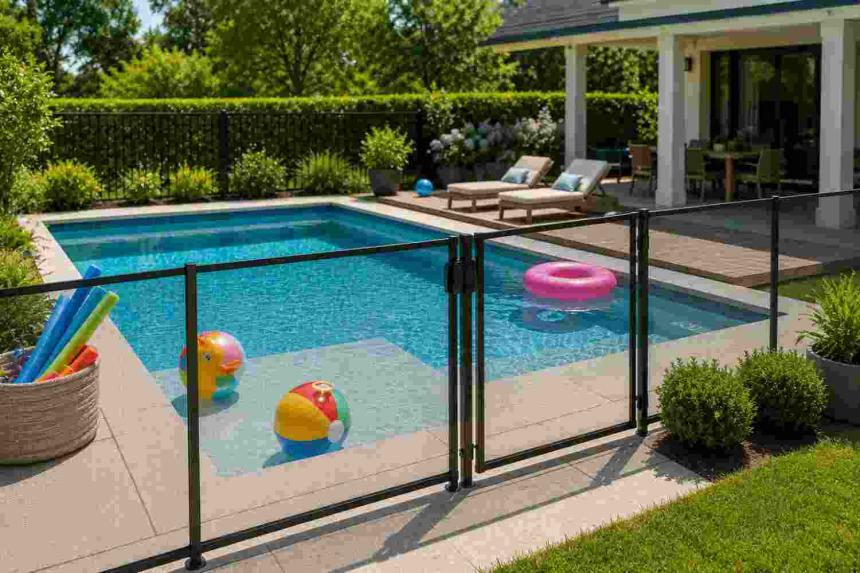

How to Make Your Swimming Pool Safer for Children
Learn practical ways to make a swimming pool safer for children with barriers, supervision, alarms, safe design, and emergency measures.
A swimming pool can make a home more enjoyable, but safety should always come first when children use or live near it. Young children can reach a pool quickly, even when adults believe the area is secure. That makes prevention, supervision, and proper pool planning essential.
A safe Swimming Pool for Children should use multiple layers of protection. Secure barriers, safe pool access, active supervision, suitable equipment, and emergency preparation can work together to reduce risks. If you are planning a new pool, these measures should be considered during the design and construction stage rather than added later.
The safest approach is to combine several protective measures instead of depending on one safety product.
Here are the most important steps:
- Install a secure barrier around the pool.
- Use self-closing and self-latching gates.
- Keep children under active adult supervision.
- Secure ladders and other access points.
- Use suitable pool alarms or safety covers.
- Keep rescue equipment close to the pool.
- Maintain secure drain covers.
- Keep the pool deck clear and suitable for wet conditions.
- Teach children basic swimming and water-safety rules.
- Inspect safety equipment regularly.
The U.S. Consumer Product Safety Commission (CPSC) recommends using barriers, supervision, alarms, and other protective measures together to reduce drowning risks.
Pool safety begins with good design. A pool that is easy for adults to monitor and difficult for young children to access without permission can provide an important additional layer of protection.
Think about visibility when choosing the pool location. Adults should be able to see the pool easily from commonly used areas of the home or property.
The pool entry should also be practical. Properly designed steps, handrails, and clearly defined shallow areas can make entering and exiting easier. The surrounding deck should provide suitable traction and remain free from unnecessary objects.
These details should be discussed before construction begins. An experienced swimming pool construction company can incorporate safety requirements into the layout instead of trying to modify the design after completion.
A physical barrier is one of the most important safety features for a residential swimming pool. It should limit a child's ability to reach the water without adult assistance.
A suitable barrier can include a properly designed fence and a self-closing, self-latching gate. The gate should remain closed when the pool is not actively being used.
Additional safety options can include:
Safety FeatureMain PurposeBest UsePool fenceLimits access to the waterResidential poolsSelf-latching gateControls entryPool access pointsDoor alarmAlerts adults to accessHomes connected to pool areasPool alarmProvides an additional warningExtra safety layerSafety coverCovers the pool when unusedPrivate residential poolsCPSC guidance emphasizes that barriers should be used as part of a broader safety strategy. Alarms and other devices should not replace active supervision.
Yes. Children should always have active adult supervision around a swimming pool.
Swimming lessons can improve a child's water skills, but they cannot eliminate every risk. A child may become tired, panic, slip, or experience an unexpected problem in the water.
CPSC recommends having a designated adult Water Watcher who remains attentive and avoids distractions such as phones, reading, or other activities.
A useful household rule is simple: whenever children are using the pool, one responsible adult should clearly take responsibility for watching them.
Do not assume that another adult is supervising simply because several people are nearby.
Steps, ladders, and drains deserve particular attention because they are frequently used areas of the pool.
For pools with removable ladders, consider securing or removing access when the pool is not being used. Children should also be prevented from playing around drains, suction outlets, and other openings.
Drain covers should remain secure and suitable for the pool system. Damaged or loose covers should be addressed promptly.
CPSC provides specific guidance concerning pool and spa drain covers and entrapment protection.
During new construction, discuss drain placement and suction protection with your pool professional. These details are easier to address during design than after installation.
Safety is easier to integrate when it is considered from the beginning.
If you are building a new pool, discuss the following features with your contractor:
1. Controlled Pool AccessPlan fencing, gates, and access routes so children cannot easily reach the pool without an adult.
2. Safe Entry and ExitWell-planned steps and appropriate handrails can make entering and leaving the pool easier.
3. Suitable Pool SurroundsChoose appropriate materials for the pool deck and keep walking areas clear of unnecessary obstacles.
4. Secure Equipment PlacementPumps, filters, electrical components, and other equipment should be installed and accessed appropriately.
5. Drain SafetyUse suitable drain covers and consider entrapment protection during the pool design process.
6. Emergency PreparednessKeep suitable rescue equipment and a phone or other means of communication accessible.
CPSC also recommends having rescue equipment near the pool and encouraging caregivers to learn CPR.
A professional swimming pool construction company can help incorporate safety into the pool's design, construction, and equipment planning.
Instead of discussing only pool size, shape, tiles, and features, homeowners should ask about access control, visibility, drainage, deck materials, steps, handrails, and equipment placement.
When evaluating swimming pool construction services, consider asking:
- How will the pool be separated from the rest of the property?
- What type of gate would suit the design?
- Can the pool be positioned for better visibility?
- What type of steps and handrails are appropriate?
- How will drain and suction outlets be protected?
- What deck material is suitable for wet conditions?
- Where will pumps and filters be installed?
- What safety equipment should be kept near the pool?
- What maintenance checks should homeowners perform?
A good pool design should balance appearance, comfort, maintenance, functionality, and safety.
A quick safety check can help identify problems before swimming begins.
Before pool use, check:
- The pool gate is closed and functioning.
- Barriers have no obvious access gaps.
- The pool deck is clear.
- Ladders and access points are secure.
- Drain covers are intact.
- Rescue equipment is accessible.
- Children are being actively supervised.
- Pool rules have been explained to children.
- The responsible adult is free from distractions.
These checks should become part of the family's regular pool routine.
Check the pool immediately. Do not assume the child is somewhere else.
A few seconds can matter during a water emergency. CPSC advises caregivers to check the pool first if a child is missing and recommends keeping rescue equipment nearby.
Families should also prepare an emergency plan in advance. Adults who regularly supervise children around the pool should know how to respond and should consider learning CPR.
For official pool-safety information, homeowners can refer to theU.S. Consumer Product Safety Commission's safety resources.
Choosing the right contractor can influence the safety and usability of the finished pool.
Before selecting swimming pool construction services, ask questions about both construction quality and safety planning.
Important questions include:
- What safety features can be incorporated into the design?
- How will pool access be controlled?
- Can the layout improve visibility from the house?
- How will steps and handrails be positioned?
- What measures will be used for drain safety?
- Which deck materials are appropriate?
- How will pool equipment be positioned?
- What safety features should be installed before the pool becomes operational?
- What maintenance should homeowners perform regularly?
A contractor who discusses these areas early can help you make more informed decisions before construction begins.
Conclusion
Creating a safer Swimming Pool for Children requires a combination of thoughtful design, secure access, active supervision, appropriate equipment, and regular maintenance.
Safety should begin before construction starts. By discussing child-safety requirements with a reliable swimming pool construction company, homeowners can plan important features from the beginning.
If you are comparing swimming pool construction services, look beyond appearance and pricing. Consider how well the proposed design addresses access control, supervision, drainage, pool surroundings, equipment, and long-term safety. A well-planned pool can provide a more enjoyable experience while helping families create a safer environment for children.
Best cancer care treatment Hospitals India
Best cancer care treatment Hospitals India


How Experienced Mechanics Ensure Vehicle Reliability and Safety
Experienced Miranda mechanics understand how these systems interact and can identify devel...