How to Get Real Value From HC Licence Road Training (Without Wasting Lessons)
Step up to an HC licence with less wasted lesson time. This guide breaks down what effective HC road training should cover, the most common mistakes that stall progress, how to choose the right training approach, and a simple 7–14 day plan to build safe, assessment-ready habits—especially for real Sydney driving conditions.
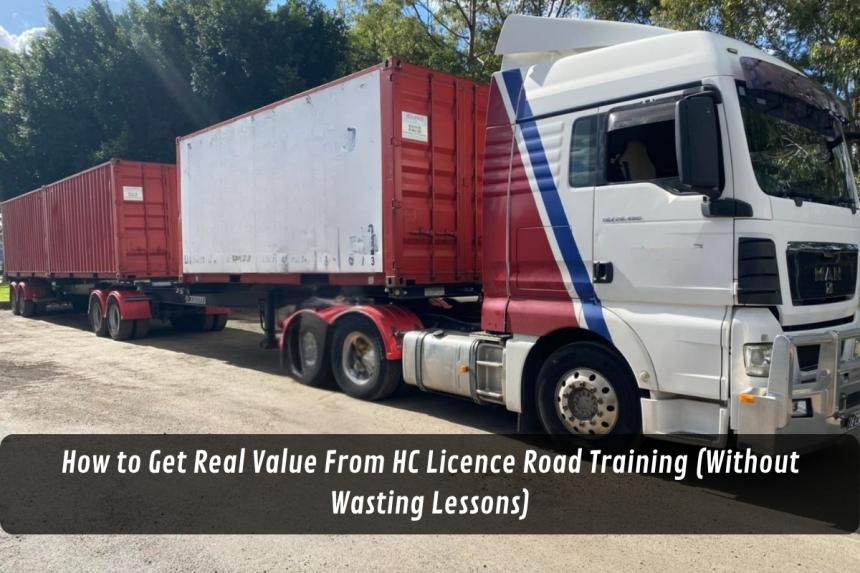
Stepping up to a Heavy Combination (HC) licence isn’t just “a bigger truck”. The vehicle behaves differently, the margin for error shrinks, and the assessment is built to spot habits that might be fine in a car but risky in a longer, heavier combination.
HC licence road training is where those habits get rebuilt in the real world: roundabouts, tight turns, lane changes, hills, traffic, and all the “small” decisions that add up to safe control. If training feels like you’re just driving around until time runs out, you’re paying for hours rather than progress.
What follows is a practical way to get more out of each lesson, make faster improvements between sessions, and turn road time into licence-ready competence.
Road time isn’t the same as road trainingA good HC session has a purpose, a structure, and a clear “what changed today” outcome. The truck is a classroom, not just a vehicle.
Road training should do three things repeatedly:
One: build a repeatable routine (set-up, checks, scan pattern, decision rhythm).
Two: teach vehicle behaviour (tracking, off-tracking, weight transfer, braking feel, trailer response).
Three: translate rules into decisions (space management, speed choice, lane selection, timing, communication).
If any of those are missing, progress tends to stall. You might feel more comfortable in the seat, but the assessment looks for consistent judgement and control, not just confidence.
What “good” HC road training usually includesThe specifics vary, but high-quality road training tends to cover the same core building blocks, because that’s what real driving demands.
A clear pre-drive routine. Not a rushed walkaround, but a consistent order of checks so nothing gets missed when you’re tired or distracted.
Low-speed control that connects to real streets. Tight left turns, roundabouts, driveway entries, and managing the trailer’s path without drifting wide or cutting corners.
Space and positioning. Choosing lanes early, holding a safe following distance, and managing blind spots in ways that are calm—not reactive.
Braking and smoothness. Not “slow”, but stable: understanding how much space the combination needs and avoiding late braking that unsettles the rig.
Hill work and intersections. Starts, stops, and timing—especially when traffic pressure tempts you to rush.
Coupling/uncoupling competence. Even if the assessment emphasis varies, competence here is part of being safe around combinations.
Self-correction. The ability to notice a developing problem early and fix it smoothly (without sharp inputs or panic decisions).
A strong instructor will also narrate what they’re watching for, so you learn how you’ll be assessed—without turning the lesson into a scripted performance.
Common mistakes that slow progressMost learners don’t fail because they “can’t drive”. They fail because their decisions aren’t consistent under pressure, or their routines break down when the environment gets messy.
Treating mirrors like a quick glance. In an HC, mirror work is a rhythm. If you only check when you feel unsure, you’re already late.
Turning based on the prime mover, not the trailer. Many people aim the cab correctly but forget the trailer’s path until it’s too close to a kerb, island, or parked car.
Late lane choices. The longer the vehicle, the earlier you need to commit. Last-second weaving is a red flag because it shows poor planning.
Braking too late to “keep up with traffic”. You can’t negotiate physics. Late braking creates harsh inputs, compresses your time to make decisions, and makes everything look rushed.
Overcorrecting. Small steering changes early beat big corrections late. Overcorrection often comes from not looking far enough ahead.
Inconsistent routines. A great pre-drive check once and a sloppy one next time is a reliability problem, not a knowledge problem.
Not practising between lessons. You can’t practise driving an HC at home, but you can practise the thinking: scanning, planning, and narrating decisions while driving your own vehicle.
Decision factors: choosing the right HC road trainingNot every training option fits every learner. The key is picking the approach that matches how you learn and what you’ll actually do on the job.
1) How structured is the training plan?
Look for sessions that have a focus (e.g., “roundabouts and lane management”) and a recap. If it’s just “we’ll see what happens,” you may plateau.
2) How much feedback do you get, and how is it delivered?
You want specific, actionable feedback: what you did, what the risk was, and what to do next time. Vague feedback (“be smoother”) is hard to improve from.
3) Are you practising the hard parts early?
If you avoid tight work, hills, and complex traffic until the end, you’ll feel busy right when you need calm repetition.
4) Does the training match your likely routes and work?
Metro traffic, industrial estates, and mixed-speed roads all create different challenges. Training that reflects typical Sydney driving conditions helps judgement become automatic.
5) What’s included outside the driver’s seat?
Good providers help you understand expectations, routines, and readiness—not just steering and gears.
If comparing providers, it helps to read a clear outline of what’s covered in an HC session—something like the Core Truck Driving School HC training guide—so expectations are set before the first lesson.
Operator Experience MomentA pattern that shows up often is the “quiet improvement” that happens when a learner stops trying to be perfect and starts trying to be consistent. The big breakthrough is usually not a flashy skill—it’s a calmer scan pattern, earlier lane decisions, and smoother braking because the driver is thinking further ahead. Once that clicks, the rest of the training becomes more about refining than scrambling.
The skill stack that matters most on assessment dayAssessments reward repeatability. It’s less about one perfect manoeuvre and more about whether your judgement holds together for the whole drive.
Aim to build these layers in order:
Layer 1: Routine
Pre-drive checks, seat and mirror setup, start-of-drive scan, and a consistent mirror rhythm.
Layer 2: Space
Following distance, speed selection, and “escape options” (what you’ll do if the car in front brakes hard, or a lane closes).
Layer 3: Path
Understanding tracking, especially through turns and roundabouts, and keeping the trailer safe without drifting or cutting.
Layer 4: Timing
Early lane selection, calm gap choices, and not letting other road users rush you into poor decisions.
Layer 5: Communication
Clear signals, steady positioning, and predictable behaviour that helps others understand what the combination is doing.
If you’re missing a lower layer, the higher layers wobble. For example, you can’t time merges confidently if your mirror rhythm is inconsistent.
A simple 7–14 day plan to get readyYou don’t need a complex program. You need consistency and focus.
Days 1–2: Build your “driver script” (on paper).
Write a simple checklist for pre-drive routine, mirror rhythm, and what you say to yourself at intersections and roundabouts.
Days 3–5: Practise the thinking while driving your own vehicle.
Narrate lane choices early, call out hazards, and practise a steady scan pattern. The vehicle is different, but the decision-making muscle is the same.
Days 6–7: Identify your top three problem moments.
Examples: tight left turns, roundabout exits, late braking, or lane changes. Keep it to three so you don’t dilute effort.
Days 8–10: Targeted training sessions.
Book lessons that explicitly focus on those three moments, and ask for one drill per moment that you can repeat until it’s boring.
Days 11–12: Pressure-proof your routines.
Do the basics when conditions are harder: busier traffic, unfamiliar streets, or mixed-speed zones. This reveals where routines break.
Days 13–14: Mock run + debrief.
Do a full-length drive with a “no surprises” mindset: calm, early decisions, and consistent routines. Debrief on patterns, not one-off errors.
If you only take one thing from this plan, make it this: reduce variables. Repetition is what turns skill into reliability.
Local SMB mini-walkthrough (Sydney)A Sydney-based electrical contractor wins a new maintenance contract and needs someone in-house who can legally and confidently drive the heavier combination when the schedule blows out.
They shortlist two staff members: one is confident but rushed, the other is cautious but consistent.
They map likely driving: industrial areas, mixed-speed arterial roads, and tight site entries.
They choose training that prioritises low-speed control, lane planning, and calm braking in traffic.
They schedule lessons around quieter periods so fatigue doesn’t become the hidden variable.
They set a rule: no “hero driving”—only repeatable routines that hold up under pressure.
Practical OpinionsConsistency beats intensity.
Early lane choices solve more problems than late steering corrections.
If a session doesn’t change a habit, it wasn’t specific enough.
Trade-offs and constraints to be honest aboutTraining is not a shortcut around readiness. If you’re under-slept, distracted, or trying to cram everything into a couple of lessons, you’ll get seat time but not stable performance.
Also, different learners progress differently. Some need more time on low-speed control; others need more time managing space and timing in traffic. The goal isn’t to “tick off” topics—it’s to make the basics strong enough that complex situations don’t knock you off balance.
Key Takeaways- HC road training is about repeatable routines and judgement, not just time behind the wheel.
- Strong mirror rhythm, early lane decisions, and smooth braking make everything else easier.
- The fastest progress comes from targeted sessions and practising the decision-making between lessons.
- Choose training that has structure, specific feedback, and real-world driving conditions that match the work.
Q1) How many lessons does it usually take to feel ready for HC road training assessment?
Usually… it depends on prior experience, how often you train, and how consistent your routines are. A practical next step is to do one session focused purely on “baseline driving” and ask for a short list of the top three gaps to work on in the next 7–14 days. In Sydney traffic, consistency under pressure matters as much as technical skill.
Q2) What should be practised first: tight turns or higher-speed driving?
In most cases… start with routines and low-speed control, because that’s where tracking mistakes and overcorrections show up quickly. A practical next step is to spend a session drilling roundabouts and tight left turns until the trailer path becomes predictable, then layer in more complex traffic. Around many Sydney industrial areas, tight entries and roundabouts are common, so this order tends to match real conditions.
Q3) Is it better to do back-to-back lessons or spread them out?
It depends… back-to-back lessons can build momentum, but spreading sessions out gives time to practise the thinking and lock in routines. A practical next step is to pick a cadence (for example, 2 sessions in a week) and commit to a short between-lesson habit like narrated scanning in your daily driving. With Sydney schedules and commute time, realistic spacing often beats an ambitious plan you can’t maintain.
Q4) What’s a reasonable way to choose a training provider without overthinking it?
Usually… you’ll make a good choice by checking for structure, specificity of feedback, and whether the training covers the situations you’ll actually drive in. A practical next step is to ask how a typical session is planned and how progress is measured from lesson to lesson. In NSW, where safety and compliance expectations are taken seriously, clear routines and calm decision-making are good signs you’re in the right place.
Pourquoi les Joueurs Préfèrent Aujourd’hui le Casino en Ligne
Pourquoi les Joueurs Préfèrent Aujourd’hui le Casino en Ligne