
How to choose the Best Blast Protection Wall Sleeve?
This article explains how Explosion Protection Sleeves protect blast-resistant walls and service penetrations from explosion pressure. It covers key features, applications, pricing factors, selection criteria, common mistakes, and the importance of certified, durable solutions for industrial safety.
A large oil and gas processing facility was preparing for its annual safety certification. Engineers carefully inspected every blast-resistant wall, emergency ventilation system, and reinforced access point. During the review, they discovered that a few service penetrations had been fitted with conventional wall sleeves instead of a Blast Protection Wall Sleeve. Although the difference appeared minor, those penetrations could have become weak points during an explosion. Replacing them with engineered blast-rated sleeves ensured the facility maintained its designed level of protection. This example demonstrates why selecting the right explosion protection sleeve is a critical decision for industrial safety.
The best solution is not simply the strongest product available—it is the one that matches your facility's risk profile, engineering requirements, and long-term operational needs.
What is a Blast Protection Wall Sleeve?
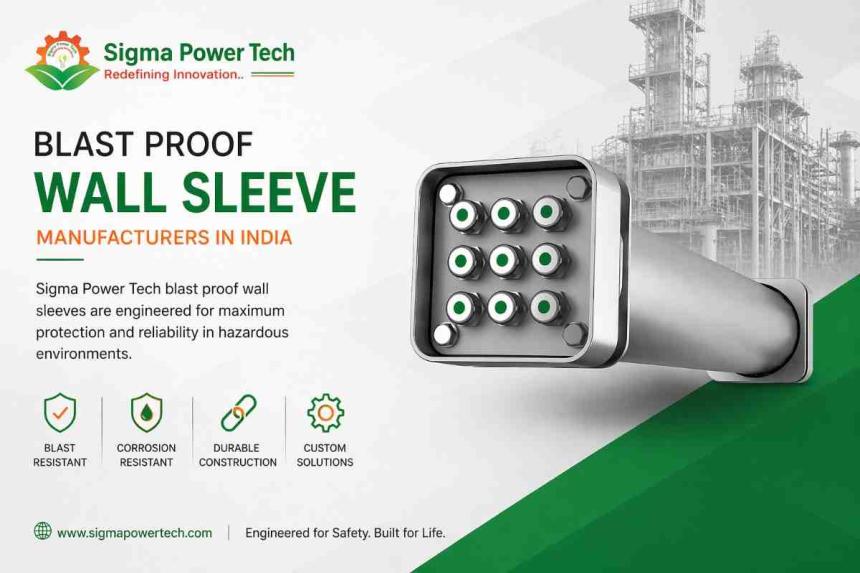
A Blast Protection Wall Sleeve is a specially engineered penetration system that allows pipes, conduits, ducts, and cable trays to pass safely through blast-resistant walls without compromising structural integrity. Unlike standard wall sleeves, these systems are designed to withstand explosion pressure while preserving the protective performance of the surrounding wall.
A high-quality Blast Protection Sleeve strengthens wall penetrations and forms an essential part of the blast-resistant barrier. Many models also provide gas-tight and water-tight sealing to prevent smoke, hazardous gases, moisture, and dust from entering protected areas.
Because utility penetrations are unavoidable in industrial facilities, properly engineered sleeves are vital for maintaining complete structural protection.
How Does an Explosion Protection Sleeve Work?
During an explosion, high-pressure shock waves travel rapidly through structures and place enormous stress on reinforced walls. Service penetrations are particularly vulnerable because they interrupt the continuity of the protective barrier.
An engineered Explosion Protection Sleeve distributes these loads into the surrounding wall, reducing stress concentrations and helping prevent cracking or structural failure. At the same time, its sealing system helps stop hazardous gases, smoke, and airborne contaminants from entering secure spaces after the blast.
This combination of structural reinforcement and environmental sealing significantly improves the resilience of high-risk facilities.
Features of the Best Explosion Protection Sleeve
When selecting the best solution for industrial safety, engineers should evaluate several key performance characteristics.
High Structural Strength: A dependable Blast Resistant Sleeve should be manufactured from heavy-duty steel or equivalent engineered materials capable of resisting severe blast loads without permanent deformation.
Certified Pressure Resistance: The sleeve should be tested for the blast pressure and impulse ratings required by the project. Certified performance provides confidence during critical operating conditions.
Superior Sealing Performance: A professionally engineered Blast Guard Sleeve provides reliable gas-tight and water-tight sealing that protects secure areas from hazardous gases, smoke, moisture, and contaminants.
Corrosion Protection: Industrial environments expose equipment to chemicals, humidity, offshore conditions, and temperature fluctuations. Corrosion-resistant coatings help maximise product lifespan while reducing maintenance requirements.
Long-Term Durability: A premium Protective Blast Sleeve should deliver reliable performance for decades while maintaining both structural strength and sealing effectiveness.
Where are Blast Protection Wall Sleeves Used?
Blast protection wall sleeves are essential in industries where explosion hazards require advanced engineering protection.
Common applications include:
- Oil and gas processing facilities
- Petrochemical plants
- Chemical manufacturing units
- Defence installations
- Ammunition storage facilities
- Power generation plants
- Underground bunkers and shelters
- Industrial control rooms
- Critical infrastructure projects
In these environments, a durable Blast Shield Sleeve helps preserve the integrity of blast-resistant walls while protecting essential service penetrations.
Factors Affecting Blast Protection Wall Sleeve Price
The cost of a blast protection wall sleeve depends on several engineering and project-specific considerations.
Important pricing factors include:
- Required blast pressure rating
- Sleeve diameter and wall thickness
- Material specification
- Corrosion-resistant coatings
- Gas-tight or water-tight sealing systems
- Custom fabrication requirements
- Installation complexity
- Quantity ordered
Although lower-cost alternatives may reduce initial expenses, they often lack certified testing, documented engineering performance, or long-term durability. Selecting a high-quality product usually provides better lifecycle value.
How to Choose Blast Proof Wall Sleeve Manufacturers in India
Selecting the right manufacturer is one of the most important procurement decisions.
Before purchasing, verify that the supplier offers:
- Proven blast protection engineering expertise
- Certified testing and technical documentation
- Custom manufacturing capabilities
- Compliance with recognised engineering standards
- Technical support during design and installation
- Strong quality assurance procedures
- Reliable after-sales service
Solutions such as the Sigma Power Tech Blast Sleeve are engineered for demanding industrial applications where precision manufacturing, dependable performance, and long-term reliability are essential.
Common Mistakes to Avoid
Many procurement teams unintentionally reduce blast protection by making avoidable specification mistakes.
Common errors include:
- Choosing products based only on price
- Installing conventional wall sleeves in blast-rated walls
- Ignoring certified engineering documentation
- Overlooking sealing performance requirements
- Selecting suppliers without blast engineering experience
- Failing to inspect completed installations
Avoiding these mistakes helps ensure that every wall penetration contributes to the overall strength of the blast protection system.
Now is an excellent opportunity to review your facility's safety setup and confirm that all service penetrations meet current engineering standards.
You should also consider upgrading your protection systems if existing installations rely on conventional wall sleeves rather than engineered blast-rated solutions.
To stay informed about the latest developments in industrial protection, explore more safety insights and strengthen your long-term safety strategy.
Conclusion
The best Explosion Protection Sleeve is one that combines structural strength, certified pressure resistance, reliable sealing performance, corrosion protection, and long-term durability. When integrated into a properly engineered Blast Protection Wall Sleeve system, it helps maintain the integrity of blast-resistant structures while protecting critical people, assets, and operations.
By partnering with experienced manufacturers and selecting products based on proven engineering performance rather than cost alone, organisations can significantly improve industrial safety and operational resilience. In hazardous environments, investing in high-quality blast protection sleeves is a responsible engineering decision that delivers lasting protection and dependable performance when it matters most.
ICSI vs IVF Difference: Understanding Fertility Treatment
ICSI vs IVF Difference: Understanding Fertility Treatment Many couples exploring fertil...




Department of Computer Engineering Laboratories for Technical Skill De...


السِّلْمُ الاجْتِمَاعِيُّ: مَسْؤُولِيَّةٌ تَجْمَعُنَا وَأَمَانٌ يَحْمِ...

Book Affordable Skip Bin Near Adelaide | GoGo Skip Bins
Planning to clean your home this weekend or remove old rubbish from your property? You don...