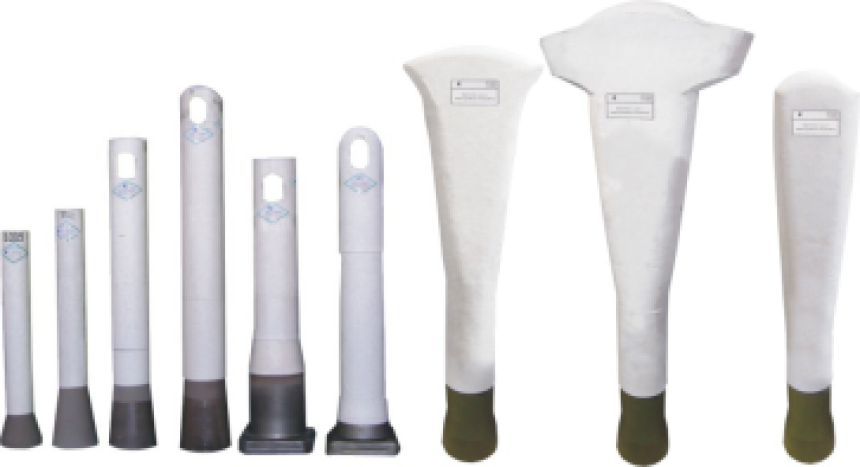

In modern continuous casting operations, the Sub-Entry Nozzle (SEN) is one of the most critical components ensuring the smooth transfer of molten steel from the tundish into the mold. SEN performance directly affects casting stability, flow control, tundish metallurgy, and final steel quality. Any failure or malfunction of the SEN can lead to production interruptions, quality defects, and serious safety incidents such as breakout events.
To guarantee safe, stable, and efficient steel casting, it is essential for steel plants to understand the common SEN problems and implement robust preventive measures. This article provides a comprehensive technical overview of SEN issues and presents effective ways to avoid them in industrial practice.
The SEN performs several key functions:
1.1. Protection Against Reoxidation
The SEN prevents molten steel from being exposed to the surrounding atmosphere as it flows into the mold. This minimizes:
- Oxygen pickup
- Nitrogen absorption
- Formation of non-metallic inclusions
1.2. Control of Flow Pattern
The SEN determines:
- Jet speed
- Jet angle
- Meniscus conditions
- Turbulence level
- Mold heat transfer
These factors are essential for preventing surface defects, breakout, or unstable solidification.
1.3. Prevention of Mold Powder Entrapment
A stable steel flow through a properly designed SEN reduces slag entrapment and prevents inclusion defects.
1.4. Erosion & Corrosion Resistance
The SEN must withstand:
- High-temperature thermal shock
- Erosion from molten steel
- Chemical attack from slag
- Pressure variations
Any deterioration compromises casting stability.
Before addressing prevention, understanding common SEN failures is crucial.
2.1. SEN Clogging
Clogging is the most significant issue encountered during casting.
Causes:
- Alumina buildup from deoxidized steel
- Reaction between steel and refractory
- Turbulence causing inclusion deposition
- Slag entrapment and infiltration
- Temperature drop leading to partial solidification
Consequences:
- Reduced steel flow rate
- Meniscus instability
- Shell thickness variations
- Casting speed reduction
- Risk of breakout
2.2. SEN Erosion and Corrosion
Gradual material loss from the inner bore or outer surface is common.
Causes:
- High jet velocity
- Chemical reaction with mold flux
- Steel flow containing inclusions or slag
- High tundish metal head pressure
Consequences:
- Enlargement of bore diameter
- Uncontrolled steel flow
- Vibration and hydrodynamic instability
2.3. SEN Cracking or Thermal Shock Failure
Thermal shock during preheating or steel contact can cause cracks.
Causes:
- Improper preheating procedure
- Rapid temperature fluctuation
- Uneven temperature distribution
Consequences:
- Sudden nozzle failure
- Ladle gate blockage
- Casting interruption
2.4. SEN Leakage at the Tundish Interface
Leakage at the SEN-tundish joint is dangerous.
Causes:
- Improper mounting
- Seal deterioration
- Misalignment
- Poor refractory seating quality
Consequences:
- Steel leakage
- Tundish breakout
- Safety hazards
2.5. SEN Submergence and Misalignment Issues
If immersion depth is incorrect:
- Too shallow → air aspiration and oxidation
- Too deep → excessive turbulence and mold flux disturbance
This section outlines practical, effective methods used by leading steel plants to avoid SEN issues.
3.1. Reducing SEN Clogging
3.1.1. Use of Advanced SEN Materials
Modern SENs use materials such as:
- Zirconia-based refractories (ZrO₂ > 70%) for alumina build-up resistance
- MgO-C composites for reducing reaction with steel
- ZrO₂ coatings on internal bore surfaces
These materials significantly reduce chemical interaction and deposition.
3.1.2. Optimizing Steel Deoxidation Practice
Steel plants should:
- Limit excess aluminum in Al-killed steels
- Consider partial Si-deoxidation
- Use calcium treatment to modify alumina inclusions into liquid Ca-aluminates
- Control dissolved oxygen levels
Calcium treatment is particularly effective for preventing alumina nozzle clogging.
3.1.3. Controlling Steel Temperature
Uniform casting temperature reduces:
- Partial freezing
- Viscosity increase
- Inclusion deposition
Ideal superheat control ±5°C improves SEN stability.
3.1.4. Electromagnetic Stirring (EMS)
EMS can:
- Reduce inclusion deposition
- Improve flow uniformity
- Minimize clogging tendency
3.2. Preventing Erosion and Corrosion
3.2.1. Use of Erosion-Resistant SEN Designs
Features that improve resistance:
- Thickened slag line area
- High-density zirconia structural reinforcements
- Optimized port geometry
3.2.2. Control of Mold Flux Behavior
Aggressive mold flux can severely erode SEN walls. Plants should:
- Use flux with proper viscosity and melting point
- Control CaO/SiO₂ ratio
- Reduce fluoride-based fluxes for corrosion-sensitive refractories
3.2.3. Optimization of Casting Speed
Very high casting speeds increase:
- Jet velocity
- SEN inner wall erosion
A controlled, steady casting speed prevents unnecessary erosion.
3.3. Avoiding SEN Thermal Shock and Cracking
3.3.1. Proper Preheating Procedure
SEN should be heated uniformly to 800–1100°C depending on material.
Key precautions:
- Use slow, steady heating curves
- Ensure even flame distribution
- Avoid direct flame impingement
3.3.2. Use of Thermal-Shock-Resistant Refractories
Materials such as:
- MgO-C
- Zirconia-spinel
- Alumina-graphite
provide excellent resistance to sudden temperature changes.
3.3.3. Avoiding Water Contact
Any moisture on SEN surface can cause explosive spalling.
3.4. Preventing SEN Leakage and Interface Problems
3.4.1. Improve Tundish Nozzle Seat Quality
Achievable by:
- Using high-density, low-porosity seating blocks
- Ensuring proper machining tolerance
- Avoiding cracks or surface roughness
3.4.2. Strict Installation Procedures
Operators must ensure:
- Correct placement
- Proper alignment
- Uniform tightening force
3.4.3. Use of High-Temperature Sealants
Specialized gaskets and sealant powders help prevent tundish–SEN leaks.
3.5. Preventing Misalignment or Wrong Immersion Depth
Proper SEN immersion depth depends on:
- Casting speed
- Mold dimensions
- Steel grade
3.5.1. General Guidelines
- Normal carbon steel: 50–90 mm
- Stainless steel: 70–100 mm
- High-speed thin slab casting: 100–130 mm
Correct depth prevents air aspiration and excessive mold turbulence.
Leading steel plants adopt improved SEN designs:
4.1. Anti-Clogging SEN Designs
- Swirling flow ports
- Enlarged upper bore
- Internal coatings
- Controlled surface roughness
4.2. Flow-Control SEN Types
- Multiport SEN
- Biased port SEN
- Bottom-entry SEN
These help stabilize flow patterns and minimize inclusion entrapment.
4.3. Computational Fluid Dynamics (CFD) Simulation
CFD allows engineers to:
- Predict flow patterns
- Analyze erosion risk zones
- Optimize port design
- Reduce turbulence
Modern CFD-based design reduces SEN problems by up to 40%.
Beyond design and materials, operational discipline is critical.
5.1. Tundish Metallurgy Control
- Clean steel practice
- Proper slag management
- Inclusion flotation via gas bubbling
5.2. Cleanliness of Ladle and Tundish
Any residual oxide can cause SEN buildup.
Strict cleaning schedule is essential.
5.3. Use of Argon Purging Through SEN
A small argon flow:
- Reduces clogging
- Maintains bore temperature
- Improves flow stability
Flow rate must be optimized to avoid:
- Blow holes
- Mold level fluctuations
5.4. Real-Time Monitoring
Use of sensors and live process data helps detect early signs of:
- Clogging
- Temperature drop
- Flow instability
The Sub-Entry Nozzle is a vital component in modern steel continuous casting. Problems such as clogging, erosion, cracking, and leakage can severely impact production efficiency and product quality. However, by applying a comprehensive strategy that covers material technology, SEN design, casting practices, tundish metallurgy, and operational control, steel plants can significantly minimize SEN-related issues.
Key takeaways include:
- Use advanced zirconia-based materials and anti-clogging coatings
- Optimize steel deoxidation and ensure proper calcium treatment
- Implement strict preheating and installation procedures
- Control casting speed, temperature, and mold flux properties
- Use argon purging and real-time monitoring systems
- Apply CFD-guided SEN design improvements
A well-maintained and properly operated SEN system enhances casting stability, reduces defects, increases productivity, and improves overall steel plant performance
More information please visit Henan Yangyu Refractories Co.,Ltd