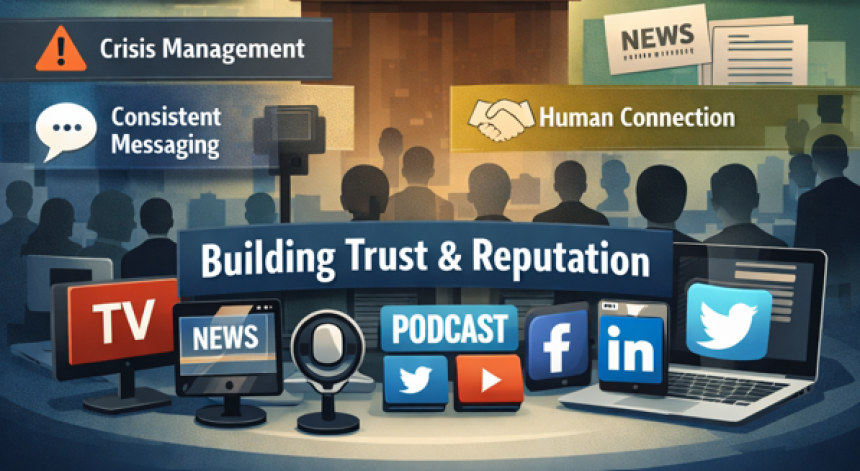

How Strategic Media Engagement Strengthens Corporate Credibility
Build trust and authority through strategic media engagement. Discover how proactive PR strengthens corporate credibility and long-term reputation.
In today’s hyperconnected environment, corporate credibility is no longer shaped solely by financial performance or advertising reach. It is shaped by perception—how stakeholders interpret a company’s values, leadership, transparency, and consistency. One of the most powerful tools for shaping that perception is strategic media engagement.
When organizations thoughtfully engage with the media—rather than reacting sporadically or defensively—they build authority, trust, and long-term reputational equity. Strategic media engagement is not about chasing headlines; it is about building sustained credibility through meaningful, consistent, and transparent communication.
Understanding Strategic Media Engagement
Strategic media engagement refers to a structured, proactive approach to interacting with journalists, news platforms, digital publishers, and industry media. It goes beyond issuing press releases. It involves:
- Establishing relationships with relevant media outlets
- Offering expert insights and commentary
- Providing transparent access to information
- Responding thoughtfully during crises
- Aligning media communication with corporate values and long-term strategy
Organizations that approach media engagement strategically treat it as a core leadership function, not just a marketing activity.
Why Corporate Credibility Matters More Than Ever
Corporate credibility directly influences:
- Investor confidence
- Customer loyalty
- Employee retention
- Partnership opportunities
- Regulatory relationships
In an era of social media scrutiny and real-time news cycles, a single negative narrative can escalate rapidly. However, companies that consistently engage with reputable media outlets build a reservoir of trust that protects them during difficult moments.
Credibility is earned when stakeholders believe three things about a company:
- It is competent.
- It is transparent.
- It acts with integrity.
Strategic media engagement reinforces all three.
1. Establishing Thought Leadership
When executives and subject-matter experts contribute insights to respected media outlets, they position the organization as an authority within its industry.
For example, leaders like Satya Nadella frequently articulate forward-looking perspectives in interviews and opinion pieces. By consistently communicating Microsoft’s innovation roadmap and ethical approach to AI, he reinforces the company’s leadership credibility.
Thought leadership through media:
- Demonstrates expertise
- Shapes industry conversations
- Differentiates the brand from competitors
- Influences policy and regulatory discussions
Rather than selling products, thought leadership sells competence.
2. Building Transparency Through Media Access
Trust grows when organizations are accessible and willing to answer difficult questions. Companies that provide clear, timely information during both successes and challenges signal confidence and integrity.
Consider how leaders such as Mary Barra addressed safety concerns during product recalls. Through open communication and direct engagement with major outlets like The Wall Street Journal, she reinforced accountability and commitment to reform.
Strategic transparency includes:
- Hosting media briefings
- Offering behind-the-scenes insights
- Addressing controversies directly
- Correcting misinformation quickly
Avoiding media does not protect credibility—engaging thoughtfully does.
3. Strengthening Crisis Resilience
Every organization faces reputational risks. The difference between reputational damage and reputational recovery often depends on how effectively leadership communicates through the media.
Strategic media engagement before a crisis builds established relationships with journalists. When a crisis emerges, these relationships ensure balanced reporting and accurate context.
Take the example of Johnson & Johnson during its historic product crises. The company’s willingness to communicate openly with media outlets and prioritize public safety helped it regain trust over time. Their approach remains a case study in crisis communication strategy.
Key crisis engagement principles include:
- Responding quickly
- Showing empathy
- Providing verifiable facts
- Updating information consistently
- Demonstrating corrective action
Silence creates suspicion. Strategic communication restores confidence.
4. Reinforcing Brand Narrative Consistency
Corporate credibility is strengthened when media coverage aligns with a company’s long-term mission and values. This alignment does not happen accidentally—it requires narrative discipline.
Organizations must:
- Develop clear messaging frameworks
- Train executives for interviews
- Align PR, marketing, and investor communications
- Monitor coverage for accuracy and tone
Companies like Patagonia have consistently aligned their environmental advocacy messaging with media engagement. As a result, their sustainability positioning feels authentic rather than performative.
Consistency across interviews, opinion articles, press releases, and social commentary ensures that credibility compounds over time.
5. Enhancing Investor and Stakeholder Confidence
Institutional investors and stakeholders often rely on reputable media coverage to gauge a company’s stability and leadership effectiveness. Positive media visibility in respected outlets signals legitimacy.
Coverage in platforms such as Bloomberg or Financial Times carries reputational weight because these institutions are known for rigorous reporting standards.
When executives engage in meaningful interviews or contribute thought pieces in such outlets, they communicate:
- Strategic clarity
- Financial discipline
- Market foresight
- Governance responsibility
This enhances investor trust beyond quarterly earnings reports.
6. Humanizing Corporate Leadership
Modern audiences expect authenticity from corporate leaders. Media engagement offers a platform to demonstrate personality, empathy, and values.
Profiles, interviews, and behind-the-scenes features allow executives to:
- Share personal motivations
- Explain decision-making processes
- Discuss challenges openly
- Connect emotionally with audiences
This human dimension reduces corporate distance and strengthens relational trust.
When leadership is visible and articulate, credibility becomes personal—not abstract.
7. Leveraging Digital and Social Media Integration
Strategic media engagement now extends beyond traditional press outlets. Digital-first publications, podcasts, LinkedIn thought leadership, and broadcast interviews amplify credibility across channels.
A well-placed interview can be:
- Repurposed into social media content
- Shared with stakeholders
- Integrated into investor presentations
- Used in employer branding campaigns
This multiplies the credibility impact of a single media engagement.
The key is integration: ensuring that earned media aligns with owned and shared media channels for cohesive messaging.
Best Practices for Strategic Media Engagement
To strengthen corporate credibility, organizations should:
- Develop a clear media engagement strategy tied to corporate objectives.
- Identify priority outlets aligned with industry relevance.
- Train spokespersons regularly.
- Prepare message frameworks for both opportunity and risk scenarios.
- Track media sentiment and refine positioning accordingly.
- Prioritize long-term relationships over short-term exposure.
Strategic engagement is about sustained trust-building—not one-off publicity wins.
The Long-Term Impact on Corporate Credibility
Corporate credibility is cumulative. Each transparent interview, insightful commentary, and responsible response adds to a company’s reputational capital.
Organizations that treat media as a strategic partner—not an adversary—gain:
- Stronger public trust
- Increased stakeholder confidence
- Greater resilience during crises
- Enhanced competitive positioning
- Long-term brand equity
In an environment where information spreads instantly and reputations can shift overnight, strategic media engagement is no longer optional. It is a foundational pillar of corporate governance and leadership.
Ultimately, credibility is built when what a company says publicly aligns consistently with what it does internally. Thoughtful, proactive, and authentic media engagement ensures that alignment is visible—and trusted—by the world.
Best cancer care treatment Hospitals India
Best cancer care treatment Hospitals India


How Experienced Mechanics Ensure Vehicle Reliability and Safety
Experienced Miranda mechanics understand how these systems interact and can identify devel...