How Residential Spray Foam Expands to Seal Gaps and Cracks
This article explains how professional residential spray foam insulation behaves during and after application, why it’s effective at sealing, and what homeowners or professionals should consider.
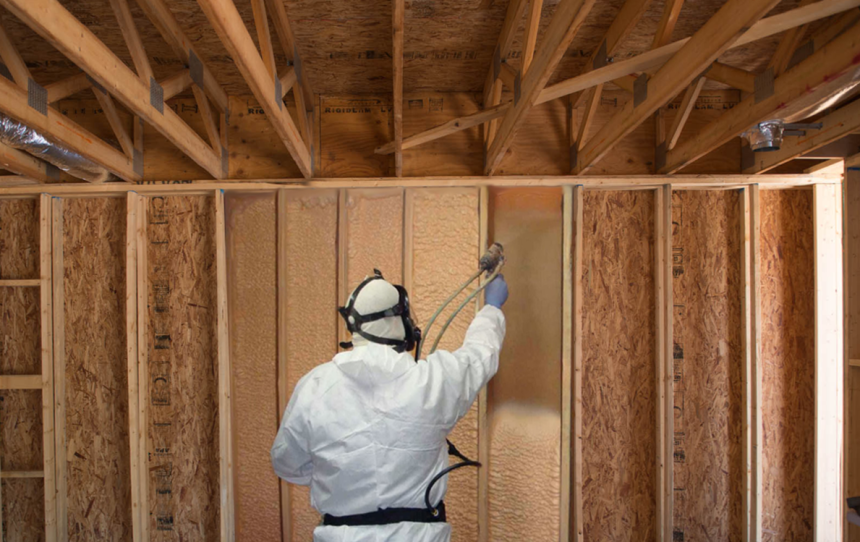
Spray foam insulation plays a critical role in modern home energy efficiency. Its ability to expand after application makes it especially useful for sealing gaps, cracks, and irregular spaces in attics, walls, and foundations. Unlike traditional insulation materials that are cut and fitted, spray foam conforms to the surfaces it touches, creating a continuous barrier that minimizes air leaks.
This article explains how professional residential spray foam insulation behaves during and after application, why it’s effective at sealing, and what homeowners or professionals should consider. Whether you’re involved in installation, inspection, or planning a retrofit, understanding how this material expands and performs is key to making informed choices.
Foam Expansion DynamicsSpray foam insulation begins as a liquid mixture that reacts chemically once sprayed. The expansion process is the primary feature that allows it to seal even the smallest cracks.
Chemical Reaction and Expansion BehaviorOnce applied, the two components (typically isocyanate and polyol resin) react, forming foam that expands rapidly within seconds. This expansion can multiply the original volume by 30 to 60 times depending on the formulation.
- Closed-cell spray foam has a higher density and expands less, usually 30–40 times its original size.
- Open-cell spray foam expands more, up to 100 times, making it effective for filling larger cavities.
The foam flows into cracks, seams, and voids before fully expanding. This flow behavior is key in sealing:
- Wall junctions
- Roof deck undersides
- Plumbing and electrical penetrations
After curing, the foam forms a semi-rigid barrier that physically blocks air and moisture movement.
How Gaps and Cracks Are Effectively SealedThe ability of spray foam to expand into hidden areas allows it to provide comprehensive sealing, which is critical for both thermal and air leakage control.
Air Sealing and Thermal EfficiencyBy eliminating pathways for air exchange, spray foam prevents energy loss through convection. This has measurable benefits:
- Reduces heating and cooling demand
- Stabilizes indoor temperature
- Blocks drafts, reducing discomfort
Unlike fiberglass or cellulose, which can leave gaps around obstacles, spray foam surrounds every surface it contacts.
Moisture and Vapor Barrier FunctionsClosed-cell foam in particular can also serve as a vapor retarder and moisture barrier:
- Seals humid air from entering walls or attics
- Helps prevent condensation-related issues
- Supports mold prevention by keeping assemblies dry
This sealing performance improves the overall building envelope integrity and reduces the risk of long-term structural damage.
Application Considerations That Impact ExpansionThe way spray foam is installed affects its ability to seal effectively. Factors like temperature, substrate condition, and mixing ratios can alter its expansion.
Installation Surface and ConditionsThe expansion rate and adhesion quality depend heavily on surface temperature and cleanliness:
- Cold surfaces may reduce expansion
- Damp or dusty surfaces may affect bonding
- Metal and wood substrates respond differently to foam adhesion
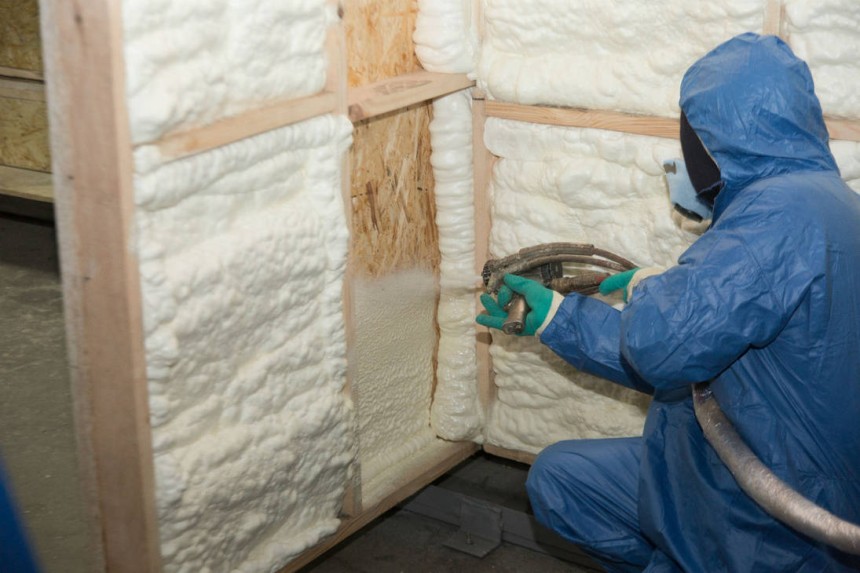 Professional Techniques to Control Expansion
Experienced spray foam contractor adjust spray technique to match cavity size and conditions. These best practices include:
- Warming the chemical tanks if needed
- Applying in controlled layers
- Monitoring foam reaction in real time
Proper technique ensures that the foam does not over-expand (risking pressure on surfaces) or under-expand (leaving gaps)
 Environmental and Structural Impact
Spray foam’s expansion contributes not only to energy performance but also to overall building durability and indoor air quality.
Reducing Building Movement and Air InfiltrationOnce cured, spray foam becomes a stable part of the structure:
- It reinforces wall assemblies against vibration and movement
- Prevents dust and allergens from entering
- Contributes to improved HVAC performance through airtightness
Properly installed foam insulation can last for decades without shrinking or sagging. Its resistance to pests and rot also makes it a reliable long-term solution for gap sealing.
Common QuestionsHow does spray foam find and fill small gaps?Spray foam remains in liquid form for a few seconds after application. During this time, it flows into any opening it contacts, then expands to fill the available space. The foam adheres tightly to surfaces, eliminating potential air channels.
Can spray foam crack or shrink after curing?Quality closed-cell foam resists shrinkage and cracking when applied correctly. Shrinkage typically results from improper mixing or substrate issues during installation. Cured foam remains dimensionally stable under normal conditions.
Is spray foam better than caulking for sealing?Yes, in most cases. While caulking works for narrow joints, spray foam covers wider areas and insulates at the same time. It’s more durable and less prone to drying out or separating over time.
Will spray foam affect wiring or plumbing?Spray foam does not damage wires or pipes but should not be applied inside electrical boxes or moving parts. Installers work around these elements to allow future access and maintain code compliance.
ConclusionResidential spray foam insulation expands to seal gaps and cracks by reacting chemically upon application, forming a durable, air-blocking barrier. Its unique ability to flow and then solidify gives it a strong advantage over traditional insulation types when it comes to energy efficiency and structural sealing.
From air infiltration reduction to long-term durability, the expansion properties of spray foam play a central role in its performance. Proper application ensures those benefits are realized without causing structural stress or leaving unfilled areas.
For reliable results in sealing residential structures, spray foam—especially closed-cell types—offers consistent performance when applied with expertise.
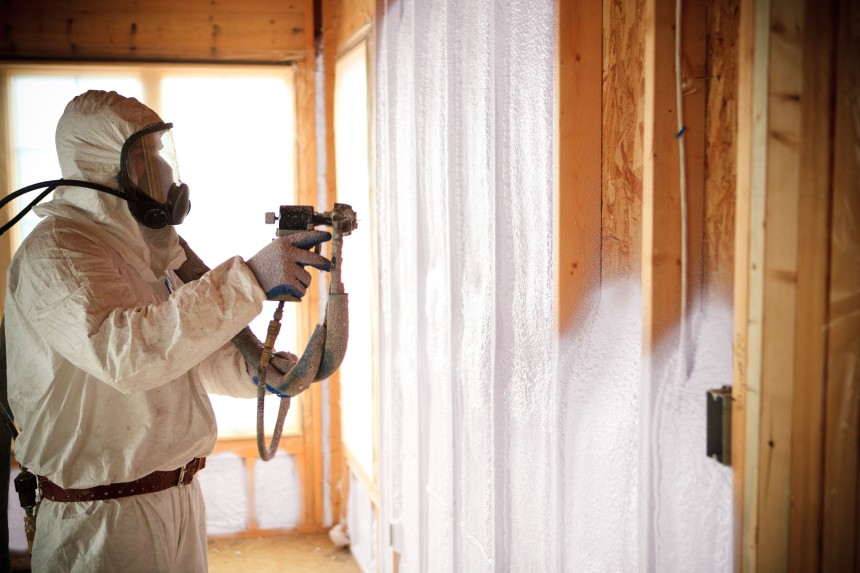 FAQs
How thick should spray foam be to seal a crack?
The thickness depends on the crack size and location. For air sealing, a 1- to 2-inch layer of closed-cell foam is usually enough. In larger cavities, multiple passes may be needed.
Is expanding foam waterproof once cured?
Closed-cell spray foam resists water penetration and can act as a moisture barrier. Open-cell foam is not waterproof and should not be used where water exposure is possible.
Can you apply spray foam over existing insulation?
It’s possible but not always ideal. Spray foam performs best when applied directly to clean, dry surfaces. Existing insulation may prevent proper adhesion or limit foam expansion.
Does spray foam continue to expand after it's installed?
No. The expansion process completes within minutes of application. Once cured, the foam stops growing and retains its shape permanently.
Is spray foam insulation safe in homes?
When installed and cured properly, spray foam is safe for residential use. Proper ventilation during installation ensures that fumes dissipate. Once hardened, it emits no VOCs or harmful substances.
Reviewer: Jacob Wright has 6 years of experience in spray foam insulation. He reviewed this content and made sure it focused on the real decisions small business owners deal with every day.

What Information Should You Give a Tow Truck Dispatcher During a Roads...