How Residential Spray Foam Cuts Monthly Utility Bills
The HVAC system is the heart of a home's comfort, but it's also the biggest energy hog.
Residential spray foam cuts monthly utility bills by creating a superior thermal and air barrier that dramatically reduces a home's energy waste. Most of a home's energy consumption, especially in a hot climate, goes toward running the heating and air conditioning (HVAC) system. Spray foam attacks energy loss in two ways: it has a high R-value to slow down heat transfer, and it expands to seal the cracks and gaps that allow conditioned air to leak out and outside air to leak in. This two-in-one solution significantly lessens the workload on the HVAC system, causing it to run less often and more efficiently, which translates directly to lower utility bills every month.
Let's break down exactly how Residential spray foam professional achieves these savings and why it's a more complete solution than traditional insulation types. The information here is based on fundamental principles of building science and the practical experience of home performance professionals.
The Two Thieves of Home EnergyTo understand how spray foam saves money, it's important to first understand the two primary ways a home wastes energy: heat transfer and air leakage.
1. Heat Transfer (Conduction and Radiation): Heat naturally moves from warmer areas to cooler areas. In the summer, this means the intense heat from outside is constantly trying to get into your cool, air-conditioned home. It conducts through the solid materials of your roof and walls. R-value is the measure of how well an insulation material can resist this conductive heat flow. A higher R-value means less heat gets through.
2. Air Leakage (Convection): This is the often-overlooked but equally significant energy thief. The average U.S. home has enough small cracks, gaps, and holes to equal a two-foot-square window being left open all day. Through these gaps, your expensive, conditioned air leaks out, and hot, dusty outside air infiltrates in. This forces your HVAC system to constantly cool down this new, hot air, wasting a tremendous amount of energy.
Traditional insulation like fiberglass only addresses the first problem. It does nothing to stop air leakage. This is where spray foam sets itself apart.
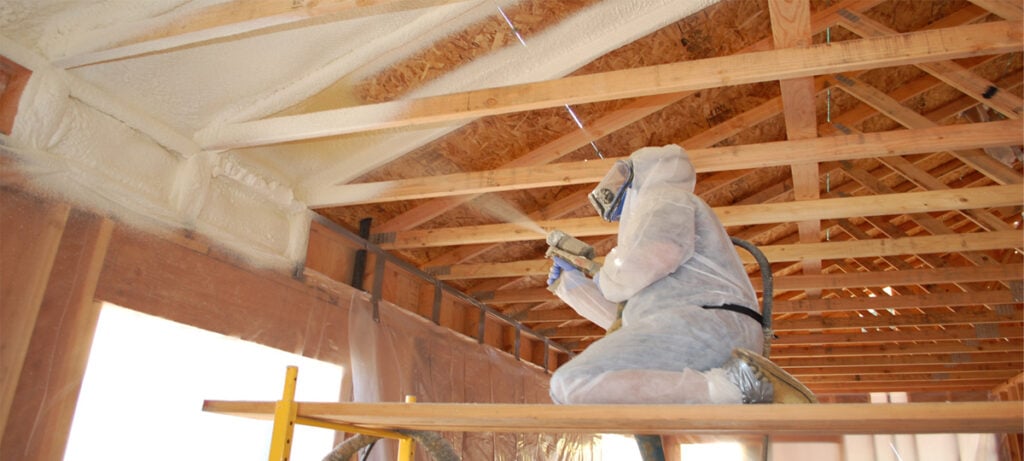
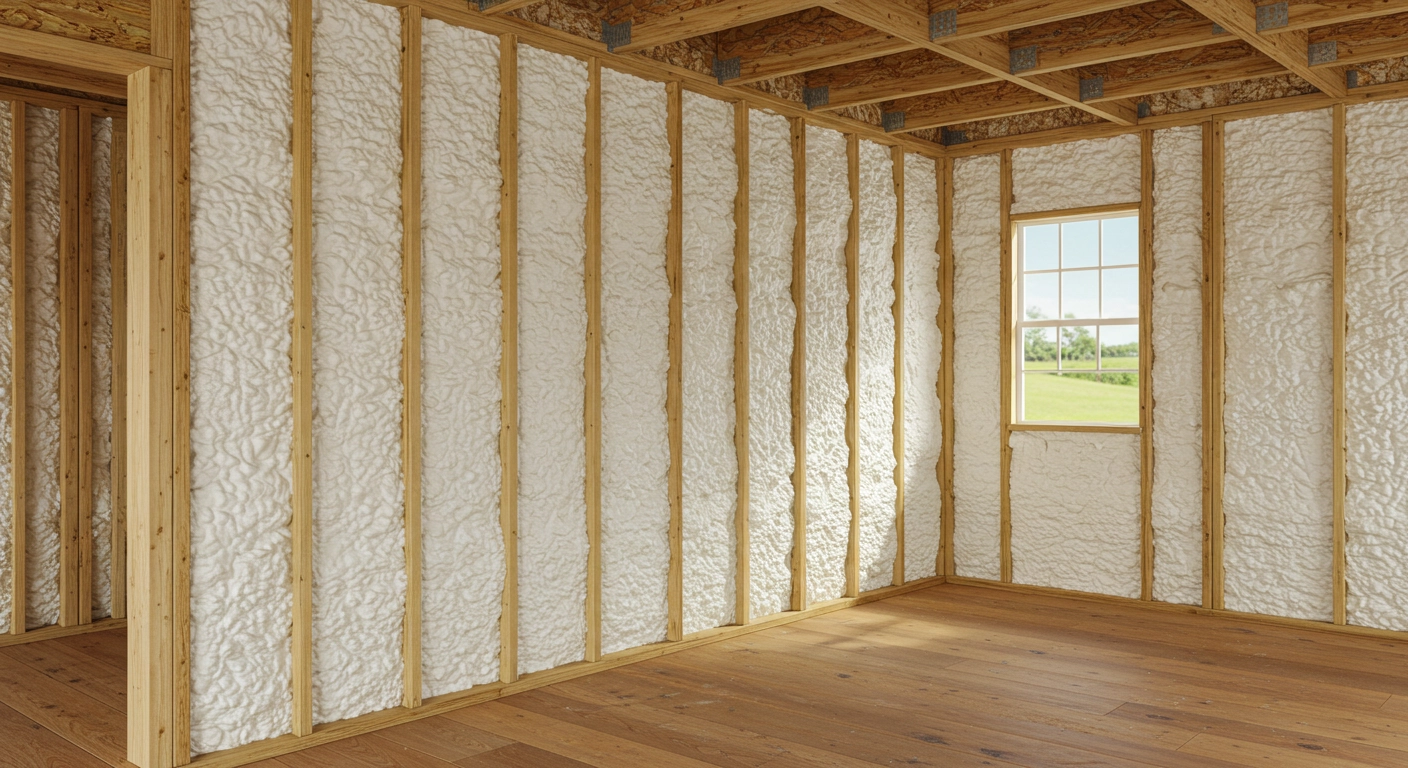
Spray foam insulation is unique because it provides both a high R-value and a near-perfect air seal in a single application. It is applied as a liquid that expands to fill every cavity, no matter how irregular, sealing every crack and crevice before it cures. This creates a complete, monolithic barrier that addresses both forms of energy loss simultaneously.
How Insulation Types Compare on Energy SavingsBy creating this comprehensive thermal and air barrier, spray foam keeps the conditioned air you've paid for inside your home and the extreme temperatures of the outside where they belong.
Reducing the Strain on Your HVAC SystemThe HVAC system is the heart of a home's comfort, but it's also the biggest energy hog. In a hot climate like Las Vegas, it can account for over 50% of a home's total electricity use during the summer. Every bit of heat that gets in or cool air that gets out makes this system work harder.
By drastically reducing this "heating and cooling load," spray foam allows the HVAC system to operate much more efficiently.
- Shorter Run Times: The system doesn't have to run as long or as often to maintain the temperature set on the thermostat.
- Longer Equipment Life: A system that isn't running constantly is under less strain, which can lead to fewer breakdowns and a longer operational lifespan, saving money on costly repairs or replacements.
- Potential for Smaller Units: In new construction, building with a spray foam envelope can often allow for the installation of a smaller, less expensive, and more efficient HVAC unit, saving money both upfront and over the long term.
Bonus Tip: Many homeowners find that after insulating with spray foam, they can set their thermostat a degree or two higher in the summer and still feel just as comfortable, providing an extra layer of energy savings.
To get the most out of an investment in spray foam, homeowners should consider a few key factors.
Where Is Your Home Losing the Most Energy?In a hot, sunny climate, the biggest source of heat gain is almost always the attic. The sun beats down on the roof all day, turning the attic into an oven that radiates heat down into the living space. Insulating the attic floor or the underside of the roof deck will provide the biggest bang for your buck. Walls are the second most important area, especially those that get direct sun in the afternoon.
Your Home's Current ConditionAn older home is likely to have much less insulation and more air leaks than a newer one, meaning it has more room for improvement and will see more dramatic savings from an upgrade. A professional energy assessment can use tools like a blower door to quantify how leaky a home is and show exactly where the biggest savings can be found.
Upfront Cost vs. Long-Term PaybackSpray foam has a higher upfront cost than some traditional insulation types. However, it's important to view it as a long-term investment. The money saved on monthly utility bills begins immediately and continues for the entire life of the home. The payback period, the time it takes for the energy savings to equal the initial cost, can often be just a few years.
Questions Homeowners Ask About Spray Foam and Utility BillsHow much money can I really save?This varies depending on the house, but the EPA's ENERGY STAR program states that homeowners can save an average of 15% on heating and cooling costs by air sealing and insulating. With a high-performance system like spray foam, savings of 20-40% on the heating and cooling portion of a utility bill are commonly reported.
Does spray foam pay for itself?Over time, yes. For many homeowners, the combination of energy savings, improved comfort, and increased home value makes it a worthwhile investment. The exact payback period depends on local energy costs and the home's starting condition.
Is open-cell or closed-cell spray foam better for saving money?Both are excellent at air sealing, which is where a huge portion of the savings comes from. Closed-cell foam has a higher R-value per inch, making it a better insulator in tight spaces, but it also costs more. An experienced contractor can help a homeowner decide which is the most cost-effective choice for their specific situation.
Will my house be too airtight?The old saying that a "house needs to breathe" refers to the uncontrolled leakage of air through cracks and gaps. Modern building science advocates for building a tight, well-insulated shell and then providing fresh air through controlled, mechanical ventilation. This is a much healthier and more efficient approach.
What has a better ROI new windows or spray foam?In most cases, upgrading insulation and air sealing provides a much faster and larger return on investment than replacing windows. The total surface area of a home's walls and ceilings is far greater than the area of its windows, so that's where the biggest energy losses usually occur.
A Permanent Solution for Lower BillsA spray foam Insulation contractor provides a permanent and effective solution for high utility bills. By creating a complete thermal and air barrier, it fundamentally improves the way a home performs. This allows the HVAC system to work less, saving a significant amount of money each month. For homeowners tired of watching their energy costs climb, it's an investment in a more affordable, comfortable, and sustainable future.
Getting a Clear Picture of Your Potential SavingsFor homeowners in the Las Vegas area who want to understand exactly how much energy their home is wasting and how much they could save, a professional home energy assessment is the best place to start. An expert can identify the key areas of energy loss and provide a clear plan for improvement. The team at Supreme Spray Foam LV offers these kinds of detailed evaluations. They can be contacted for a consultation by email at info@supremesprayfoamlv.com or by phone at (702) 904-9895.
Reviewer: Michael Carter reviewed this article using insight gained over 12 years in the spray foam business. His feedback focused on helping contractors reach new customers without overcomplicating their message.