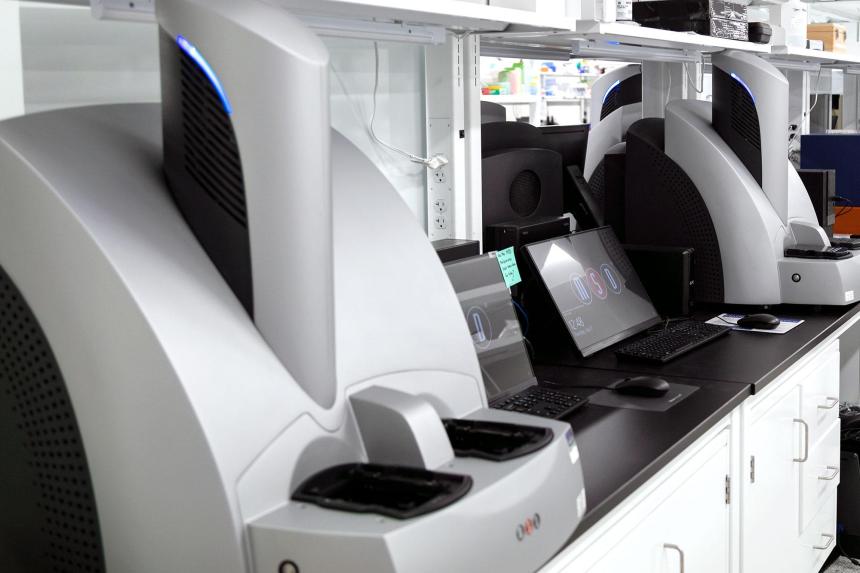

How MSD Mesoscale Assays Work in Biomarker Detection
MSD (Meso Scale Discovery) assays are highly sensitive, robust immunoassay platforms widely used in clinical and translational research for biomarker detection.
Meso Scale Discovery (MSD) technology utilizes electrochemiluminescence (ECL) combined with multi-array formats to achieve high sensitivity, a wide dynamic range, and multiplexing capabilities. Widely applied in drug development and diagnostics, this technology enables efficient biomarker detection from small sample volumes. This article details the principles, procedures, and applications of MSD assays in regulated bioanalytical contexts.
Basic Principles of MSD TechnologyThe MSD Mesoscale platform is founded on two core components: multi-array microplates and electrochemiluminescence detection.
- Multi-Array Microplates: MSD plates feature carbon-ink electrodes integrated at the well bottoms, serving as the immobilization surface for capture antibodies and the initiation site for the ECL reaction. These plates come in formats supporting multiplexed assays with single or multiple spots per well.
- Electrochemiluminescence (ECL): ECL uses SULFO-TAG™ labels conjugated to detection antibodies, which emit light upon electrical stimulation of the electrodes. This surface-initiated reaction minimizes sample matrix interference and enhances the signal-to-noise ratio compared to traditional chemiluminescence or fluorescence assays. Emitted light is captured by an integrated CCD camera for quantification.
This technology offers advantages over traditional Enzyme-Linked Immunosorbent Assay (ELISA) methods, notably in sensitivity, enabled by electrochemiluminescent detection and a solid-phase plate design.
Steps Involved in MSD AssaysThe MSD assay service workflow parallels sandwich ELISA but incorporates electrochemiluminescent detection steps as follows:
- Coating the Plate: Capture antibodies specific to target analytes are pre-coated or applied onto the carbon electrode surfaces.
- Sample Incubation: Biological samples (e.g., serum, plasma, cell lysate) are added to bind target biomarkers. Unbound components are removed by washing.
- Detection Antibody Incubation: Detection antibodies labeled with electrochemiluminescent SULFO-TAG™ bind to captured biomarkers, forming a sandwich complex, followed by washing to remove excess antibodies.
- Reading the Plate: A read buffer containing ECL co-reactants is added, and the plate is inserted into an MSD instrument.
- Signal Generation and Measurement: Applied voltage triggers light emission from SULFO-TAG™ labels, which is proportional to biomarker concentration and captured quantitatively by a CCD camera.
These assays provide quantitative results with a broad dynamic range and are conducted under Good Laboratory Practice (GLP) and regulatory standards to ensure data quality and compliance.
Must Read: Importance of Bioanalytical Laboratory in Clinical Trials
Applications of MSD Assays in Biomarker DetectionOwing to high sensitivity and multiplexing, MSD assays are essential in multiple drug development stages:
- Pharmacokinetics (PK): Quantification of drug concentrations for absorption, distribution, metabolism, and excretion analysis.
- Pharmacodynamics (PD): Measurement of drug effects via biomarker changes.
- Immunogenicity: Detection of anti-drug antibodies (ADAs) for immune response assessments.
- Toxicology: Monitoring biomarkers for organ toxicity or adverse effects in preclinical and clinical studies.
- Clinical Diagnostics: Assay development for disease diagnosis and patient stratification based on biomarker signatures.
High-quality Biomarker Services using MSD assay technology support regulatory submissions and clinical decision-making aligned with FDA, ICH, and GLP/GCLP standards.
Advantages and LimitationsThe advantages and limitations of this assay platform must be carefully considered to optimize its application in bioanalytical research and drug development.
Advantages- High sensitivity due to low background and strong signal amplification.
- Wide dynamic range (typically 3–4 log), reducing the need for repeat dilutions.
- Multiplexing capability enables simultaneous measurement of up to 10 analytes, conserving samples and reducing assay time.
- Low sample volume requirement is beneficial for limited or precious samples.
- Matrix tolerance minimizes interference from complex biological fluids.
- A proprietary platform requires specialized instruments and reagents, which entail a higher initial investment.
- Custom multiplex assay development requires extensive optimization to avoid antibody cross-reactivity.
- Instrument throughput considerations are important for very large-scale screening, even though assay runtimes remain efficient.
Understanding these strengths and constraints enables informed decisions that maximize the assay's effectiveness while managing practical and technical challenges.
Future Directions and OutlookMSD Mesoscale technology remains a cornerstone for sensitive, reproducible biomarker quantification and immunogenicity testing in bioanalysis. Its data-rich and efficient methods align with evolving needs for precise drug development analytics. As bioanalytical demands grow, the MSD assay service is expected to continue playing a pivotal role in advancing preclinical and clinical research.
ConclusionMSD Mesoscale assays offer high sensitivity, multiplexing, and wide dynamic range, enabling precise biomarker quantification with minimal sample volumes. This technology supports critical drug development applications, from pharmacokinetics to immunogenicity testing, while ensuring regulatory compliance. As assay platforms advance, MSD assays will remain central to delivering reliable, efficient bioanalytical data and accelerating breakthroughs in clinical research.

FIFA World Cup Final Tickets: Argentina Moves Closer to FIFA World Cup...