

How Long Does Spray Foam Insulation Take to Install and Off-Gas in Your Home?
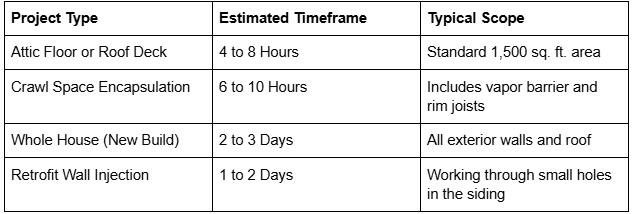
Standard residential spray foam installation usually takes one to two days for an average-sized home. While small projects like a crawl space or an attic might be completed in just a few hours, whole-house applications require more preparation and precision. This guide covers the timeline from the moment the rig arrives until your family can safely return to a newly insulated space.
Drawing from years of field experience in the insulation industry, professionals understand that timing depends on several factors. These include the size of the area, the type of foam used, and the current weather conditions. Proper planning ensures you get the best performance from your investment without unnecessary delays in your renovation schedule.
1. Factors Influencing Your Installation Timeline
The total spray foam installation time varies based on the accessibility of the work area. If crews have to move through tight attic hatches or work around heavy storage, the process naturally slows down. Professional teams prioritize clearing the work zone to keep the application moving smoothly and efficiently.
- Project size determines the amount of material needed and the number of passes required.
- Site preparation involves masking windows, doors, and finished floors to prevent overspray.
- Removing existing insulation can add a full day to the project if old fiberglass or cellulose is present.
- The thickness of the application changes how long it takes for the chemical reaction to finish.
Bonus Tip: You can speed up the process by ensuring all personal items are moved away from the walls and attic access points before the crew arrives.
2. Average Timelines for Different Home Projects
Small air sealing jobs are often completed in half a day, while larger residential structures require more coordination. Using foam spray insulation effectively means installers must manage the chemical temperature and the moisture levels in the wood framing. This careful monitoring ensures the foam adheres correctly and expands to the desired R-value.
3. The Duration of the Off-Gassing Process
Homeowners often askHow long spray foam insulation off-gases before they can re-enter their property. Most manufacturers recommend a 24-hour waiting period after the application is complete. This window allows the chemical reaction to stabilize and the ventilation system to clear any lingering odors or particulates from the air.
- Standard re-entry for high-pressure systems is usually 24 hours for residents.
- Low-pressure kits or smaller patch jobs might only require 1 to 4 hours.
- Continuous mechanical ventilation during and after the spray helps remove volatile organic compounds.
- Temperature and humidity affect how quickly the chemicals cure and stop releasing gases.
4. Understanding Different Application Methods
When searching for spray foam insulation near me, you will find two primary types: open-cell and closed-cell. Open-cell foam is lighter and expands significantly, making it excellent for soundproofing and quickly filling large cavities. Closed-cell foam is denser and provides a higher R-value per inch, though it may take slightly longer to apply because it is often installed in multiple layers.
Comparing Open-Cell and Closed-Cell Performance
Open-cell foam expands up to 100 times its liquid volume, which is ideal for interior walls. Closed-cell foam acts as a vapor barrier and adds structural strength, making it the preferred choice for crawl spaces or exterior applications. Both types are effective spray foam uses for improving home comfort and energy efficiency.
Professional Equipment and Mixing
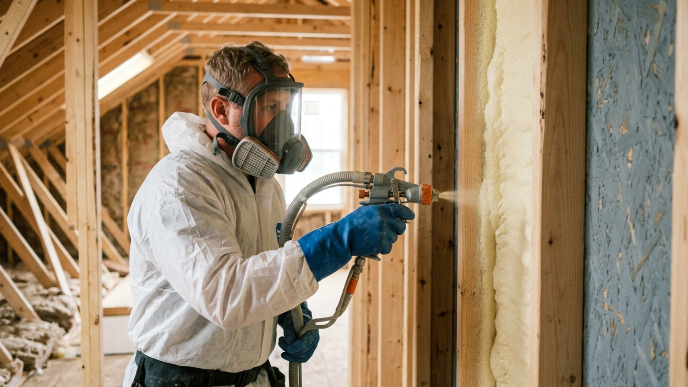
Professionals use specialized rigs to maintain the perfect 1:1 chemical mix ratio. This precision is vital to ensuring the spray foam installation stays on schedule and the material cures properly. Inconsistent mixing can lead to lingering odors or poor adhesion.
Bonus Tip: Ask your installer if they use low-VOC formulas, which can sometimes reduce the required vacancy time for your home.
5. How Does Weather Affect the Installation Speed?
Regional climate heavily dictates the spray foam installation time on any given day. In humid areas like the Southeast, installers must check the wood's moisture content before starting. If the wood is too wet, the foam will not bond, leading to future delamination and performance issues.
- Cold temperatures require the chemical drums to be pre-heated for several hours.
- High humidity can cause the foam to react too quickly or bubble.
- Summer heat may require installers to work in shifts to avoid heat exhaustion in attics.
- Rainy days might delay exterior wall applications or crawl space work.
6. Using Spray Foam for Air Sealing and Energy Gains
One of the most effective spray foam for air sealing techniques involves targeting the "envelope" of the home. This includes the rim joists, top plates, and around plumbing penetrations. By reducing air movement, you reduce the workload on your HVAC system, which can lead to lower monthly utility bills and a more consistent indoor temperature.
- Sealing rim joists prevents cold floors in the winter.
- Closing gaps around electrical boxes stops drafts behind your drywall.
- Attic air sealing prevents the "stack effect," in which warm air escapes through the roof.
- Proper sealing is often a requirement for modern energy code compliance.
7. How to Prepare Your Property for a Smooth Installation
Before the team arrives, you should take specific steps to ensure the spray foam installation stays on schedule. Clear paths to the attic and crawl space are essential for dragging heavy hoses. If you are doing a renovation, ensure that other contractors, such as electricians or plumbers, have finished their rough-in work so they don't have to cut through the new foam later.
- Turn off pilot lights and HVAC systems to prevent fumes from circulating.
- Cover furniture in nearby rooms with plastic sheeting as a precaution.
- Arrange for pets and family members to stay elsewhere for at least 24 hours.
- Ensure the installers have a clear space to park their large equipment truck.
How Should You Evaluate a Local Specialist?
When you search for "closed-cell spray foam near me," focus on the company's credentials and equipment. Reliable professionals will provide a clear contract detailing the foam thickness and the specific areas to be covered. They should also be able to explain their safety protocols and how they manage ventilation during the curing process.
- Verify that the company carries specialized insurance for spray-foam applications.
- Check for certifications from the Spray Polyurethane Foam Alliance (SPFA).
- Review recent feedback from other homeowners in your specific climate zone.
- Confirm they offer a post-installation walkthrough to check for gaps.
Get a Free Quote for Expert Support and Home Comfort
If you are ready to improve your home's thermal performance, reaching out to a professional is the best next step. Premier Insulation offers a wide range of services, including Residential Spray Foam Insulation and Crawl Space Encapsulation, to help you manage moisture and energy loss. Whether you need a quick quote for an attic project or a full evaluation of your commercial property, their team provides the expertise needed for a successful application. You can contact them at (229) 554-3939 or via email at [email protected] to discuss your specific requirements. Their office is located in Georgia, and you can find their service area via this Map.
Key Takeaways for Homeowners
A successful project relies on understanding the timeline and the material's safety requirements. Most installations wrap up within 48 hours, but the 24-hour curing period is the most important part for your safety. By choosing the right material for your climate and ensuring the site is prepared, you can maximize the benefits of your new insulation. Always prioritize ventilation and follow the manufacturer's re-entry guidelines to ensure a healthy home environment.
Which Questions Do Homeowners Ask Most Frequently?How do I know if the foam was installed correctly?
You should look for a consistent texture and full coverage, with no large voids. The foam should be firm to the touch once cured and should not have a lingering "fishy" or chemical smell after the 24-hour mark.
Can I stay in the house during the application?
It is highly recommended that all occupants and pets leave the home during the spray and for the following 24 hours. The chemicals used during the liquid application phase require professional-grade respirators for safety.
Does the foam lose its R-value over time?
Unlike fiberglass, which can sag, or cellulose, which can settle, spray foam is dimensionally stable. Once it cures, it stays in place for the life of the building, maintaining its insulating properties and air-sealing capabilities.
Is spray foam effective for soundproofing?
Open-cell foam is particularly good at absorbing sound waves, making it a popular choice for media rooms or walls between bedrooms. Closed-cell is denser and better for structural strength and moisture control.
Will spray foam cause my roof to rot?
When installed correctly by professionals who understand moisture transport and attic ventilation, spray foam does not cause rot. It is often used on the underside of roof decks to create a conditioned attic space.
Quality Driving Education and Behind-the-Wheel Lessons for Northern Vi...



15 Effective Play Therapy Activities for Children: Creative Ways to Bu...



Best Time to Get Pregnant: Understanding Your Fertile Window
Best Time to Get Pregnant: Understanding Your Fertile Window Planning a pregnancy is an...
