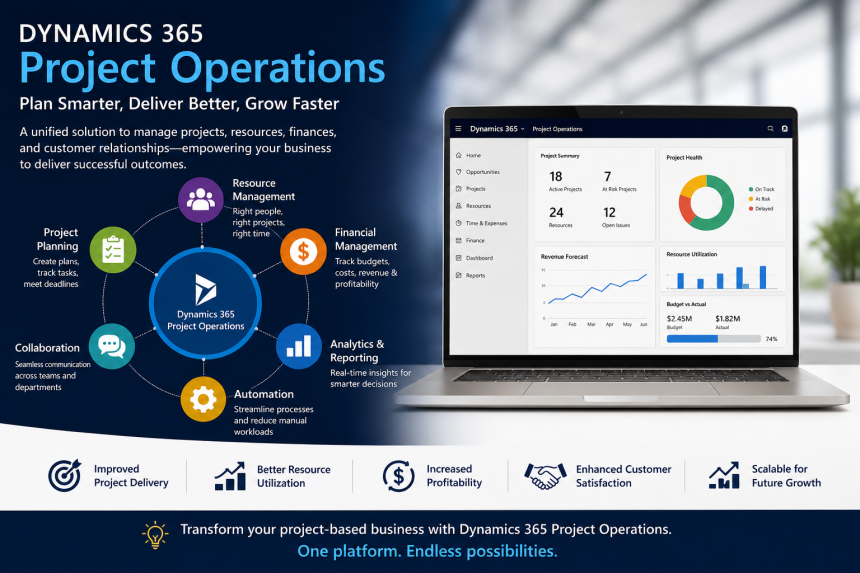

How Intelligent Project Management Improves Business Success
Streamline project planning, resource management, and financial tracking with Dynamics 365 Project Operations to improve efficiency and deliver projects successfully.
Introduction
Every successful project begins with a clear vision, but achieving that vision requires effective planning, skilled resource management, accurate budgeting, and seamless collaboration. As businesses expand, managing multiple projects across departments becomes increasingly challenging. Relying on spreadsheets, disconnected software, or manual processes often results in delayed deliveries, poor communication, budget overruns, and limited visibility into project performance.
To stay competitive, organizations need a unified solution that connects every aspect of project management. From capturing new business opportunities to planning resources, tracking finances, and analyzing project performance, an integrated platform helps businesses streamline operations while improving decision-making. By replacing isolated systems with intelligent technology, companies can deliver projects on time, maximize profitability, and build stronger relationships with clients.
Whether operating in consulting, engineering, information technology, manufacturing, or professional services, businesses benefit from modern project management solutions that provide complete transparency throughout the project lifecycle.
Why Connected Project Management Is Essential
Projects involve multiple stakeholders, including sales teams, project managers, finance departments, operations professionals, and customers. When these groups work in separate applications, information becomes fragmented, making collaboration difficult and slowing business processes.
Disconnected systems often create challenges such as duplicate data entry, inconsistent reporting, communication delays, and inaccurate forecasting. These issues reduce productivity and increase operational risks.
A connected project management platform eliminates these barriers by providing one centralized workspace where every department can access real-time information. This improves collaboration, enhances visibility, and enables organizations to make informed business decisions with confidence.
Common Challenges in Project-Based Businesses
Organizations managing customer projects frequently encounter several operational challenges that affect performance.
Resource Scheduling
Assigning employees without understanding their skills, availability, and workload can lead to resource conflicts and reduced productivity.
Budget Management
Monitoring project costs manually often delays financial reporting, making it difficult to identify budget issues before they affect profitability.
Limited Project Visibility
Managers need instant access to project progress, financial performance, and resource utilization, but disconnected systems make obtaining accurate information difficult.
Communication Gaps
Poor coordination between departments can delay approvals, reduce efficiency, and create inconsistent customer experiences.
Manual Administrative Processes
Tasks such as expense reporting, timesheet approvals, invoice creation, and project documentation consume valuable employee time and increase administrative overhead.
How Dynamics 365 Project Operations Simplifies Complex Project Management
Organizations seeking greater operational efficiency are increasingly implementing Dynamics 365 Project Operations because it combines project planning, resource management, financial control, automation, collaboration, and analytics into a single cloud-based business solution.
Instead of switching between multiple software applications, businesses can manage every phase of the project lifecycle within one platform. From opportunity management and project planning to execution, budgeting, billing, and reporting, the system provides complete visibility into business operations.
The solution enables organizations to:
- Plan projects with greater accuracy
- Allocate resources intelligently
- Track budgets and expenses in real time
- Improve collaboration across departments
- Automate routine business processes
- Monitor project profitability
- Generate meaningful performance reports
- Enhance customer communication
- Support data-driven business decisions
By integrating project operations with financial management, businesses gain complete control over project performance while improving overall efficiency.
Key Features That Drive Project Success
Intelligent Project Planning
Effective planning lays the foundation for successful project execution. Managers can create structured project plans, establish milestones, define dependencies, assign responsibilities, and monitor progress through interactive dashboards.
Improved planning helps reduce delays while increasing accountability across teams.
Resource Optimization
People are among the most valuable assets within any organization.
Advanced resource management enables businesses to allocate employees according to:
- Skills and certifications
- Experience
- Availability
- Current workload
- Project priorities
Optimized resource scheduling improves productivity while reducing employee burnout and scheduling conflicts.
Financial Management
Successful projects require continuous financial oversight.
Integrated financial capabilities allow organizations to monitor:
- Planned budgets
- Actual project costs
- Revenue forecasts
- Profit margins
- Customer invoices
- Financial performance
Real-time visibility enables project managers to identify risks early and make informed financial decisions.
Time and Expense Tracking
Employees can submit digital timesheets and expense reports through standardized workflows, allowing managers to review and approve submissions quickly.
Automation improves billing accuracy while reducing paperwork and administrative effort.
Advanced Analytics and Reporting
Interactive dashboards transform operational data into meaningful business insights.
Organizations can evaluate:
- Project progress
- Resource utilization
- Budget performance
- Revenue trends
- Customer engagement
- Operational efficiency
- Project profitability
Access to real-time analytics supports faster decision-making and continuous business improvement.
Industry Applications
An integrated project management platform delivers measurable benefits across multiple industries.
Information Technology
Manage software implementation, cloud migration, application development, and managed services with greater visibility.
Professional Services
Improve consulting engagements through efficient scheduling, financial management, and automated invoicing.
Engineering
Coordinate engineering projects with better planning, budgeting, and workforce management.
Construction
Monitor procurement, subcontractors, budgets, timelines, and project performance from a centralized platform.
Manufacturing
Manage installation projects, maintenance services, engineering operations, and customer engagements more effectively.
Strengthening Collaboration Across Departments
Project success depends on effective collaboration between every department involved in project delivery.
A centralized platform enables project managers, sales teams, finance professionals, executives, and customer service representatives to access the same project information. This improves transparency, reduces duplicate work, and ensures everyone works toward common business goals.
Better collaboration also enhances customer satisfaction by providing accurate updates and improving responsiveness throughout the project lifecycle.
Automating Business Processes
Manual processes often reduce productivity and increase operational costs.
Automation simplifies routine activities, including:
- Project creation
- Resource scheduling
- Workflow approvals
- Budget monitoring
- Invoice generation
- Expense approvals
- Timesheet management
- Status notifications
Reducing repetitive administrative work allows employees to focus on innovation, customer relationships, and strategic initiatives.
Making Smarter Decisions with Business Intelligence
Reliable business data enables organizations to improve operational performance continuously.
Comprehensive reporting helps leadership evaluate:
- Project profitability
- Resource productivity
- Financial performance
- Revenue growth
- Customer satisfaction
- Operational efficiency
- Future resource demand
These insights support better planning, stronger forecasting, and long-term business success.
Preparing for Future Growth
As organizations grow, project complexity naturally increases. Managing larger teams, multiple customers, and expanding operations requires technology that scales with business needs.
A connected project management platform provides standardized workflows, centralized information, and intelligent automation that help organizations manage growth without increasing operational complexity. Businesses can confidently deliver larger projects while maintaining profitability, efficiency, and service quality.
Conclusion
Modern organizations require more than traditional project management software to remain competitive. Successful project delivery depends on intelligent planning, efficient resource management, financial visibility, collaboration, and real-time decision-making.
By integrating every stage of the project lifecycle, Dynamics 365 Project Operations empowers businesses to streamline operations, automate repetitive processes, improve financial control, and deliver projects more efficiently. Organizations that adopt a connected project management platform can increase productivity, strengthen customer relationships, enhance profitability, and build a scalable foundation for long-term business growth.
As project demands continue to evolve, investing in a comprehensive project management solution enables businesses to stay agile, competitive, and prepared for future opportunities.
Flower Box Stand for Opening Ceremony and Condolences
Flower Box Stand for Opening Ceremony and Condolences


Looking for Tax Debt Relief Services in Canada? Read This Guide
Discover how tax debt relief services work in Canada, from CRA payment arrangements and ta...