How Insulation Removal Prepares Your Home for Upgrades
Removing existing insulation is the first step to preparing your home
Upgrading a home often means improving comfort, efficiency, and value. Removing old or damaged insulation plays a key role in this process. It clears the way for new materials, reveals hidden problems, and ensures the upgrade performs as expected. This article explains how insulation removal prepares your home for upgrades, offering clear guidance for residents and commercial property owners.
Why Removing Old Insulation Matters Before Upgrades
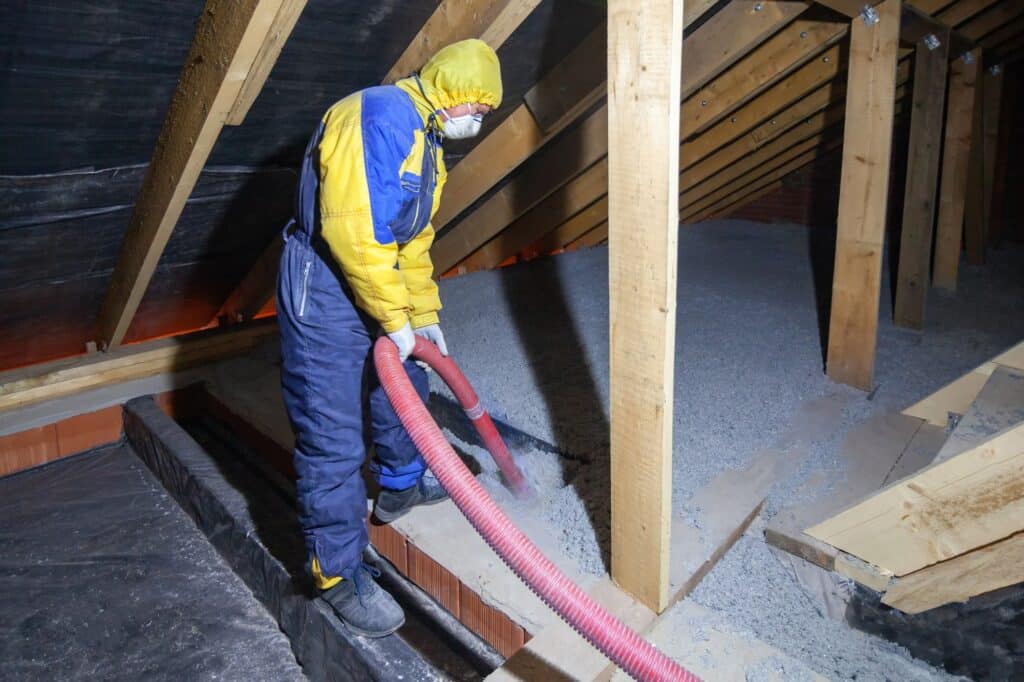
Removing existing insulation is the first step to preparing your home for upgrades such as installing new insulation, HVAC systems, or remodeling. Old insulation can degrade over time, lose effectiveness, or harbor mold and pests.
The Role of Insulation Removal
Removing insulation uncovers the condition of walls, ceilings, and floors. It helps detect moisture damage, structural issues, and contamination that could affect the upgrade’s success.
Impact on Upgrade Quality
New insulation installed over damaged or compromised surfaces may not perform well. Removing old insulation eliminates barriers and allows for proper installation of new materials, improving overall energy efficiency and indoor comfort.
Identifying When Insulation Removal Is Necessary
Not all insulation needs removal. Some materials remain effective for decades, but several signs indicate when removal is required.
Signs to Remove Insulation
- Visible mold or mildew
- Water or moisture damage
- Pest infestations within insulation
- Compacted or deteriorated insulation material
- Odors or allergens linked to insulation
- Upgrades that require new insulation types or configurations
Insulation Types and Removal Considerations
Different insulation materials require different removal methods. For example:

Understanding your insulation type informs the best removal approach and safety precautions.
How Insulation Removal Supports Energy Efficiency Upgrades
Energy efficiency improvements often involve upgrading insulation. Removing old, ineffective insulation ensures the new layer functions at maximum capacity.
Eliminating Energy Loss Points
Old insulation that is damaged or compressed can create gaps and air leaks. Removal allows sealing cracks, reinforcing barriers, and installing modern insulation that better prevents heat transfer.
Enhancing HVAC System Performance
Clean wall cavities and properly installed insulation reduce heating and cooling loads. This supports HVAC upgrades by lowering energy consumption and extending system lifespan.
Insulation Removal’s Role in Health and Safety During Upgrades
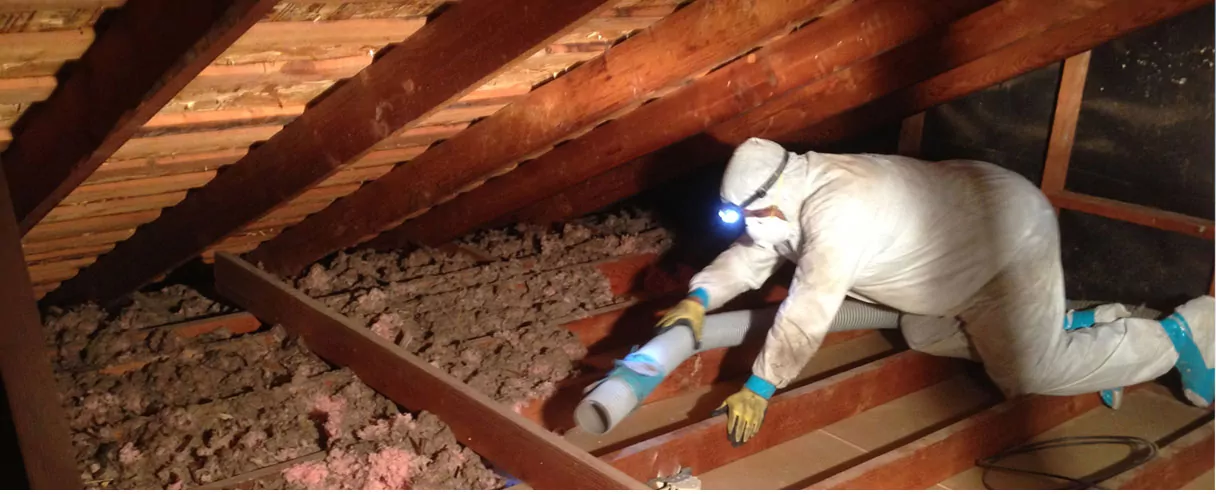
Removing old insulation helps address indoor air quality and safety risks before upgrades begin.
Mold and Moisture Mitigation
Damaged insulation often traps moisture, encouraging mold growth. Removing it exposes affected areas for treatment and prevents mold spores from circulating during renovation.
Pest and Allergen Removal
Rodents, insects, and dust mites can inhabit old insulation. Extraction reduces allergen presence and pest-related damage, creating a safer environment.
Practical Steps in the Insulation Removal Process
Understanding the steps involved clarifies how insulation removal integrates into home upgrades.
Inspection and Assessment
A thorough inspection identifies insulation conditions, potential hazards, and scope of removal needed.
Preparation and Containment
Preparing the workspace includes sealing off areas to prevent dust and debris spread. Safety equipment is required to protect workers and occupants.
Removal and Disposal
The insulation is carefully removed using appropriate tools and disposed of according to local regulations.
Cleaning and Repair
Once removed, the exposed structure is cleaned and repaired as necessary before new insulation installation.
Comparing Insulation Removal Methods
Choosing the right removal method depends on insulation type, home layout, and upgrade goals.
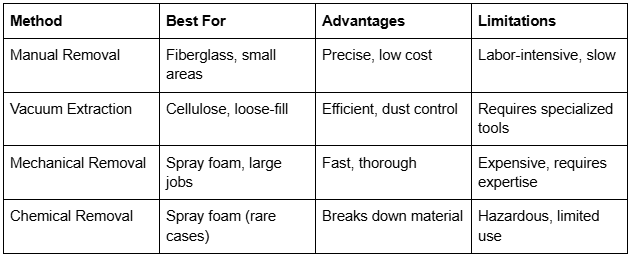
Selecting an appropriate method ensures effective and safe removal.
Conclusion
Removing old insulation prepares your home or commercial property for upgrades by ensuring a clean, safe, and efficient foundation for new materials. It reveals hidden damage, eliminates contaminants, and maximizes the performance of energy-saving improvements. Choosing the right removal method depends on insulation type and project scope, but proper extraction always supports long-term results.
Taking the time to remove existing insulation can prevent costly repairs and improve the success of your home upgrade. Understanding when and how to remove insulation helps property owners make informed decisions that protect their investment.
FAQs
How do I know if my insulation needs to be removed before an upgrade? Look for signs such as mold, moisture damage, pest infestation, or compressed insulation. If the existing insulation does not meet current standards or blocks planned upgrades, removal is necessary.
What safety precautions are needed during insulation removal? Use protective gear like masks, gloves, and goggles. Seal work areas to contain dust and debris. Follow disposal regulations for materials containing contaminants or hazardous substances.
Can insulation removal improve indoor air quality? Yes, removing damaged or moldy insulation reduces allergens, dust, and spores that affect air quality. This is especially important before remodeling or HVAC upgrades.
Is professional insulation removal always required? Professional removal is recommended for spray foam, large areas, or hazardous materials. Small fiberglass removal may be done safely by homeowners if proper precautions are taken.
How does insulation removal affect energy efficiency upgrades? Removing ineffective or damaged insulation allows proper installation of new materials. This reduces air leaks and thermal bridging, boosting overall energy efficiency.
Author: Jared Baker, Owner and Director of Business, brings deep local insight and strong business expertise to Armored Insulation as a native of Mayfield. While continuing a full-time role as a Staff Officer with a federal natural resources agency, he has successfully built multiple ventures, including Bluegrass Commercial Cleaning, Animal Tales, and Undercover Properties. As Armored’s Business and Marketing Manager, he plays a key role in upholding the company’s focus on delivering top-tier service.
Reviewer: Mia Clark used her 9 years of experience in spray foam to review this article and offered input focused on helping companies make their services easier to understand and market effectively.