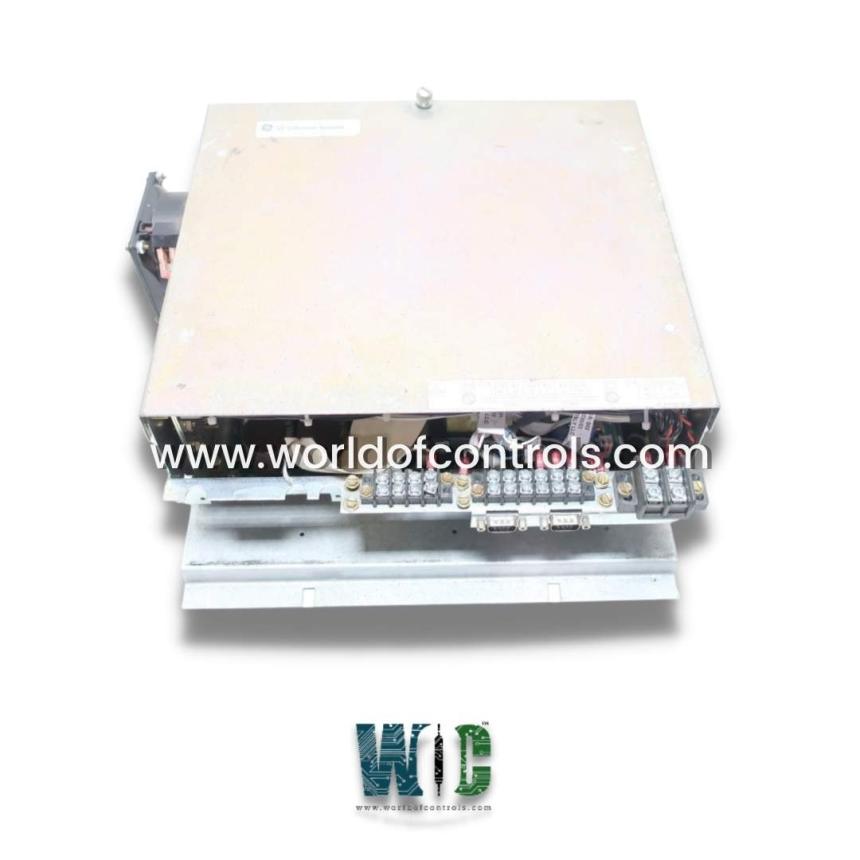

How Does the IS230TNIDH3A Discrete Input DIN-Rail Module Improve Signal Monitoring in Industrial Control Systems?
In modern industrial environments, accurate and reliable signal monitoring is fundamental to ensuring efficient and safe operations
In modern industrial environments, accurate and reliable signal monitoring is fundamental to ensuring efficient and safe operations. Industrial control systems (ICS), particularly in sectors such as power generation, oil and gas, and manufacturing, depend heavily on precise input data to execute control logic. One of the key components enabling this functionality is the discrete input module. Among these, the IS230TNIDH3A Discrete Input DIN-Rail Module stands out as a robust and efficient solution for improving signal monitoring.
Understanding the Role of Discrete Input Modules
Discrete input modules are responsible for receiving binary signals from field devices such as switches, sensors, and relays. These signals typically represent two states—on/off, open/closed, or high/low—and are essential for initiating control actions within a system.
For example, a limit switch indicating whether a valve is open or closed sends a discrete signal to the control system. The module processes this signal and communicates it to the controller, which then determines the next course of action. Without reliable discrete input modules, industrial systems would lack the real-time visibility needed for precise control.
Key Features of the IS230TNIDH3A Module
The IS230TNIDH3A module is specifically engineered to meet the demanding requirements of industrial environments. One of its defining characteristics is its DIN-rail mounting design, which allows for quick installation and efficient use of panel space. This makes it particularly suitable for modular control system architectures.
Additionally, the module supports multiple input channels, enabling it to handle a large number of field signals simultaneously. Its electrical isolation capabilities protect both the module and the control system from voltage spikes and electrical noise, ensuring long-term reliability.
Another notable feature is its compatibility with advanced turbine control systems and distributed control architectures, making it a versatile component in complex industrial setups.
Enhanced Signal Monitoring Capabilities
One of the primary advantages of the IS230TNIDH3A module is its ability to enhance signal monitoring accuracy. It achieves this through real-time signal acquisition, ensuring that changes in field device status are immediately detected and processed.
Signal integrity is a major concern in industrial environments due to electromagnetic interference (EMI) and noise. The module incorporates filtering and isolation techniques to minimize these disturbances, ensuring that only accurate and clean signals are transmitted to the control system.
Furthermore, its high-speed communication interface allows seamless data transfer between the module and the central controller. This ensures that decision-making processes are based on up-to-date information, improving overall system responsiveness.
Reliability and Fault Detection
Reliability is critical in industrial operations, where even minor disruptions can lead to significant downtime and financial losses. The IS230TNIDH3A module addresses this through built-in diagnostic features that continuously monitor its operational health.
These diagnostics can detect issues such as signal loss, wiring faults, or abnormal voltage levels. By identifying problems early, maintenance teams can take corrective action before they escalate into major failures.
In addition, the module can be integrated into redundant system architectures, ensuring continuous operation even if one component fails. This level of fault tolerance is especially important in mission-critical applications such as turbine control systems.
Seamless Integration with Control Systems
The IS230TNIDH3A module is designed for seamless integration with industrial control systems, including distributed control systems (DCS) and programmable logic controllers (PLCs). It communicates efficiently with central processing units, enabling coordinated system behavior.
Its modular design also supports scalability, allowing engineers to expand the system as operational requirements grow. This flexibility is crucial for industries that need to adapt to changing production demands without overhauling their entire control infrastructure.
Benefits in Industrial Applications
By improving signal monitoring, the IS230TNIDH3A module delivers several tangible benefits. First, it enhances operational efficiency by providing accurate and timely data to the control system. This leads to better decision-making and optimized process performance.
Second, it reduces downtime by enabling early fault detection and simplifying maintenance procedures. Technicians can quickly identify and resolve issues, minimizing disruptions to operations.
Finally, the module contributes to improved safety by ensuring that critical signals—such as emergency shutdown triggers—are reliably detected and processed. This is particularly important in high-risk industries where safety is paramount.
Real-World Applications
The IS230TNIDH3A module is widely used in various industrial sectors. In power generation, it plays a vital role in turbine control systems by monitoring critical inputs such as pressure switches and safety interlocks. In oil and gas facilities, it helps track the status of valves and pumps, ensuring smooth and safe operations.
In manufacturing, the module supports automation by monitoring sensors and switches across production lines. It is also used in safety systems to detect abnormal conditions and initiate protective actions.
Conclusion
The IS230TNIDH3A Discrete Input DIN-Rail Module significantly enhances signal monitoring in industrial control systems by delivering accurate, reliable, and real-time data from field devices. Its advanced features, including robust isolation, high-speed communication, and built-in diagnostics, make it an indispensable component in modern automation environments.
By improving signal integrity, enabling early fault detection, and supporting seamless system integration, this module not only boosts operational efficiency but also ensures safety and reliability across a wide range of industrial applications.
Check Also - IS215UCVCH5A - Controller Board
How Can Scalable Web Applications Support Long-Term Business Growth?

dead animal removal Melbourne
Protect your home or business with professional pest control South East Melbourne services...