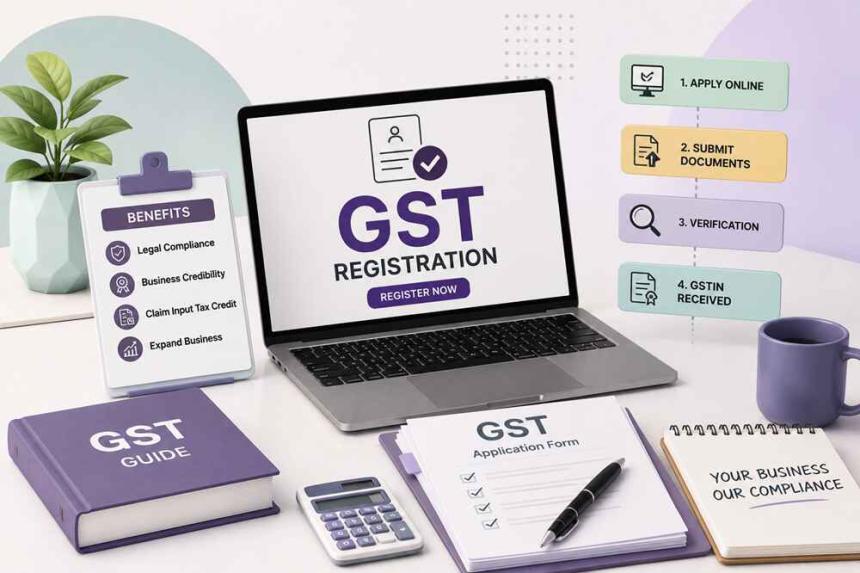

How Does GST Registration Work in India?
Understanding GST registration is essential for every business operating in today's competitive environment. Beyond legal compliance, it strengthens business credibility, improves financial transparency, and enables access to valuable tax benefits through Input Tax Credit.
Goods and Services Tax (GST) has transformed India's indirect tax system by replacing multiple state and central taxes with a unified taxation framework. Whether you are a startup founder, freelancer, online seller, manufacturer, service provider, or established business owner, understanding GST registration is essential for staying compliant and avoiding unnecessary penalties. This guide explains everything you need to know about GST registration, including eligibility, the GST registration process, required GST registration documents, benefits, common mistakes, and post-registration responsibilities.
Understanding GST RegistrationGST registration is the process through which a business obtains a unique Goods and Services Tax Identification Number (GSTIN) from the government. This registration legally authorizes a business to collect GST from customers and claim Input Tax Credit (ITC) on eligible purchases. The importance of GST registration extends beyond tax compliance. It establishes business credibility, enables participation in larger business contracts, and simplifies tax administration.
Some major advantages include:
- Legal recognition under GST laws.
- Ability to collect GST from customers.
- Eligibility to claim Input Tax Credit.
- Improved business credibility.
- Easier expansion across states.
- Better compliance with government regulations.
- Increased trust among vendors and customers.
Understanding these benefits makes it clear why timely GST registration is a smart business decision.
Who Needs GST Registration in India?Not every business requires immediate registration, but several categories must complete the GST registration without delay. Businesses generally require GST registration if they cross the prescribed turnover threshold under the GST law. Additionally, registration becomes mandatory in several special situations. Mandatory cases include:
- Businesses exceeding the applicable turnover limit.
- Interstate suppliers of goods in specified situations.
- E-commerce sellers.
- Input Service Distributors.
- Casual taxable persons.
- Non-resident taxable persons.
- Businesses liable under reverse charge provisions.
Even businesses below the threshold often voluntarily complete GST registration because it enables them to claim tax credits and work with larger organizations.
GST Registration Documents RequiredOne of the most important parts of the GST registration is preparing accurate GST registration documents. Submitting incomplete or incorrect GST registration documents is among the most common reasons for application delays or rejection. Generally required GST registration documents include:
- PAN card of the business or applicant.
- Aadhaar card.
- Passport-size photographs.
- Business address proof.
- Electricity bill or utility bill.
- Rental agreement or ownership proof.
- Bank account details and cancelled cheque.
- Digital Signature Certificate (where applicable).
- Authorization letter or board resolution for authorized signatories.
Depending on the business structure, additional GST registration documents may be required for companies, LLPs, partnerships, trusts, or societies.
How the GST Registration Process WorksThe GST registration process is conducted online through the GST portal, making registration faster and more transparent than traditional tax registrations. The standard GST registration process involves the following stages:
- Visit the GST registration portal.
- Fill in business and applicant details.
- Verify the mobile number and email address through OTP.
- Receive the Temporary Reference Number (TRN).
- Upload the required GST registration documents.
- Complete Aadhaar authentication where applicable.
- Submit the application for verification.
- Receive the Application Reference Number (ARN).
- Wait for departmental review and approval.
- Obtain the GSTIN after successful verification.
Many entrepreneurs initially view GST registration as merely a legal requirement. However, it provides several long-term advantages that directly contribute to business growth. Some significant benefits include:
- Improved business reputation.
- Better compliance with tax regulations.
- Seamless interstate business operations.
- Eligibility for Input Tax Credit.
- Easier vendor partnerships.
- Greater transparency in financial transactions.
- Enhanced opportunities for government tenders.
Businesses with proper GST registration often find it easier to establish relationships with corporate clients who prefer dealing only with GST-compliant vendors.
Responsibilities After GST RegistrationObtaining GST registration is only the beginning. Businesses must continue complying with GST regulations to maintain good standing. These include:
- Issuing GST-compliant invoices.
- Filing GST returns on time.
- Maintaining proper accounting records.
- Paying GST liabilities before due dates.
- Reconciling Input Tax Credit.
- Updating registration details whenever changes occur.
- Preserving financial records for future reference.
Businesses that neglect these responsibilities may face penalties despite successfully completing GST registration. Good compliance practices ensure that businesses continue enjoying the benefits associated with proper GST registration.
How Professional Assistance Simplifies GST RegistrationAlthough the GST registration process is available online, professional guidance helps businesses avoid costly mistakes and save valuable time. Experienced consultants understand documentation requirements, application procedures, and regulatory updates, ensuring a hassle-free registration experience. Professional assistance offers several advantages:
- Verification of GST registration documents before submission.
- Correct classification of business activities.
- Faster application processing.
- Expert responses to departmental queries.
- Compliance guidance after registration.
- Reduced chances of application rejection.
- Ongoing GST advisory support.
For startups and growing businesses, working with experienced professionals can significantly reduce compliance risks while ensuring the GST registration is completed efficiently. Businesses seeking reliable support can explore professional GST registration services at AMpuesto.
ConclusionUnderstanding GST registration is essential for every business operating in today's competitive environment. Beyond legal compliance, it strengthens business credibility, improves financial transparency, and enables access to valuable tax benefits through Input Tax Credit. Whether you are launching a startup, expanding into new markets, or formalizing an existing business, timely GST registration helps build trust with customers, suppliers, and financial institutions.
White Top Linerboard Price Trend Q2 2026 | Global Price Trends, Foreca...

How to Find the Best Large Leather Desk Mat for Your Workspace
A well-organized desk can make daily work more comfortable and help you keep essential ite...


Concrete Technology Laboratory Learning at Terna Engineering College i...