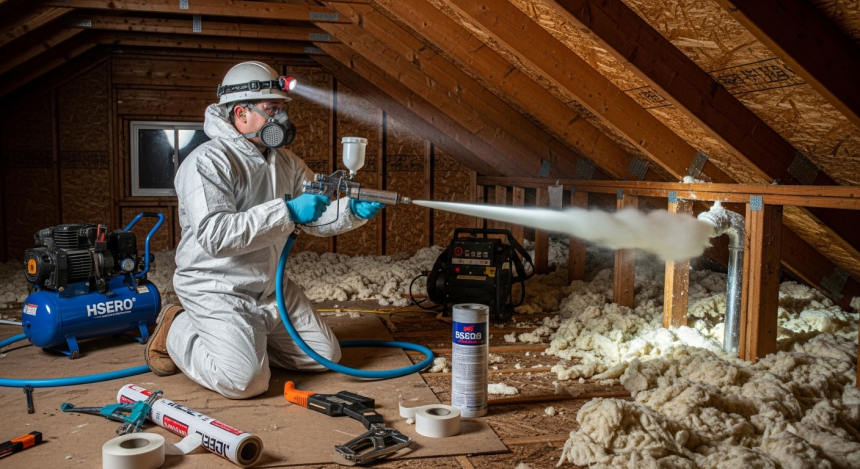

How Do Hidden Air Leaks Affect Indoor Temperature Without Warning?
Hidden air leaks destabilize indoor temperatures by allowing conditioned air to escape while drawing in unmanaged outdoor air through a process called the stack effect. This exchange forces heating and cooling systems to run longer cycles to maintain a set temperature, often leading to hot or cold spots in different rooms despite a consistent thermostat setting.
Because these gaps often exist behind walls, under floorboards, or in attic bypasses, you may not notice them until energy bills rise or comfort decreases. Understanding how air moves through a building structure helps you identify why a room feels drafty even when windows are closed. This article covers the mechanics of air infiltration, common leak locations, and how professional sealing improves home performance.
Experts in the insulation industry recognize that even the most expensive HVAC units cannot overcome poor air sealing services. Maintaining a thermal boundary requires a combination of high-quality materials and precise installation to prevent the silent loss of energy.
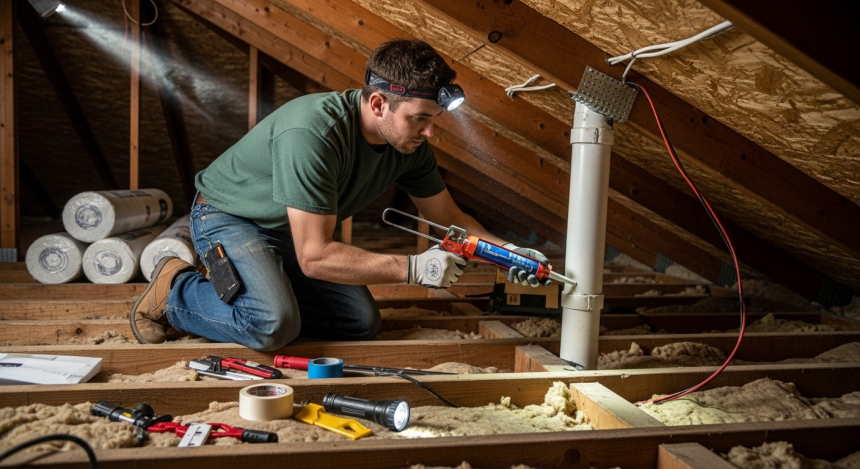 The Mechanics of Air Pressure and Temperature Shifts
Air moves from areas of high pressure to low pressure and from warm spaces to cold spaces. In the winter, warm air inside a home rises and escapes through leaks in the ceiling and attic. This creates a vacuum at the lower levels of the house, which pulls cold air in through gaps in the basement or crawl space.
This cycle, known as the stack effect, happens continuously without any audible warning. You might notice that the upstairs remains too warm while the downstairs feels icy. The thermostat, usually located in a central hallway, may read the correct temperature, but the actual living spaces feel uncomfortable due to this constant air movement.
Market data shows that roughly 25% to 40% of the energy used for heating or cooling a typical home is wasted through these invisible gaps. This loss occurs regardless of how much insulation you have if the air is allowed to flow directly through or around the material.
5 Common Signs of Air Infiltration- Uneven room temperatures: One room is significantly warmer or colder than the rest of the house.
- Persistent dust: High levels of dust can indicate that outdoor air is being pulled in through the attic or crawl space.
- High energy bills: Seasonal spikes that seem out of proportion with the weather.
- Drafts near baseboards: Feeling air movement at floor level even when all windows are shut.
- Ice dams: Frequent ice buildup on the roof during the winter months.
The speed at which a home loses its temperature often depends on the severity of air bypasses. When outdoor winds increase, the pressure on the building exterior pushes outside air into the wall cavities. If those cavities are not properly sealed, that air enters the living space through electrical outlets and baseboards.
Humidity also plays a role in how you perceive temperature. Hidden leaks allow moist outdoor air to enter during the summer months. High humidity makes a room feel much warmer than the thermometer suggests, leading many people to lower the air conditioning settings, which increases wear on the equipment.
Bonus Tip: You can often find hidden leaks by looking for "dirty" insulation. Fiberglass acts like a filter; if it looks dark or gray in specific spots, it usually means air is blowing through it, leaving dust trapped in the fibers.
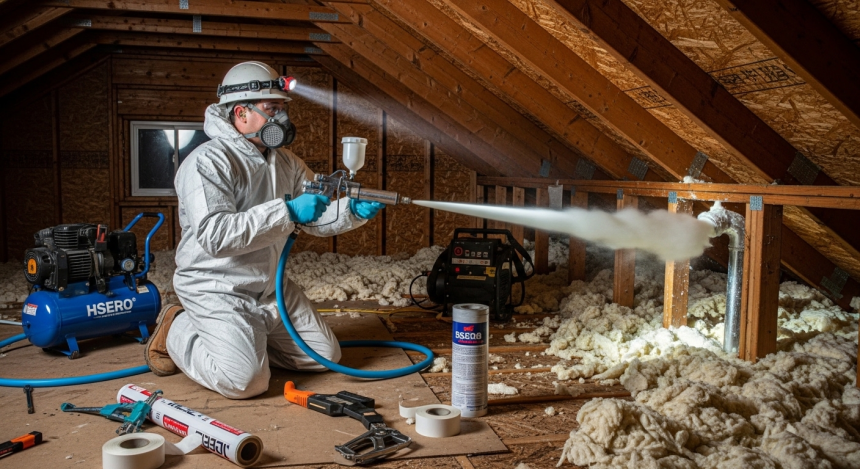 Common Locations for Unseen Air Leaks
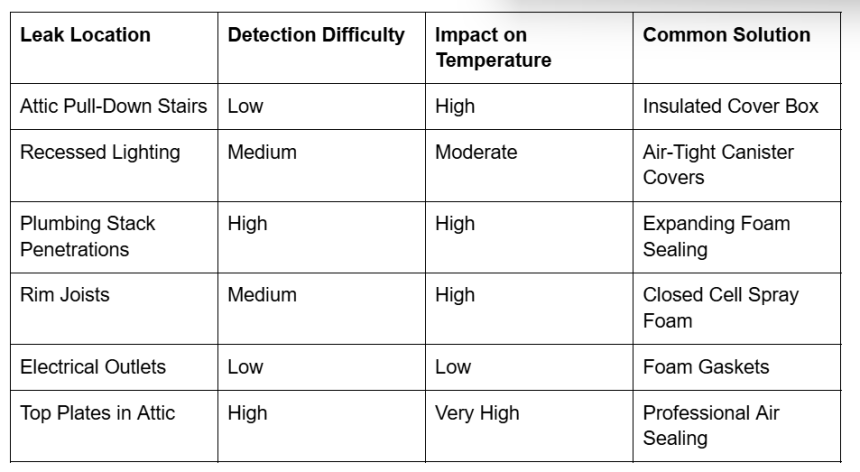
Many homeowners focus on windows and doors, but the largest leaks often occur in areas that are not visible during daily activities. The following table highlights common areas where air escapes and the typical impact on your comfort.
Table: Impact of Common Air Leak Locations
 The Role of Specialized Insulation Materials
Once these leaks are identified, choosing the right material is the next step to restoring efficiency. Traditional materials like fiberglass batts provide thermal resistance but do not stop air movement. This is why a home can have a high R-value and still feel drafty. Using materials that provide both insulation and an air barrier is often the most effective way to stabilize indoor climates.
Closed Cell and Open Cell Spray Foam ApplicationsClosed-cell spray foam is a primary example of a dual-purpose material. It expands to fill gaps while hardening into a rigid structure that blocks air and moisture. Open-cell spray foam also provides an excellent air seal while offering sound-dampening qualities, making it useful for interior walls or attic slopes.
Dense Pack Cellulose for Retrofitting WallsIn older homes, dense-pack cellulose is often used to fill wall cavities that were previously empty. This material is packed tightly enough to significantly slow down air movement, though it is often paired with specific air-sealing services for the best results.
Environmental and Regional ConsiderationsIn colder northern climates, air leaks contribute to the formation of ice dams. When warm air leaks into the attic, it melts the snow on the roof. The water then refreezes at the eaves, causing potential structural damage. Proper air sealing prevents this warm air transfer, protecting the roof and the interior temperature.
Crawl Space Encapsulation and Moisture ControlIn humid regions, sealing the crawl space is a vital step. An unencapsulated crawl space allows heavy, moist air to enter the home from below. This not only makes the floors feel cold but also introduces moisture that can lead to mold growth behind walls.
Bonus Tip: During a very cold day, use a damp hand to feel around your electrical outlets on exterior walls. If you feel a breeze, it is a sign that air is moving through your wall cavities from the outside.
How Hidden Leaks Strain HVAC SystemsWhen air leaks go unaddressed, the HVAC system must work harder to compensate for the lost conditioned air. This leads to frequent "short cycling," where the system turns on and off constantly. Short cycling increases the likelihood of mechanical failure and shortens the lifespan of furnaces and air conditioners.
Consistent air leaks also mean the system may never reach the desired humidity level. In the winter, leaky homes become very dry because the cold air being pulled in has very little moisture. This leads to static electricity, dry skin, and respiratory discomfort, all of which are secondary effects of poor air sealing.
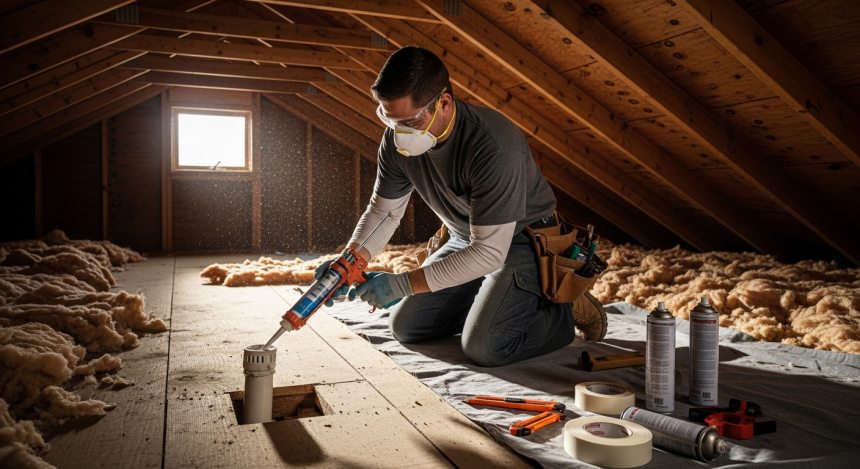 Factors to Evaluate Before Choosing an Insulation Professional
Selecting the right provider for air sealing and insulation requires looking beyond the initial price. You should consider the specific needs of your building and the expertise of the team performing the work.
Diagnostic Tools and Project Scope- Diagnostic Tools: Ask if they use tools like blower door tests or thermal cameras to locate leaks.
- Material Knowledge: Ensure they understand the differences between open-cell and closed-cell foam for your specific climate.
- Scope of Service: Verify if they handle both air sealing and insulation, as doing one without the other often yields poor results.
- Project Experience: Check their familiarity with crawl space encapsulation if you have moisture issues.
- Safety Standards: Confirm they follow proper ventilation protocols when installing spray foam or removing old insulation.
Managing your indoor temperature requires more than just a functional thermostat. By addressing hidden air leaks, you create a stable environment that resists outdoor weather changes. This not only makes your living space more comfortable but also protects your mechanical systems and lowers monthly costs.
Evaluating the current state of your attic, crawl space, and wall cavities is the first step toward long-term efficiency. Whether you are building a new home or updating an existing one, prioritizing an airtight envelope ensures that your insulation can do its job effectively. Consult with an expert to determine which solutions, such as spray foam or dense-pack cellulose, are right for your specific situation.
Connect With Experts For A More Efficient Home And A Free QuoteIf you are experiencing inconsistent temperatures or high energy costs, contacting a specialist can provide the clarity you need. Selkirk Energy Solutions offers a wide range of services, including residential insulation, air sealing, and crawl space encapsulation to help you regain control over your indoor environment. You can reach their team at (208) 295-9780 or via email at [email protected] to discuss your project. They provide professional guidance on closed-cell and open-cell spray foam applications tailored to your needs.
Common Questions About Residential Air SealingCan I seal air leaks myself without professional help?While you can apply weatherstripping to doors or use caulk around windows, many major leaks are located in hard-to-reach areas like the attic floor or crawl space. Professionals use specialized equipment and materials like spray foam to seal gaps that are invisible to the naked eye.
Does air sealing make a house too tight for air quality?Modern building standards focus on "sealing tight and ventilating right." Controlled ventilation is much better than the "random" ventilation provided by leaks, as it allows you to filter the air and manage humidity levels properly.
How long does it take to see the effects of air sealing?The impact on comfort is usually immediate, as drafts are eliminated the moment the seal is created. You will typically see the impact on your energy bills within the first full billing cycle following the service.
Is spray foam the only way to stop air leaks?No, but it is one of the most effective. Other methods include using high-quality caulk, rigid foam board with taped seams, and dense-pack cellulose, though spray foam provides a superior air barrier in complex spaces.
Will air sealing help reduce outdoor noise?Yes, air leaks are also sound leaks. By sealing the gaps where air enters, you also block many of the pathways that allow street noise or wind sounds to enter your home, leading to a quieter interior.
U888: A Modern Entertainment Platform Designed for Digital Users
U888: A Modern Entertainment Platform Designed for Digital Users


Rush Patch University of Tennessee Iron On: Complete Guide to Custom U...