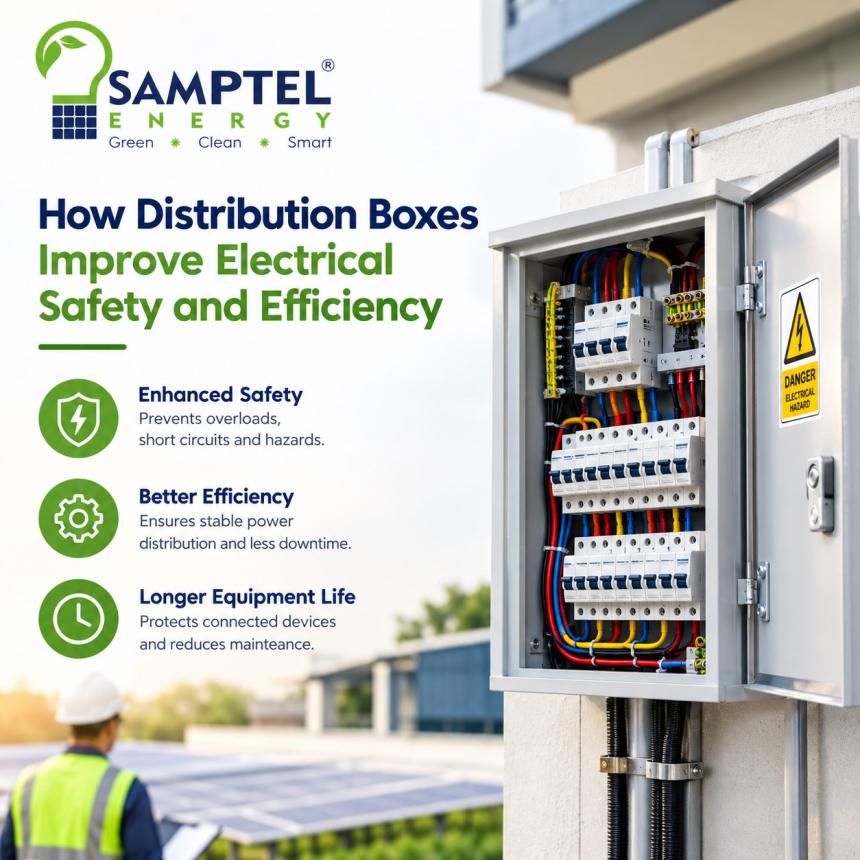

How Distribution Boxes Improve Electrical Safety and Efficiency
Electrical systems are the foundation of modern homes, commercial buildings, industrial facilities, and infrastructure projects. As power demands continue to grow, the need for organized, safe, and efficient electrical distribution becomes increasingly important. One of the most critical components that supports this objective is the distribution box. A distribution box plays a vital role in managing electrical circuits, protecting equipment, and ensuring reliable power distribution throughout a facility. Whether used in residential, commercial, or industrial environments, a properly designed distribution box helps improve both electrical safety and operational efficiency. What Is a Distribution Box? A distribution box, often referred to as a distribution board or electrical panel, is a central unit that receives electrical power from the main supply and distributes it to multiple circuits within a building or facility. The distribution box contains protective devices such as circuit breakers, isolators, and safety switches that help regulate electrical flow and protect the system from faults. By organizing electrical connections in one location, it becomes easier to manage, monitor, and maintain the overall electrical infrastructure. Why Distribution Boxes Are Important Electrical installations involve multiple circuits powering different equipment, machines, lighting systems, and appliances. Without a proper distribution system, electrical faults can become difficult to detect and control. Distribution boxes provide a structured approach to electrical management by: Distributing power safely across multiple circuits Protecting equipment from electrical faults Reducing the risk of overload conditions Improving maintenance efficiency Supporting system reliability Enhancing workplace and building safety These advantages make distribution boxes an essential part of modern electrical installations. How Distribution Boxes Improve Electrical Safety Protection Against Overloads Electrical overloads occur when circuits carry more current than their designed capacity. Excessive current can cause overheating, equipment damage, and potential fire hazards. Distribution boxes incorporate circuit protection devices that automatically disconnect overloaded circuits before serious damage occurs. This helps safeguard both electrical equipment and occupants. Short Circuit Protection Short circuits are among the most common electrical faults. They occur when electrical current follows an unintended path, resulting in excessive current flow. Modern distribution boxes include protective breakers designed to detect and isolate short circuits immediately. Quick fault isolation reduces the risk of electrical fires and equipment failures. Improved Circuit Management Distribution boxes separate electrical loads into dedicated circuits. This organized approach improves safety by preventing a single fault from affecting the entire electrical system. For example, lighting circuits, machinery circuits, and power outlets can be independently protected and controlled. Reduced Fire Risks Faulty wiring, overloaded circuits, and electrical equipment failures are common causes of electrical fires. By integrating protective devices and proper circuit management, distribution boxes significantly reduce the likelihood of electrical fire incidents. Enhanced Personnel Safety Electrical safety is essential in workplaces, manufacturing plants, commercial buildings, and residential properties. Properly designed distribution systems help protect maintenance personnel, operators, and occupants from accidental electrical exposure and hazardous conditions. How Distribution Boxes Improve Efficiency Reliable Power Distribution Distribution boxes ensure electrical power is distributed efficiently across connected circuits. Consistent power delivery helps maintain equipment performance and supports uninterrupted operations. Reliable distribution becomes particularly important in industrial facilities where production equipment depends on continuous electrical supply. Easier Maintenance and Troubleshooting When electrical issues occur, distribution boxes make fault identification much easier. Clearly organized circuits allow technicians to quickly locate and isolate problems, reducing downtime and maintenance costs. Faster troubleshooting contributes to improved operational efficiency. Better Load Balancing Efficient electrical systems require balanced load distribution. Distribution boxes help distribute electrical loads evenly across circuits, reducing stress on individual components and improving overall system performance. Balanced electrical systems typically experience: Improved efficiency Lower energy losses Reduced equipment wear Extended component lifespan Simplified System Expansion As businesses grow, electrical systems often require expansion to accommodate additional equipment and infrastructure. Download the Medium app A properly planned distribution box makes it easier to add new circuits and electrical connections without major modifications to the existing system. Increased Equipment Protection Sensitive electrical equipment can be damaged by power fluctuations, overloads, and electrical faults. Distribution boxes provide an additional layer of protection that helps extend equipment life while reducing repair and replacement costs. Applications of Distribution Boxes Distribution boxes are used across numerous sectors and industries. Residential Buildings Homes rely on distribution boxes to manage lighting circuits, appliances, air conditioning systems, and general power outlets safely. Commercial Buildings Office complexes, shopping centers, educational institutions, and healthcare facilities depend on organized electrical distribution systems to support daily operations. Industrial Facilities Manufacturing plants, processing units, and engineering facilities use distribution boxes to distribute power safely to machinery and production equipment. Infrastructure Projects Large infrastructure developments require reliable electrical distribution systems for lighting, control systems, and operational equipment. Renewable Energy Installations Solar power projects often incorporate distribution boxes to manage electrical power flow between generation systems and connected loads. Key Features to Look for in a Distribution Box When selecting a distribution box, businesses should consider several important factors: Build Quality High-quality construction ensures long-term durability and reliable performance under demanding operating conditions. Safety Standards Products should comply with recognized electrical safety standards and industry regulations. Environmental Protection Dustproof and weather-resistant designs help maintain performance in challenging environments. Scalability Future expansion requirements should be considered when selecting a distribution system. Ease of Installation Well-designed distribution boxes simplify installation, maintenance, and future upgrades. Common Mistakes to Avoid Organizations should avoid the following mistakes when selecting electrical distribution equipment: Choosing products based only on price Ignoring future expansion requirements Using inadequate protection ratings Overloading circuits Neglecting routine maintenance Failing to comply with electrical safety standards Avoiding these issues helps maximize safety and system reliability. Future of Electrical Distribution Systems As electrical infrastructure becomes more advanced, distribution systems continue to evolve. Modern facilities increasingly require smarter, safer, and more efficient power management solutions. Advanced distribution boxes are being designed with improved protection mechanisms, enhanced durability, and better compatibility with modern electrical systems. These developments support greater operational efficiency and improved electrical safety across industries. Conclusion Distribution boxes are essential components of modern electrical installations. They help improve electrical safety by protecting against overloads, short circuits, and other potential hazards while supporting efficient power distribution across multiple circuits. Their ability to enhance reliability, simplify maintenance, and protect valuable equipment makes them a critical part of residential, commercial, and industrial electrical systems. For organizations seeking dependable electrical distribution solutions, Samptel Energy provides products designed to support safe, efficient, and reliable power management. Contact Samptel Energy 📱 Call: +91 99980 50519 📍 Address: Plot №31, Road №5/A, Kathwada GIDC, Kathwada, Ahmedabad — 382430, Gujarat, India 📧 Email: [email protected] 🌐 Website: https://www.samptelenergy.com/
Payments, Privacy, and Protection: A Practical Guide for Safer Online...
Payments, Privacy, and Protection: A Practical Guide for Safer Online Betting in Malaysia

Odds, Margins, and Smart Habits: Understanding Sports Betting in Malay...
Odds, Margins, and Smart Habits: Understanding Sports Betting in Malaysia


Blood Clots Explained: 6 Serious Risk Factors and Effective Treatment...
Discover 6 serious risk factors for blood clots, recognize warning signs, and learn about...