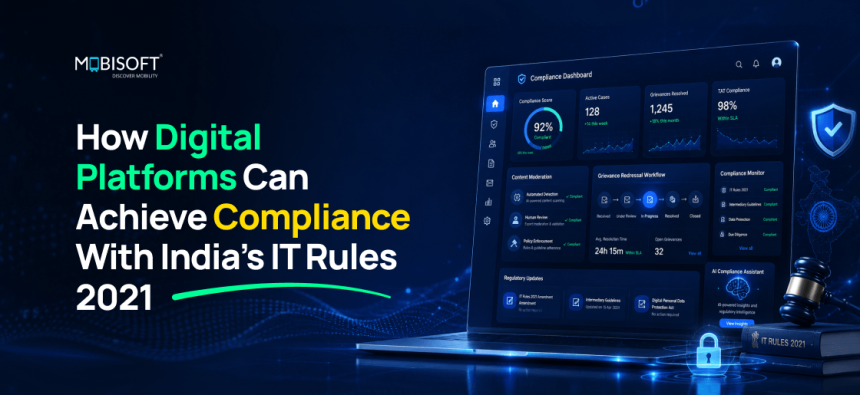

How Digital Platforms Can Achieve Compliance with India’s IT Rules 2021
India's IT Rules 2021 compliance reality is not what most tech companies expect. Many platforms assume that publishing a Privacy Policy and adding a Grievance Officer email address is enough. But it is not.
The rules demand operational infrastructure, technical systems, and governance structures that function reliably under real load, including on weekends, public holidays, and at 2 AM when a priority complaint arrives.
Most platforms understand what the India IT Rules 2021 require at a policy level. Far fewer have built the grievance management workflows, content moderation pipelines, SSMI compliance programmes, and data retention systems that actually satisfy the obligations when a regulator looks closely.
This guide covers the implementation side. Every layer of compliance infrastructure a digital platform operating in India needs to build, what it must contain, when it must be operational, and what happens when it is not.
Whether you are a startup approaching the 5 million-user threshold or an established platform with existing compliance gaps, the sections ahead walk through each layer in the order you need to build them.
Understanding the IT Rules 2021The Information Technology (Intermediary Guidelines and Digital Media Ethics Code) Rules, 2021, cover a wide range of digital intermediary regulations India has introduced in recent years. At their core, they govern how platforms handle user-generated content, how they respond to complaints, and what obligations apply once a platform crosses certain scale thresholds.
A few numbers frame the stakes clearly.
- 24 hours is the deadline for acknowledging user complaints and for removing non-consensual intimate images or CSAM upon complaint.
- 15 days is the resolution deadline for most user complaints under the Grievance Officer framework.
- 5 million registered Indian users is the threshold that triggers the enhanced SSMI obligations under Rule 4.
- Monthly is the cadence at which SSMIs must publish compliance reports.
These are not aspirational targets. They are hard compliance obligations. Missing them repeatedly creates a safe harbour risk and real regulatory exposure.
The Compliance Programme ArchitectureMost platforms approach digital platform compliance as a one-time legal exercise. They draft the documents, publish the policies, and move on. The problem is that compliance with the IT Rules 2021 is not a documentation exercise. It is an operational infrastructure exercise.
The 24-hour acknowledgement requirement cannot be met by a Grievance Officer checking email twice a day. The 15-day resolution window cannot be met without a case management system that tracks complaint status and escalates aged complaints. The monthly compliance report cannot be produced without data systems capturing the required inputs throughout the month.
Legal documents are necessary but not sufficient on their own.
Working with an experienced IT consulting services company early in this process helps platforms avoid building compliance infrastructure that looks complete on paper but breaks down under real operational load.
The Four Layers of a Compliant Digital PlatformOnline platform compliance at the IT Rules 2021 standard requires four distinct layers, each with its own timing requirement.
Layer 1: Policy and DocumentationThis covers:
- Terms of Service
- Privacy Policy
- Community Standards
- Internal compliance policies
These must be in place before the first user registers. Every registration on non-compliant Terms is a compliance exposure from Day 1.
Layer 2: Grievance InfrastructureThis includes:
- Grievance management system,
- Grievance Officer appointment and publication
- 24-hour response capability for priority complaints
- Escalation workflows.
This layer must be operational before your platform has its first user, because complaints can arrive at any time.
Layer 3: Content ModerationThis covers:
- Proactive content screening
- Reactive takedown workflows
- CSAM detection
- 180-day data retention for removed content
- Audit trails for all moderation actions
This layer must be live before you enable user-generated content on the platform.
Layer 4: SSMI Compliance ProgrammeThis includes:
- Chief Compliance Officer
- Nodal Contact Person
- Monthly compliance reports
- Proactive monitoring
- Voluntary user verification
- Physical India address.
Read more: How Digital Platforms Can Achieve Compliance with India’s IT Rules 2021





Best Graphic Designing Institute in Delhi: Start Your Creative Journey...
Graphic design has become one of the most sought-after creative careers in today's digital...

Hair Stylist Course in Delhi: Build a Creative Career with a Hair Styl...
The beauty and wellness industry has experienced remarkable growth over the last few years...