
How Can Businesses Build a Strong Workplace Safety Culture Through EHS Training?
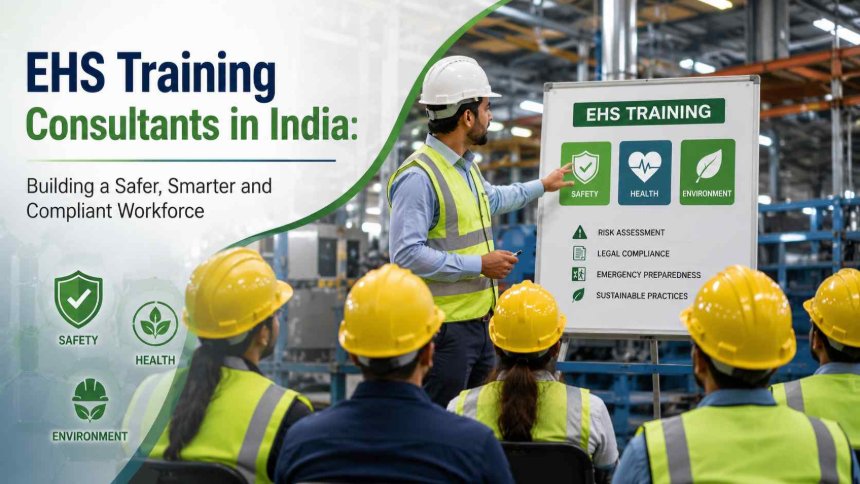
Building a strong workplace safety culture requires more than rules and protective equipment. Effective EHS training helps businesses improve employee awareness, prevent workplace accidents, identify potential hazards, and maintain regulatory compliance through consistent safety practices.
Businesses build a strong workplace safety culture through EHS training by making safety knowledge practical, role-specific, repeated and visible in daily decisions. Effective training teaches workers to spot hazards, follow safe procedures and speak up early. When leadership backs it with audits, incident learning and clear accountability, safety becomes a shared habit and not a compliance formality.
For manufacturers, this matters more than ever. A structured set of EHS training services helps plants move from one-time induction sessions to a continuous programme that covers hazard awareness, emergency response, contractor safety and regulatory duties. The sections below explain why the need is rising and how to build the programme step by step.
Why Is EHS Training Urgent for Indian Industry Today?India’s factory workforce is growing, and so is the exposure to workplace risk.
- ASI 2024-25 estimated 2,66,931 factories and 2,09,96,913 persons engaged across India.
- Industrial employment grew by 7.19%, from 1.96 crore to 2.10 crore, with manufacturing adding more than 14 lakh workers.
- DGFASLI data for 2023 shows 1,090 fatal injuries and 2,949 non-fatal injuries in registered factories, a total of 4,039.
- The same dataset records 5.46 fatal injuries per lakh workers and 3.08 fatal injuries per thousand registered factories.
- NCRB data for 2024 recorded 742 factory and machine accidents that resulted in 660 deaths.
- That works out to nearly 89 deaths for every 100 factory accidents in 2024, which shows how severe these incidents are when they occur.
More workers on the floor mean more new joiners, more contract staff and more shifts to train. Untrained or under-trained workers are the easiest gap to close.
What Does the Regulatory Shift Mean for Safety Training?The OSH Code framework has moved from law to operation, and it raises the standard for documentation, committees and health checks.
- The Occupational Safety, Health and Working Conditions (Central) Rules, 2026 were notified on 8 May 2026.
- The Rules replace 15 earlier sets of rules and require every establishment with 500 or more workers to constitute a Safety Committee.
- The Safety Committee must meet at least once every quarter, with adequate representation of women among employer and worker members.
- The Rules also bring mandatory online registration, free annual health check-ups for certain workers, and stricter reporting of accidents and dangerous occurrences.
- The Code expects written procedures for dangerous tasks and training for workers before they begin such work.
Training now supports compliance directly. Safety committee members, supervisors and workers need to understand their roles, and the records of that training become part of inspection readiness.
Why Is Psychosocial Safety Part of EHS Training Now?Safety culture is no longer only about machines and chemicals.
- An ILO report released in April 2026 linked at least 840,000 deaths a year to health conditions arising from workplace risks such as long working hours, job insecurity, harassment and bullying.
- The ILO also warned that digitalisation, AI and changing work structures could intensify these risks if they are not managed well.
Modern EHS programmes should therefore include fatigue, overtime pressure, respectful conduct and mental wellbeing alongside traditional topics such as machine guarding and fire safety.
What Are the Core Elements of a Strong Safety Culture?- Visible leadership: Managers attend training, join floor walks and act on findings.
- Clear accountability: Every role has defined safety duties and measurable expectations.
- Open reporting: Workers can report hazards and near misses without fear of blame.
- Consistent standards: The same rules apply to permanent staff, contract workers and visitors.
- Continuous learning: Training is repeated, refreshed and updated after incidents and audits.
- Worker participation: Safety committees and toolbox talks give workers a real voice.
Step 1: Assess risks and training gaps
- Review hazards by area, task and shift.
- Compare past incidents, near misses and audit findings against existing training records.
- Identify which roles need which skills.
Step 2: Segment the audience
- New joiners and contract workers need basic induction before starting work.
- Operators and maintenance teams need task-specific hazard training.
- Supervisors need incident investigation, coaching and permit-to-work skills.
- Senior managers need training on legal duties, risk review and safety leadership.
Step 3: Cover the right topics
- Machine safety, lockout and tagout, and working at height
- Fire prevention, emergency drills and evacuation
- Chemical handling, PPE use and confined space entry
- Electrical safety and safe material handling
- Environmental duties such as waste handling, spill response and emissions awareness
- Ergonomics, fatigue management and workplace conduct
Step 4: Use practical, repeatable delivery
- Combine classroom sessions with on-site demonstrations and mock drills.
- Use local languages and simple visuals for shop-floor teams.
- Run short toolbox talks every shift on one hazard at a time.
- Test understanding with practical checks, not only attendance sheets.
Step 5: Link training to real incidents
- Share lessons from near misses within days, not months.
- Update procedures and training content after every investigation.
- Recognise teams that report hazards early.
Step 6: Measure and improve
- Track training completion, drill performance, near-miss reporting and corrective action closure.
- Review leading indicators monthly and lagging indicators such as injuries and lost days.
- Use audit results to refresh the training calendar.
- Treating training as a one-time induction
- Using generic content that ignores the plant’s actual hazards
- Skipping contract and temporary workers
- Measuring only attendance, not behaviour change
- Punishing reporting, which silences near-miss data
- Leaving supervisors untrained, even though they shape daily practice
- Keeping training records in loose files that cannot support audits
With safety committees, online registration and reporting duties now in the rules, records matter as much as the training itself.
- Maintain a training matrix by role, area and hazard.
- Record dates, trainers, topics, attendance and assessment results.
- Keep safety committee minutes and action-taken reports together.
- Store drill reports and corrective actions in a searchable system.
Plants that organise these records early can respond faster to inspections and internal reviews.
How Can IMARC Engineering Help?IMARC Engineering is an EPCM and engineering consulting firm based in Noida, serving industrial and manufacturing clients. Its team understands plant layouts, process risks and operating conditions, so training content reflects how a facility actually runs.
Support typically includes:
- Training needs analysis based on plant hazards and workforce roles
- Customised modules for operators, supervisors, contractors and management
- Emergency preparedness and drill planning
- Guidance on aligning training with OSH Code and related safety requirements
- Training record systems that support audits and inspections
- Follow-up reviews to keep content current as processes and equipment change
An engineering-led approach connects training to equipment, procedures and layout, which makes lessons easier for workers to apply.
Consult With Our Team: https://www.imarcengineering.com/contact?service=ehs-training
ConclusionA strong safety culture is built through consistent action. With 1,090 fatal injuries recorded in registered factories in 2023 and new OSH Rules in force since May 2026, businesses have both a human and a regulatory reason to invest in training. Start with a risk-based needs analysis, train every role, measure results and keep improving. Over time, safe behaviour becomes the normal way of working.
Contact Us:
IMARC Engineering
Phone: +91-120-433-0800
Email: [email protected]
India: C-130, Sector 2, Noida, Uttar Pradesh 201301
LinkedIn: https://www.linkedin.com/showcase/imarc-engineering/
How to Confront an Employee About Drug Use: A Professional Guide for E...
How to Confront



What Factors Affect the Cost of Flooded Basement Restoration?
The amount of water inside a basement plays a major role in determining restoration expens...