
How AI Is Transforming Procurement Management: Benefits, Risks, and Real-World Use Cases
How AI Is Transforming Procurement Management: Benefits, Risks, and Real-World Use Cases
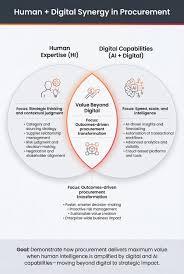
The Growing Role of AI in Procurement Management Artificial intelligence (AI) is reshaping procurement management by enabling organizations to make faster, data-driven purchasing decisions. As supply chains become more complex and global markets face increasing uncertainty, procurement teams are turning to AI-powered tools to improve efficiency, reduce costs, and strengthen supplier relationships. Today, AI is no longer viewed as an emerging technology but as a strategic capability that helps procurement functions move from reactive operations to proactive decision-making. AI-driven systems can analyze large volumes of procurement data, identify patterns, and provide actionable insights that would be difficult to uncover through manual processes alone. Key Benefits of AI in Procurement One of the most significant advantages of AI is its ability to automate repetitive and time-consuming tasks. Activities such as spend classification, invoice processing, contract review, and supplier data management can be completed more accurately and efficiently through intelligent automation. This reduces administrative burdens and allows procurement professionals to focus on strategic initiatives. AI also enhances decision-making by providing real-time market intelligence and predictive analytics. Procurement teams can use AI to evaluate supplier performance, monitor pricing trends, and identify opportunities for cost savings. By analyzing historical and external data, AI helps organizations forecast demand, optimize sourcing strategies, and improve budgeting accuracy. Another major benefit is improved risk management. AI can continuously monitor supplier networks, financial indicators, news sources, and market conditions to detect potential disruptions before they impact operations. This proactive approach enables businesses to build more resilient supply chains and respond quickly to emerging risks. Potential Risks and Challenges Despite its advantages, AI implementation in procurement is not without challenges. Data quality remains one of the biggest obstacles. AI systems rely on accurate, structured, and comprehensive data to generate reliable insights. Poor data governance can lead to inaccurate recommendations and ineffective decision-making. Transparency is another concern. Some AI models operate as “black boxes,” making it difficult for procurement teams to understand how specific recommendations are generated. This can create challenges when organizations need to justify supplier selections, pricing decisions, or compliance outcomes. Maintaining audit trails and human oversight is essential for building trust in AI-driven processes. Organizations must also consider workforce readiness. While AI can automate routine activities, procurement professionals still play a critical role in negotiations, stakeholder management, and strategic supplier relationships. Successful adoption requires training employees to work alongside AI rather than viewing it as a replacement for human expertise. Real-World Use Cases of AI in Procurement AI is already delivering measurable value across several procurement functions. Spend analysis is one of the most common applications, where AI automatically categorizes purchasing data and identifies savings opportunities across suppliers and categories. This helps organizations gain greater visibility into spending patterns and improve cost control. Supplier risk monitoring is another widely adopted use case. AI continuously evaluates supplier performance, financial stability, and external risk factors, enabling procurement teams to address issues before they escalate into supply chain disruptions. Contract management has also benefited significantly from AI. Intelligent systems can extract key terms, monitor compliance obligations, flag renewal dates, and identify potential risks within large contract portfolios. This improves governance while reducing manual review efforts. The Future of AI-Driven Procurement As AI technologies continue to mature, procurement functions will become increasingly predictive, automated, and strategic. Organizations that combine advanced AI capabilities with human expertise will be better positioned to drive efficiency, reduce risk, and create long-term value. For any modern procurement management company, adopting AI is becoming less about gaining a competitive advantage and more about remaining competitive in a rapidly evolving business environment.
https://www.wnsprocurement.com/


A Trusted Choice for Modern Online Gaming Enthusiasts
A Trusted Choice for Modern Online Gaming Enthusiasts



Casino non AAMS: Perché Sempre Più Giocatori Li Preferiscono
Casino non AAMS: Perché Sempre Più Giocatori Li Preferiscono