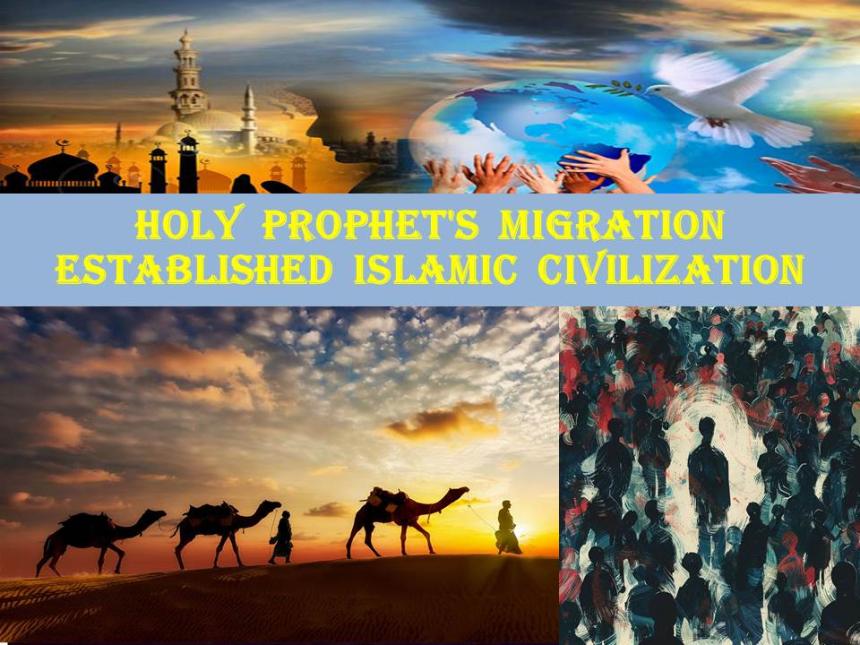

Holy Prophet's Migration Established Islamic Civilization
The holy prophet of Islam Muhammad (PBUH) migrated to Yathrib (later called as Medina) from Makkah (his birth place) after 13 years of first revelation. That became a historic milestone in Islamic civilization. This write up "Holy Prophet's Migration Established Islamic Civilization" is an English translated opinion from an Arab Scholar Dr Ehsan Samara on FB.
أَعُوذُ بِاللّٰهِ مِنَ الشَّيْطَانِ الرَّجِيمِ
بِسۡمِ ٱللهِ ٱلرَّحۡمَـٰنِ ٱلرَّحِيمِ
In the name of ALLAH, the Most Gracious, the Most Merciful
Holy Prophet's Migration Established Islamic Civilization
The Prophet, peace and blessings be upon him, was not unique among the messengers in his migration. His people had gone to great lengths to harm him and those who responded to his call and believed in his message, forcing him to migrate from Mecca to Medina. This occurred after they had pledged to shelter and support him so that he could deliver God's message, which he was commanded to convey to the people.
Many prophets and messengers before him had also migrated, forced to do so by their closest relatives due to their calling. For example, Abraham, peace be upon him, migrated from Ur-Babylon in Iraq to the Levant, and then to Palestine and the Hijaz, after God saved him from Nimrod's fire.
Similarly, his nephew Lot, peace be upon him, migrated with him from Iraq to Sodom in Jordan in the Levant. Likewise, Moses, peace be upon him, migrated to Midian to escape the tyranny of Pharaoh and his soldiers. However, the migration of the Chosen One (peace and blessings be upon him) was distinguished from that of other prophets (peace be upon them) by the unique nature of his message.
Previous messages and prophethoods were limited to their time and place, ending with the death of the prophet sent with them, and were specifically for the peoples to whom the previous prophets were sent. However, the prophethood and message of Muhammad (peace and blessings be upon him) are perpetual until the Day of Judgment and do not end with the death of the Prophet Muhammad (peace and blessings be upon him).
It is for all of humanity until the Day of Judgment, as God Almighty says:
"And We have not sent you, [O Muhammad], except as a mercy to the worlds" (Al-Anbiya: 107);
and He also says: "And We have not sent you except as a mercy to all mankind, a bearer of good tidings and a warner. But most of the people do not know" (Saba: 28).
And the Prophet (peace and blessings be upon him) said: "... Every prophet is sent to his own people specifically, but I have been sent to all of humanity, both red and black…” (Sahih al-Bukhari, no. 438; Sahih Muslim, no. 521).
The Prophet (peace and blessings be upon him) said: “By Him in Whose Hand is the soul of Muhammad, no one from this nation, whether Jew or Christian, hears of me and then dies without believing in that with which I have been sent, except that he will be among the inhabitants of Hellfire.” (Sahih Muslim, Book of Faith, no. 153).
And Allah, the Exalted, said: “O People of the Scripture, there has come to you Our Messenger making clear to you much of what you used to conceal of the Scripture and overlooking much. There has come to you from Allah a light and a clear Book by which Allah guides those who follow it.” His pleasure is the path to peace, and He brings them out of darkness into light by His permission and guides them to a straight path. (Al-Ma'idah: 15-16)
In light of this, the mission of the Prophet Muhammad (peace and blessings be upon him) heralded a civilizational transformation in the history of a nascent Muslim community that was barely a decade old. Muslims there lived in an environment lacking security, safety, and respect for basic human rights and dignity. These circumstances fostered a desire to seek a different environment, one that resonated with the nascent Muslim spirit and its aspirations to establish a civilization befitting the Islamic faith and its lofty values, noble ideals, and the laws, regulations, and systems that enable humanity to live a good life, befitting God's honoring and elevating humankind above all other beings.
The creatures, and this desire transformed from a mere "emotional state" into a creed, a culture, an idea, and a civilizational project, reflecting the aspirations of the Prophet (peace and blessings be upon him) and those who believed with him, to break free from that suffocating environment and reach broader horizons, encompassing the ambitions of that new project and its succession arrangements… a project whose features, characteristics, functions, goals, and requirements were continuously revealed through divine inspiration, highlighting the values befitting the needs of the transitional phase to embody this civilizational project as a tangible reality in the world of humanity.
Thus, the noble Prophetic migration from Mecca to Yathrib, considering its political and civilizational repercussions in various human environments, was the foundation for establishing an Islamic society, structuring a state, building a nation, and constructing an Islamic civilization with unprecedented doctrinal, ethical, social, and civilizational characteristics in its existential distinction.
This migration was the most momentous event in the course of human history since God created the earth and all that is on it! And due to the importance of the noble Prophetic migration in Islamic legal considerations, and their remarkable impact on the history of the Muslim nation and humanity, warranted being recorded in their own historical context.
The Hijra (migration) was a more influential event in the emergence of Islam and its civilizational development than the Prophet's birth and mission. It was the pivotal event with the deepest and most far-reaching impact not only on the lives of Arabs and Muslims but also on the lives of human societies.
Therefore, it was no surprise that it was chosen as the starting point of the historical calendar for the Muslim nation. Reflecting on the adoption of the Prophet's migration as the beginning of the nation's history and calendar reveals profound civilizational meanings and significant ethical implications from the perspective of Islamic thought.
If we consider the lives of Muslims in general before the migration to Medina, we observe that doctrinal education and spiritual and moral development were among the most prominent features and functional objectives of the Meccan Quran. Furthermore, we observe that this educational approach was essential for its focus and the achievement of its goals and objectives. It was founded upon a human experience rooted in faith and the arts of civilized human life, strengthening the new nation's ability to confront challenges and address issues and problems according to the lessons of the Quran and the details of the Prophet's biography.
This was through divine guidance, as the Prophet (peace and blessings be upon him) established the Hijra (migration) as the beginning of the Islamic civilizational project. Through the stories of the Meccan chapters of the Quran, Muslims absorbed the experiences of previous civilizations: how they arose, grew, flourished, and prevailed, and how they declined, deteriorated, faded away, and perished.
Thus, through this Quranic experience, they became guided and enlightened by the values of dignity, honor, and respect for human rights, prepared to undertake political responsibilities, and ready to establish their Islamic civilization on firm foundations of faith, linking it to the factors that ensure its enduring nature.
As this article is relevant, I will not dwell at length on the features of the Islamic civilizational transformation—spiritual, ethical, political, economic, social, and cultural.Intellectually, and in other such ways, the landmarks that were manifested by the migration, and with it the identity of the nation and the features of its succession project in the field of human development were manifested, as Medina, which was called Yathrib before the Prophetic migration to it, became, with the Prophetic migration, the city of the Islamic community, the Islamic state, the Islamic nation, and a center for the Islamic civilization intended from the Islamic message, which may be considered the stage of migration as a major factor in its becoming, with the possibilities of the Islamic existential realization represented in the state and society, and thus combining the ideal and the reality in the central model of the good Prophetic example that produced the civilization of the best nation brought forth for mankind.
Thus, the Prophet's migration signaled the establishment of the Muslim community's role as a witness to humanity, fulfilling its Islamic civilizational duty. It was the culmination of preparatory efforts aimed at bringing the Muslim community into existence, embodied in its creed, methodology, values, principles, ideas, spirit, and a tangible civilizational reality. This process was completed during the era of the Rightly Guided Caliphate, a practical stage in meeting the requirements of perfection, thereby realizing the concept of existence.
These constitutional arrangements for the social contract were embodied in the Constitution of Medina, which served as the constitution regulating the lives of the people in Medina and their external relations. According to this document, the rules and conditions of what is known in Islamic jurisprudence as the Abode of Islam were defined, and the principles of security, peace, and social stability were established from an Islamic perspective.
This affirmed the values of positive integration of the components of society in Medina with the realities of civilizational transformation in light of the formation of the new Islamic society. It also preserved the Islamic constitutional gains contained in the Constitution of Medina, strengthening the foundations of Islamic civilization and developing the values of the new society. And its concepts, in accordance with His Almighty saying:
(Those who, if We establish them in the land, establish prayer and give zakah and enjoin what is right and forbid what is wrong. And to Allah belongs the outcome of all matters) Al-Hajj: (41).
Hence, the Prophetic Hijra was worthy of being dated not only from it, but it was worthy of being a measure for analyzing civilizational experiences throughout history in an analysis that justifies historians and intellectuals judging these experiences in the Islamic civilizational model associated with the higher values of life.
If, in light of the previous considerations, there was nothing but the Hijra as an entry point for measuring the Islamic historical development of the nation, it would suffice! It was with this that the arrangements for forming the Islamic nation and the model Islamic society began, followed by the model Islamic state, and then international relations.
It has even been said: “When the Prophet arrived in Medina, which he did in the month of Rabi' al-Awwal, he ordered the establishment of a calendar. It was mentioned that they dated events by one or two months from his migration until the year was completed.” (Tarikh al-Tabari, edited by Muhammad Abu al-Fadl Ibrahim, 3/2).
For all these reasons, the Prophet's migration became the calendar of the Islamic nation, an indicator of its Islamic revival, and the fruit of its fulfillment of the requirements and responsibilities of stewardship on Earth. Perhaps the Islamic calendar, with its lunar months, contains diverse legal meanings and implications. According to it, the months alternate between seasons and the seasons of religious observances, festivals, and occasions.
This reflects the reinforcement of values and concepts associated with the nature of certain months, making them more widely used, more beneficial, and more influential. For example, the rotation of the month of fasting between seasons gives those with valid excuses an opportunity to observe the fast and take from them. With resolve, in pleasant weather where religious obligations are light, and similarly in the sacred months, which offer opportunities for social peace by preventing people from oppressing themselves and one another, and in which conflicts and wars are prohibited, people are given opportunities for reconciliation and the achievement of security, peace, and stability.
The rotation of the sacred months among the seasons of the year was an important occasion for accustoming people to the benefits of security, peace, and stability, and for creating a suitable environment for human civilization. Accordingly, the Islamic lunar calendar makes the entire year imbued with the values and rituals of Islam, which are dated from the Hijra (migration) and are concentrated in the sacred months. Thus, Islamic civilization is disciplined and far removed from seasonality or fleeting circumstances; for the same month of Muharram is also the same month of Safar, Rajab, Sha'ban, and Ramadan.
As for considering Muharram as the beginning of the Islamic calendar; Although this was not the time of the arrival of the Prophet, may God bless him and grant him peace, and the emigrants with him to Medina, as it was on the 12th of Rabi' al-Awwal of the first year of the Hijra, in the ninth month of the year 626 AD, this was to link the Islamic calendar with the establishment of the Islamic community and then the Islamic state, and the establishment of the Islamic civilizational process in human reality.
This is what was shown by the narration that Abu Ja'far al-Tabari narrated as part of the wisdom of choosing the month of Muharram as the beginning of the calendar: "They said: Which month shall we begin with? They said: Ramadan. Then they said: Muharram, for it is the month when people return from their pilgrimage and it is a sacred month, so they agreed on Muharram." (Tarikh al-Tabari, 3/2).
Perhaps the return of the pilgrims to their countries after performing the rituals, and what it contains of the symbolism of the right of the Islamic nation to lead humanity, and to bear witness to it with the truth, especially after the enormous geographical expansion of the Islamic faith, necessitates the codification of covenants that secure the Islamic civilizational process within the framework of that civilization extending lengthwise and widthwise across the Arabian Peninsula and its surroundings.
The month of Muharram, in the context of the historical calendar, marks the beginning of a renewed annual cycle of human activity following each accepted pilgrimage. This aligns closely with the meaning of the Prophet's migration (Hijra) as the beginning of a fundamental transformation in the course of human history, and as a harbinger of the birth of a civilization whose vision of the universe, life, and humanity is derived from divine values based on work and spreading across the earth to cultivate it in accordance with God's law and methodology. This also fulfills the requirements of the final message through which God perfected His favor and completed His religion so that people might establish justice, and humanity might be protected by God's law and methodology from all causes of civilizational stagnation.And the corrupting influence of tyrannical succession, as He, the Exalted, said:
(…This day those who disbelieved have despaired of [defeating] your religion; so do not fear them, but fear Me. This day I have perfected for you your religion and completed My favor upon you and have approved for you Islam as religion…) Al-Ma’idah: (3);
And He, the Exalted, said: “And hold fast, all of you, to the rope of Allah, and do not be divided. And remember the favor of Allah upon you when you were enemies, and He brought your hearts together, so you became brothers by His favor. And you were on the brink of a pit of fire, and He saved you from it. Thus does Allah make clear to you His verses that you may be guided.” (Al Imran: 103)
God Almighty has spoken the truth.
Dr. Ihsan Samara
Saturday: 27th of Dhul-Hijjah, 1447 AH June 13, 2026.
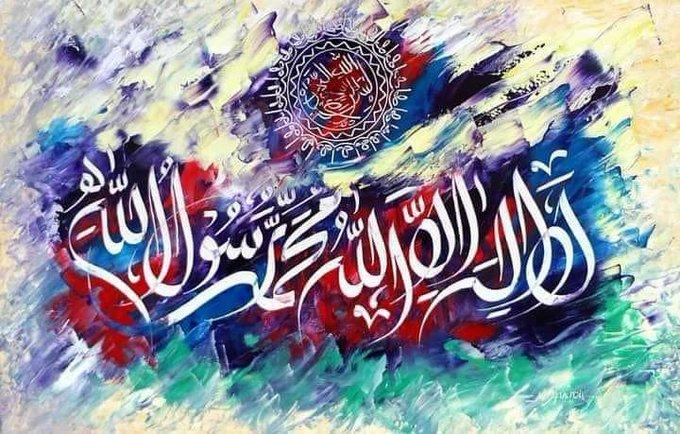
بسم الله الرحمن الرحيم
دور الهجرة النبويّة في إرساء النموذج الحضاريّ الإسلامي في الواقع
لم يكن النبي صلى الله عليه وسلم في هجرته بِدْعاََ من الرسل، إذ أن قومه تفنّنوا في إيذائه وإيذاء من استجاب لدعوته وآمن برسالته، وألجؤوه للهجرة من مكة إلى المدينة المنورة، بعد أن بايعوه على إيوائه ونصرته حتى يُبلِّغ رسالة الله تعالى التي هو مأمور بتبليغها للناس، كما أنه قد هاجر من قبله العديد من الأنبياء والرسل ألجؤوهم أقرب الناس اليهم للهجرة بدعوتهم، كإبراهيم عليه السلام، هاجر من أور-بابل- بالعراق إلى بلاد الشام، ومن ثم إلى فلسطين والحجاز، وذلك بعد أن أنجاه الله من نار النمرود، وكذا هاجر معه ابن أخيه لوط عليه السلام من العراق إلى -سدوم-بالأردن من بلاد الشام، وكذا موسى عليه السلام هاجر إلى مدين فراراََ بدينه من بطش فرعون وجنوده، إلا أنّ هجرة المصطفى صلى الله عليه وسلم قد تميّزت عمّا سواها من هجرة الأنبياء عليهم السلام بحسب تميّز رسالته، وذلك أن من قبله من الرسالات والنبوات كانت محدود بزمانها ومكانها، وتنتهي بموت النبي المبعوث بها، وخاصّة لأقوام من بعث فيهم الأنبياء السابقين، بينما نبوة محمد ورسالته هي دائمية إلى قيام الساعة، ولا تنتهي بموت النبي محمد صلى الله عليه وسلم، وهي لجميع الناس إلى قيام الساعة، حيث قال سبحانه:) وَمَا أَرْسَلْنَاكَ إِلَّا رَحْمَةً لِّلْعَالَمِينَ( الأنبياء: (107)؛ وقال سبحانه: (وَمَا أَرْسَلْنَاكَ إِلَّا كَافَّةً لِّلنَّاسِ بَشِيرًا وَنَذِيرًا وَلَٰكِنَّ أَكْثَرَ النَّاسِ لَا يَعْلَمُونَ) سبأ: (28)؛ وقال صلى الله عليه وسلم: "…كان كل نبي يبعث إلى قومه خاصة، وبعثت إلى كل أحمر وأسود…". صحيح البخاري، رقم: "٤٣٨"؛ صحيح مسلم، رقم: "٥٢١"؛ وقال صلى الله عليه وسلم: "والذي نفس محمد بيده، لا يسمع بي أحد من هذه الأمة يهودي، ولا نصراني، ثم يموت ولم يؤمن بالذي أرسلت به، إلا كان من أصحاب النار". صحيح مسلم، كتاب الإيمان، رقم: "١٥٣"؛ وقال سبحانه: (يَا أَهْلَ الْكِتَابِ قَدْ جَاءَكُمْ رَسُولُنَا يُبَيِّنُ لَكُمْ كَثِيرًا مِّمَّا كُنتُمْ تُخْفُونَ مِنَ الْكِتَابِ وَيَعْفُو عَن كَثِيرٍ ۚ قَدْ جَاءَكُم مِّنَ اللَّهِ نُورٌ وَكِتَابٌ مُّبِينٌ يَهْدِي بِهِ اللَّهُ مَنِ اتَّبَعَ رِضْوَانَهُ سُبُلَ السَّلَامِ وَيُخْرِجُهُم مِّنَ الظُّلُمَاتِ إِلَى النُّورِ بِإِذْنِهِ وَيَهْدِيهِمْ إِلَىٰ صِرَاطٍ مُّسْتَقِيمٍ) المائدة: (15-16).
وعلى ضوء ذلك كانت بعثته صلى الله عليه وسلم ، إيذانا بالتحول الحضاري في تاريخ نواة أُمَّة لمّا يتعدى عمرها عقد من الزمان؛ حيث قد عاش المسلمون فيها ظروفًا بيئية تفتقر إلى الأمن والسلامة، واحترام أدنى حقوق الإنسان وكرامته… وهي الظروف التي مهَّدَتْ لحالة من الرغبة في التحول إلى البحث عن بيئة أخرى تتجاوب مع تلك الروح المسلمة الفتية المتطلعة إلى إثبات الوجود الحضاري اللائق بالعقيدة الإسلامية وما ينبثق عنها من قيم رفيعة، ومثل عليا سامية، وأحكام وتشريعات ونظم يحيا بها الإنسان الحياة الطيبة اللائقة بتكريم الله للإنسان وتفضيله عمّا سواه من المخلوقات، وقد جعلت تلك الرغبة من مجرد كونها «حالة شعورية»، إلى عقيدة وثقافة وفكرة ومشروع حضاري، يعكس تطلعات النَّبي صلى الله عليه وسلم والذين آمنوا معه، إلى الانعتاق من ذلك المحيط الخانق إلى آفاق أوسع، استيعابًا لطموحات ذلك المشروع الجديد وترتيباته الاستخلافية… ذلك المشروع الذي ما فتئ الوحي يتنزل مشيرًا إلى بعض ملامحه وخصائصه ووظائفه وغاياته ومتطلباته، ومُعَرّجًا على القيم الخليقة باحتياجات مرحلة التحول إلى تجسيد هذا المشروع الحضاري حقيقة واقعة في دنيا الناس، وهكذا كانت الهجرة النبوية الشريفة من مكة إلى يثرب، بالنظر للآثار السياسية والحضارية المترتبة عليها في مختلف البيئات البشرية، كانت قاعدة تأسيس مجتمع إسلاميّ، وهيكلة دولة، وبناء أمة، وتشييد حضارة إسلاميّة، بمواصفات عقدية وأخلاقية واجتماعية وحضارية غير مسبوقة في تميزها الوجودي، فكانت هذه الهجرة أضْخَم حدث في حركة التاريخ البشريّ منذ أن خلق الله الأرض ومَنْ عليها! ولأهمية الهجرة النبوية الشريفة في الاعتبارات الشرعية الإسلامية، وما لها من تأثير في تاريخ الأمة الإسلامية والبشرية بطريقة لافتة للنظر؛ كانت جديرة بالتّأريخ من عندها، فإنها حدث أكثر تأثيرا في إظهار الإسلام وصيرورته الحضارية من المولد والمبعث، حيث كانت الهجرة الحدث المحوري ذات التأثير الأعمق والأوسع ليس في حياة العرب ولا المسلمين فحسب؛ بل في حياة المجتمعات البشرية، ولذلك لم يكن غريبًا أن تجعل بداية التقويم التاريخي للأمة الإسلاميّة، فبالتأمل لاتخاذ الهجرة النبوية بداية لتاريخ الأمة وتقويمها، تتجلىّ معان حضارية عميقة، ودلالات قيميّة خليقة بالأهمية من منظور الفكر الإسلامي؛ حيث إذا تصورنا حياة عموم المسلمين قبل الهجرة إلى المدينة، سنلحظ أنَّ التربية العقديّة، والتنمية الروحيّة والأخلاقيّة، كانت من أبرز سمات القرآن المكي، وغاياته الوظيفية؛ كذلك سنلحظ أنَّ ذلك النمط التربوي كان من لوازم تركزه،وتحقيق غاياته وأهدافه، التأسيس عليه لخبرة إنسانية مؤمنة بفنون الحياة البشرية المتحضرة،وتعزيز قدرة الأمة الجديدة على مواجهة التحديات ومعالجة القضايا والمشكلات وفق معطيات الخبرة القرآنية وحيثيات السيرة النبوية، وقد تمثل ذلك بالتوجيه الإلهي لتقرير النبي صلى الله عليه وسلم الهجرة كبداية للمشروع الحضاري الإسلامي، حيث إن المسلمين بالقصص القرآني المكي قد استوعبوا تجارب الحضارات السابقة؛ كيف قامت ونمت وازدهرت وسادت، وكيف تراجعت وتدهورت وأفلت وبادت، كذلك أصبحوا، من حيث الخبرة القرآنية، هداة مهديّين بقيم العزة والكرامة، واحترام حقوق الإنسان، ومهيّئين للاضطلاع بالمهام السياسية، ومتهيّئين لتأسيس حضارتهم الإسلاميّة على أسس إيمانيّة راسخة وربطها بأسباب خلودها.
وبحسب ما يتناسب مع هذا المقال لن أتوقف طويلًا عند معالم التحول الحضاري الإسلامي، روحيّا وقيميّاََ وسياسيًا واقتصاديًا واجتماعيًا وثقافيًا وفكريًا، ونحو ذلك من المعالم التي تَجَلَّتْ بالهجرة، وتَجَلَّتْ معها هوية الأمة وملامح مشروعها الاستخلافي في مجال العمران البشري، حيث إنّ المدينة المنورة التي كانت قبل الهجرة النبوية إليها تدعى يثرباََ، أصبحت بالهجرة النبوية مدينة المجتمع الإسلاميّ، والدولة الإسلاميّة، والأمّة الإسلاميّة، ومرتكزاَ للحضارة الإسلاميّة المتوخاة من الرسالة الإسلامية، التي قد تُعدُّ مرحلة الهجرة عامل رئيس في صيرورتها، وذلك بإمكانيات التحقق الوجودي الإسلامي المتمثل في الدولة والمجتمع، والجامع بذلك بين المثال والواقع في النموذج المركزي للأسوة النبوية الحسنة الذي أفرز حضارة خير أمة أخرجت للناس؛ ومن ثم كانت الهجرة النبوية إيذانًا بقيام الأمة الشاهدة على الناس بدورها الحضاري الإسلامي، وتتويجًا لتلك الجهود التحضيرية التي استهدفت إخراج الأمة المسلمة إلى حيز الوجود المتحقق عقيدةً ومنهاجًا وقيمًا ومبادئ وأفكارًا وروحًا وواقعًا حضاريًا متجسّدًا في الواقع، والتي قد استكملت في سيرة الخلافة الراشدة كمرحلة تطبيقية على شروط الكمال، ثم تحقق مبحث الوجود، ولقد كانت تلك الترتيبات الدستورية للعقد الاجتماعي متمثِّلةََ في صحيفة المدينة، التي تعد بمثابة الدستور المنظم لحياة الناس في المدينة، وفي علاقاتهم الخارجية، والتي بمقتضاها حددت قواعد وشروط ما يعرف في الفقه الإسلاميّ بدار الإسلام، وتقرير مبدأ الأمن والسلم والاستقرار المجتمعيّ، في المنظور الإسلاميّ، حيث تم بمقتضى ذلك تأكيد قيم الاندماج الإيجابي لمكونات المجتمع في المدينة مع معطيات التحول الحضاري في ضوء بلورة المجتمع الإسلاميّ الجديد، وصيانة تلك المكتسبات الدستوريّة الإسلاميّة التي تضمنتها وثيقة المدينة المنورة، تعزيزًا للمرتكزات الحضارية الإسلاميّة، وتطويرًا لقيم المجتمع الجديد ومفاهيمه، اتساقا مع قوله سبحانه: (الَّذِينَ إِن مَّكَّنَّاهُمْ فِي الْأَرْضِ أَقَامُوا الصَّلَاةَ وَآتَوُا الزَّكَاةَ وَأَمَرُوا بِالْمَعْرُوفِ وَنَهَوْا عَنِ الْمُنكَرِ ۗ وَلِلَّهِ عَاقِبَةُ الْأُمُورِ) الحج: (41)، ومن هنا كانت الهجرية النبوية جديرة بأنْ يُؤَرَّخُ من عندها فحسب، بل كانت جديرة بكونها مقياسًا لتحليل التجارب الحضارية عبر التاريخ تحليلًا يسوّغ للمؤرخين والمثقفين الحكم على هذه التجارب في النموذج الحضاري الإسلامي المرتبط بالقيم العليا للحياة، ولو لم يكن في ضوء الاعتبارات السابقة سوى الهجرة مدخلًا لقياس الصيرورة التاريخية الإسلامية للامة لكفت! حيث ابتدأت بها ترتيبات تشكيل الأمّة الإسلاميّة والمجتمع الإسلاميّ النموذج، فالدولة الإسلاميّة النموذج، فالعلاقات الدولية، حتى لقد قيل: «إنَّ النبي لما قدم المدينة، وقد قدمها في شهر ربيع الأول، أمر بالتّأريخ، فَذُكِرَ أنهم كانوا يؤرخون بالشهر والشهرين من هجرته إلى أن تَمَّت السنة» تاريخ الطبري، تحقيق محمد أبو الفضل إبراهيم،٣/٢، ولهذا كله كانت الهجرة النبوية تقويم الأمّة الإسلامية، ومؤشراََ لكينونتها النهضويّة الإسلاميّة، وثمرة لوفائها بمقتضيات ومهام الاستخلاف في الأرض، ولعل في التقويم الهجري بالشهور القمرية فيه معان ودلالاتٌ شرعيّة متنوعة، حيث بمقتضاه يحصل تقليب الشهور بين الفصول ومواسم الشعائر العبادية والأعياد والمناسبات، وهو يعكس تعزيز إنتاج القيم والمفاهيم المرتبطة بطبيعة بعض الشهور فيجعلها أوسع تداولًا وأعَمَّ نفعًا وأعرض تأثيرًا، فإنَّ تقليب شهر الصوم بين المواسم مثلًا، إنما يعطي فرصة لأصحاب الأعذار في ممارسة شعيرة الصوم والأخذ بالعزيمة في الأجواء اللطيفة التي تكون فيها الأعباء التكليفية خفيفة، وكذلك الحال في الأشهر الحرم بما تمنحه من فرص السلام الاجتماعي بكف الناس عن ظلم أنفسهم، وعن ظلم بعضهم بعضًا، وهي شهور تمتنع فيها الصراعات والحروب، وهذا ما يمنح الناس فرصًا للمصالحة وتحقيق الأمن والسلم والاستقرار، فكان تقلب الأشهر الحُرم بين فصول السنة مناسبة مهمة لتعويد الناس على عوائد الأمن والسلم والاستقرار وتهيئة الأجواء الملائمة للنشاط الحضاري الإنسانيّ، وبناء على ذلك فالتقويم الهجري القمري يجعل السنة كلها مسكونة بقيم وشعائر الإسلام التي يؤرخ لها بالهجرة، والمُتشعِّبة في الأشهر الحرم، وبذلك يكون النشاط الحضاري الإسلامي منضبطاََ، وأبعد ما يكون عن الموسمية أو الظرفية العابرة؛ فرب محرم هو رب صفر هو رب رجب وشعبان ورمضان.
أمّا بالنسبة لاعتبار المحرم مبتدأ للتأريخ الهجري؛ رغم أنّ ذلك لم يكن وقت قدوم النبي صلى الله عليه وسلم والمهاجرين معه إلى المدينة، حيث كان ذلك في ١٢/ربيع الأول من العام الأول للهجرة في الشهر التاسع من سنة ٦٢٦م، فذلك لربط التقويم الإسلامي بتأسيس المجتمع الإسلامي فالدولة الإسلامية، والتأسيس للصيرورة الحضارية الإسلامية في الواقع البشري، وهذا ما أظهرته الرواية التي ساقها أبو جعفر الطبري طرفًا من حكمة اختيار شهر المحرم مبتدأ للتأريخ: "قالوا: أي الشهور نبدأ؟ فقالوا: رمضان، ثم قالوا: المحرم، فهو منصرف الناس من حجهم وهو شهر حرام، فأجمعوا على المحرم" تاريخ الطبري، ٣/٢ ولعلّ انصراف الحجيج إلى بلادهم بعد أداء المناسك، وما فيها من رمزية أحقية الأمة الإسلامية بإمامة البشرية، والشهادة عليها بالحق لاسيّما بعد الاتساع الجغرافي الهائل لعقيدة الإسلام، يقتضي تقنين العهود التي تؤمن المسيرة الحضارية الإسلامية في إطار ذلك العمران الممتد طولًا بعرض الجزيرة العربية وما حولها. ويُعَدُّ شهر الله محرم الحرام في سياق التقويم التاريخي بداية دورة سنوية متجددة من النشاط الإنساني بعد كل حج مبرور، وهو ما يتسق إلى حد كبير مع معنى الهجرة النبوية كبداية أيضًا لمرحلة تحول جوهري في مجرى التاريخ الإنساني، وكإرهاص بميلاد حضارة تستقي رؤيتها للكون والحياة والإنسان من قيم إلهية ترتكز على العمل والانتشار في الأرض لعمارتها في ضوء شرعة الله تعالى ومنهاجه، والوفاء بمقتضيات الرسالة الخاتمة التي أتم الله بها نعمته وأكمل دينه ليقوم الناس بالقسط، وتصان البشرية بشرعة الله ومنهاجه من كل أسباب الإعاقة الحضارية، أو المفاسد الاستخلافية الطاغوتية، حيث قال سبحانه: (… الْيَوْمَ يَئِسَ الَّذِينَ كَفَرُوا مِن دِينِكُمْ فَلَا تَخْشَوْهُمْ وَاخْشَوْنِ ۚ الْيَوْمَ أَكْمَلْتُ لَكُمْ دِينَكُمْ وَأَتْمَمْتُ عَلَيْكُمْ نِعْمَتِي وَرَضِيتُ لَكُمُ الْإِسْلَامَ دِينًا …) المائدة: (٣)؛ وقال سبحانه: (وَاعْتَصِمُوا بِحَبْلِ اللَّهِ جَمِيعًا وَلَا تَفَرَّقُوا ۚ وَاذْكُرُوا نِعْمَتَ اللَّهِ عَلَيْكُمْ إِذْ كُنتُمْ أَعْدَاءً فَأَلَّفَ بَيْنَ قُلُوبِكُمْ فَأَصْبَحْتُم بِنِعْمَتِهِ إِخْوَانًا وَكُنتُمْ عَلَىٰ شَفَا حُفْرَةٍ مِّنَ النَّارِ فَأَنقَذَكُم مِّنْهَا ۗ كَذَٰلِكَ يُبَيِّنُ اللَّهُ لَكُمْ آيَاتِهِ لَعَلَّكُمْ تَهْتَدُونَ (آل عمران: (103) صدق الله العظيم.
السبت:٢٧/ذو الحجة/١٤٤٧ه.- ٢٠٢٦/٦/١٣م.




Prepare for Tomorrow’s Technology Careers with IT Training in Bilaspur...

Book Taxi Online: A Simple Way to Make Every Journey Easier
Book Taxi Online