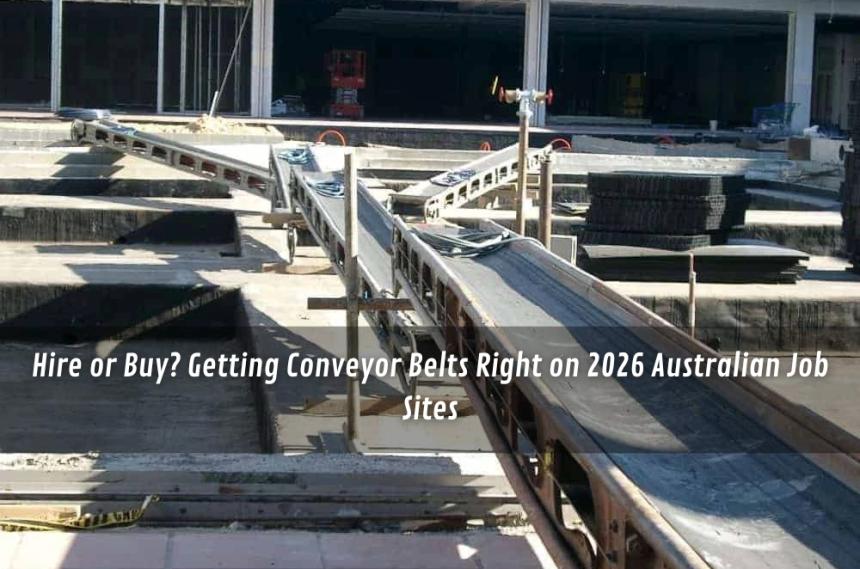

Hire or Buy? Getting Conveyor Belts Right on 2026 Australian Job Sites
Weighing up conveyor belt hire against an outright purchase? Explore project timelines, cash flow, maintenance, and WHS angles before you commit.
Site managers juggle dozens of moving parts even before the first slab is poured. Material flow is one of the earliest pressure points, and delays quickly ripple through trades and budgets alike. For many teams, the simplest fix is to rent a conveyor belt for construction projects rather than invest in a permanent setup. Yet “hire” is not automatically the better answer—context matters. Let’s dig into the questions that separate a smart short-term rental from a purchase that pays for itself many times over.
Project Life Span Dictates Pay-OffA quick rule of thumb: if the belt will clock under six months of total runtime, hiring usually wins. Anything longer and the maths starts to tilt. Still, each project throws its own curveballs. The most common variables are outlined below.
FactorHire AdvantageBuy AdvantageCash flowLower upfront outlay preserves working capital.Depreciation benefits; no ongoing rental fees.MaintenanceProvider handles servicing, parts, and swap-outs.Control over maintenance intervals and spares inventory.FlexibilitySwap belt widths, lengths, or discharge heights between jobs.Configure once for a recurring product line or identical builds.Storage between projectsEquipment returns to supplier—no yard space required.Useful if the business already maintains a plant yard.ComplianceHire gear is delivered tested and tagged.Must manage inspections and tagging in-house.That table looks neat, but real-world decisions are anything but tidy. A three-month inner-city demolition might seem tailor-made for hire—until the superintendent wins two more similar tenders starting back-to-back. Suddenly, outright ownership could be cheaper than three consecutive rentals.
Teams facing that kind of fork often compare notes with peers or scour trade forums. Another practical source is this walkthrough on reliable options for hiring conveyors; it lays out common watch-outs when equipment availability tightens in peak season.
Hiring to Test Before BuyingPlenty of firms split the difference. They rent a conveyor spec close to what long-term demand suggests, then track hours, wear patterns, and utilisation. If usage stays high and maintenance looks predictable, buying the same (or an updated) model is a low-risk move. Key tips when road-testing:
- Log actual throughput rather than approximate shifts. Hard data beats gut feel.
- Check spare part lead times. If a critical roller takes a month to land from overseas, stock it locally or rethink the model.
- Assess noise and dust output against local council limits, especially on night shifts.
Whether a belt is hired or owned, statutory obligations sit with the principal contractor. The hire company should supply a recent test tag, guarding, and user manual, but daily pre-start inspections still rest on site. If a guard is removed and not replaced, or the stop cord fails a pull test, Safe Work inspectors won’t accept “it came from the rental yard like that” as an excuse.
Practical compliance habits:
- Record pre-start checks in the same logbook as cranes and EWPs.
- Tag any repair immediately—orange tape beats an incident report later.
- Keep manuals on-site, not in a ute cabin thirty minutes away.
Heat, dust, and sideways rain are constants from Darwin to Hobart. Conveyor spec sheets written for factory floors mean little once clay sticks to return rollers or a summer storm dumps water on the head drive. When trialling hire units:
- Inspect belt covers for heat-resistant compounds if the line will handle hot asphalt or bitumen.
- Verify IP ratings on electrical components—especially plug ends—if there’s a chance of standing water.
- Consider galvanised frames rather than painted steel in coastal regions; salt spray works fast.
Simple observations during a rental period inform a purchase list much better than brochure promises.
When Ownership Pays Long-Term DividendsSome builders graduate from ad-hoc rentals to a fleet of owned conveyors because their project pipeline stabilises. Indicators it might be time:
- At least three mid-rise builds scheduled per year with similar floor-to-ground distances.
- Permanent in-house maintenance staff already servicing other plant.
- Reliable yard space available between jobs.
Financiers often look favourably on plant that directly cuts labour expenditure. A belt that nudges two brickies off repetitive shuttle duties can tip internal rate-of-return models in favour of ownership faster than many other capex proposals.
Rental Makes Sense for Specialist SituationsConversely, scenarios that keep hire in pole position include:
- One-off heritage refurbishments where gear must thread through narrow, fragile access points—a custom modular system hired with installation support can save weeks.
- Remote regional builds. Freight is high, but so is the cost of permanent storage afterward.
- Short shutdown windows in industrial plants. Paying extra for a turnkey rental team that pre-configures and removes within strict downtime limits is often cheaper than training internal crews.
Conveyor failures also carry reputational risk. Dragging rubble by hand because a belt motor failed hours before a VIP site walk can dent client confidence faster than any line item on an invoice. Rental agreements that guarantee swap-outs within 24 hours matter when the margin for error is razor thin.
Future-Proofing Through ModularityWith building methods evolving—think cross-laminated timber panels and prefab bathroom pods—flexibility is climbing the priority list. Modular belts that extend or angle up quickly let contractors adapt material routes without dismantling half the system. Hire fleets usually refresh modular stock annually, keeping pace with these trends. Buyers tempted by second-hand bargains should weigh the risk of being locked into obsolete frame pitches or motor configurations.
The Compliance Angle Never DisappearsA final note on safety culture: manual handling remains in Safe Work Australia’s top three causes of lost-time injuries. Their overview of manual tasks guidance highlights conveyors as an engineered control that eliminates repeated lifting. Whether you hire or buy, showcasing that hierarchy-of-control mindset during client audits strengthens bid credibility and raises workforce morale.
Making the CallThere’s no spreadsheet template that nails every variable. Project duration, capital appetite, labour availability, and WHS maturity all lean the decision one way or the other. The smartest path often starts with a rental—treated not as a stopgap, but as live R&D that feeds the next tender. Track the hard numbers, listen to the crew using the belt every day, and the hire-versus-buy answer will reveal itself long before the first bearing shows play.
Material flow rarely headlines the monthly progress meeting, yet it quietly underpins every milestone. Choose wisely, and conveyors fade into the background—right where good infrastructure belongs.