Guide to Understanding Closed-Cell Spray Foam Flammability
Closed-cell spray foam is a highly effective insulation material, but you must understand its fire safety properties to protect your property. While the liquid components are combustible, the cured foam contains flame retardants that help it resist ignition and slow the spread of fire. The closed-cell spray foam flammability rating typically falls under Class 1 (Class A), meaning it has a low flame spread index and smoke development score.
This guide provides a detailed look at how these materials react to heat and what safety standards you need to follow. You will learn about fire barriers, thermal coatings, and why professional installation is necessary for building safety.
Experienced safety consultants and building inspectors often look for specific certifications when evaluating insulation. They know that while no plastic foam is entirely fireproof, high-quality products meet strict national safety codes. This article explains the technical side of fire resistance so you can make informed choices for your project.
How the closed-cell spray foam flammability rating works
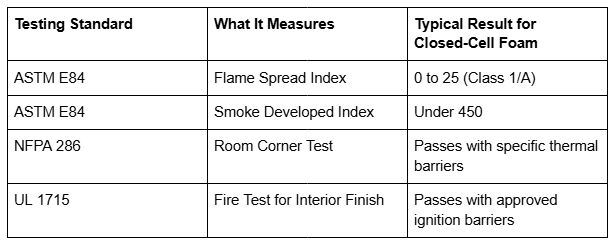
The closed-cell spray foam flammability rating is determined through standardized ASTM E84. This test measures how a flame travels across the surface and how much smoke it produces. A Class 1 (Class A) rating is the highest achievable for these types of materials, indicating a flame spread of 25 or less.
Most building codes require insulation to be separated from the living or occupied space by a thermal barrier. This is usually a half-inch layer of gypsum board or an approved intumescent coating. These barriers provide extra minutes of protection during an emergency, which is a key part of how insulation affects building fire safety standards.
Technical Specifications for Fire Performance
Is spray foam insulation flammable or safe for your building?
When people ask whether spray foam insulation is flammable or safe, the answer depends on the installation context. In its raw, liquid state, the chemicals are combustible and require careful handling. Once cured, the foam is stable but can still burn if exposed to high enough temperatures or an open flame without protection.
Understanding Ignitability and Curing
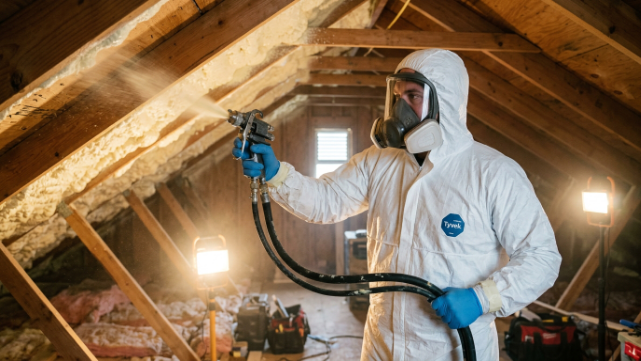
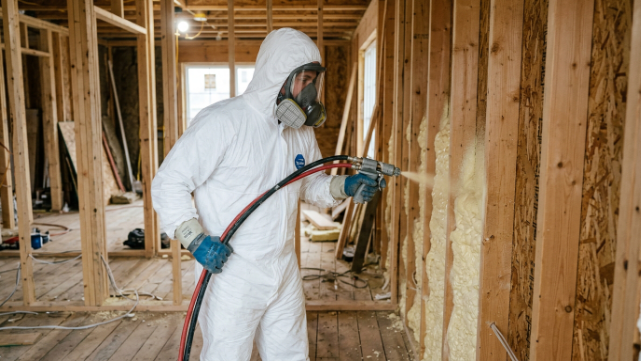
During the application process, the chemical reaction generates heat. If the foam is applied too thick in a single pass, it can retain too much heat and potentially char. This is why you should only hire a closed-cell spray foam installation company that follows the manufacturer's thickness limits and cooling times.
Bonus Tips
You should always ask your contractor for the Technical Data Sheet (TDS) of the specific foam being used. This document lists the exact fire ratings and required thermal barriers for that product.
Understanding the closed-cell spray foam fire rating
The fire rating of closed-cell spray foam simply means the material has built-in chemicals to stop it from becoming a fuel source quickly. However, the rating only applies to the material itself. To ensure the safety of the occupants, the entire wall or roof assembly must still meet local fire codes.
Common Fire Safety Requirements
- Thermal Barriers: A 15-minute barrier, like drywall, is standard for most interior walls.
- Ignition Barriers: In attics or crawlspaces with limited access, a lighter ignition barrier may be used.
- Intumescent Coatings: These special paints char and expand when heated, creating a protective shield over the foam.
- Gap Sealing: Fire-rated foams are often used to seal penetrations in fire-rated walls to prevent smoke travel.
Regional Guidance for Hot Climates
In southern regions like Texas, where attic temperatures can soar, following these fire safety standards becomes even more critical. High ambient heat doesn't cause the foam to ignite, but it can stress the building structure. Proper ventilation or a completely unvented attic design must be handled by building safety insulation solutions experts to prevent excessive heat buildup.
Is a fire-resistant insulation contractor service provider necessary?
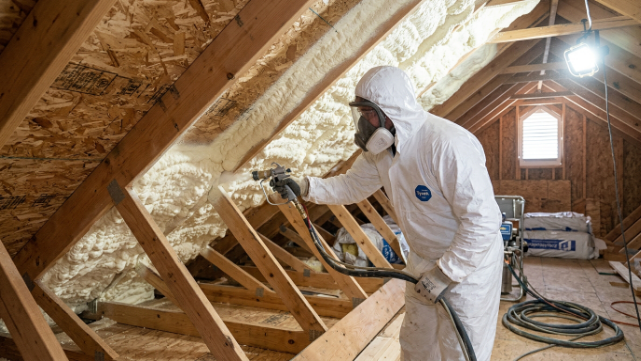
Hiring fire-resistant insulation contractor services is the best way to ensure your building stays up to code. Professional installers understand the chemistry involved and the specific requirements for your local municipality. They ensure the closed-cell spray foam flammability rating remains valid by applying the product at the correct density and depth.
Improperly installed foam can leave gaps or be too thin to provide the intended fire resistance. Professionals also use specialized equipment to monitor the temperature of the chemicals as they mix. This precision prevents the risk of internal combustion during the curing phase.
Bonus Tips
Check if your insurance provider offers discounts for using Class 1-rated insulation materials. Many commercial policies favor buildings that exceed minimum fire safety standards.
Factors to verify before choosing an insulation partner
Before you sign a contract, you must verify the credentials of the service provider. Not all companies have experience with large-scale projects or complex fire codes. You need a partner that prioritizes safety over speed.
- Certification and Training: Ensure the technicians are certified by the manufacturer or a trade organization.
- Knowledge of Local Codes: Different cities have different rules regarding where foam can be exposed.
- Equipment Quality: High-end rigs ensure the two-part chemical mix is consistent, which is vital for fire performance.
- Safety Records: Ask about their on-site safety protocols for handling pressurized chemicals.
Additional Information on Safety Standards
The International Building Code (IBC) and International Residential Code (IRC) are the primary documents that dictate how spray foam is used. These codes are updated every few years, so your contractor must stay current with the latest revisions to keep your property compliant.
Choosing a professional for your safety needs
When it comes to protecting your property, the quality of your insulation matters as much as the skill of the installer. Ensuring that your project meets every closed-cell spray foam flammability rating standard requires a deep understanding of building science. A commercial fire-rated foam insulation service can provide the necessary documentation for inspectors and insurance companies.
Stellrr Insulation & Spray Foam offers professional insulation solutions that focus on both energy efficiency and fire safety for residential and commercial properties. You can reach their team at [email protected] or call (512) 710-2839 to discuss your specific building requirements. They are located at https://maps.app.goo.gl/Kn97GfC6mWUq8gkV8 and provide expert guidance on choosing the right materials for your climate and local codes. Requesting a free quote is a great way to evaluate your options and ensure your building is protected by industry experts.
Common questions about spray foam and fire safetyCan spray foam catch fire by itself?
Cured spray foam does not spontaneously combust. However, if the liquid components are mixed incorrectly at extreme thicknesses during installation, the heat from the reaction could cause charring.
Does the foam release toxic smoke during a fire?
All organic materials, including wood and foam, release smoke when burned. Using a Class 1 (Class A) rated foam with a proper thermal barrier significantly reduces smoke development and gives people more time to exit.
Is a thermal barrier always required over spray foam?
In most cases, yes. The building code requires a thermal barrier like drywall to separate foam from occupied spaces, though some specific "DC315" coatings can act as an equivalent.
How do I know if my foam has a Class 1 (Class A) rating?
The closed-cell spray foam flammability rating should be printed on the product packaging and listed on the manufacturer's technical data sheets provided by your contractor.
Does closed-cell foam melt when heated?
Closed-cell foam is a thermoset plastic, meaning it will generally char and flake away rather than melting and dripping like some other types of plastic insulation.