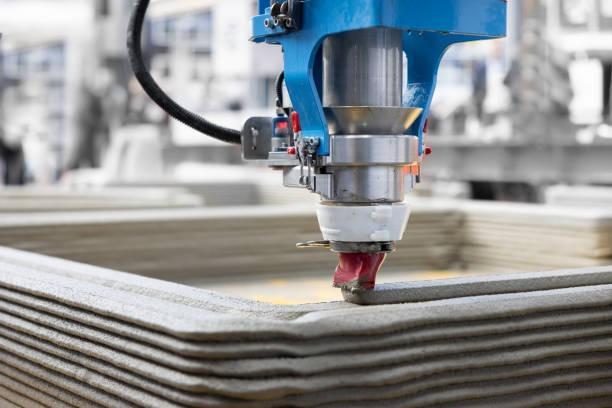

Growth in the European 3D Printing Market: Comprehensive Data, Key Findings, and Future Outlook 2026
Financial projections indicate that the market is expected to surge to an impressive USD 30.81 Billion by the year 2034.
European manufacturers consistently grapple with mounting pressures regarding supply chain resilience, escalating material waste, and elongated product development cycles. Traditional subtractive manufacturing methods often fall short when rapid iteration or low-volume custom production is required. In a highly competitive landscape, businesses need actionable, agile solutions to remain profitable and innovative. Additive manufacturing offers a clear path forward, but capitalizing on this technology requires strict data-driven decision making and a deep understanding of current industrial shifts.
Executive Summary of the European 3D Printing Market
The European 3D printing market is experiencing robust, sustained expansion as additive manufacturing firmly transitions from a niche prototyping tool to a cornerstone of mainstream industrial production. Based on rigorous analysis and current market trends, the market size was valued at USD 8.45 Billion in the base year of 2025. This baseline represents a significant threshold of adoption across multiple sectors, proving that the technology has moved far beyond its experimental phases.
Looking ahead, the sector is positioned for exponential growth. Financial projections indicate that the market is expected to surge to an impressive USD 30.81 Billion by the year 2034. This trajectory represents a formidable compound annual growth rate (CAGR) of 15.46% during the forecast period from 2026 to 2034. This aggressive growth rate is fueled by the growing adoption of additive manufacturing in the automotive, aerospace, and healthcare industries. Companies in these sectors are actively seeking rapid prototyping and custom manufacturing services to shorten production cycles and minimize material waste. Furthermore, substantial investments in research and development, alongside supportive governmental initiatives across Europe, have structurally enhanced the overall regional market share.
Key Findings and Segment Analysis in the European 3D Printing Market
To truly grasp the mechanics of this industry, it is necessary to examine the foundational segments driving adoption. The following key takeaways highlight the dominant technologies, processes, and applications shaping the European 3D printing market as of 2025:
- Leading Technology: Fused Deposition Modeling (FDM) holds a commanding lead; it captured 28.03% of the total market share in 2025.
- Dominant Process: Material extrusion represents the primary operational process, accounting for 28.12% of the market.
- Primary Material: Plastics represent the absolute largest material segment with a substantial market share of 38.10%.
- Core Offering: Printers themselves dominate the commercial offerings, securing an overwhelming 75.04% of the market value.
- Top Application: Prototyping remains the most significant application, driving 53.76% of all additive manufacturing activities.
- Primary End User: The automobile sector leads industry adoption, representing 21.08% of the overall market demand.
Technological Dominance: FDM and Material Extrusion
The prominence of Fused Deposition Modeling within the European 3D printing market is no coincidence. FDM has emerged as the dominant technology because of its inherent cost-effectiveness, operational simplicity, and widespread adoption among small and medium enterprises. It allows for highly functional prototyping without demanding extensive technical expertise. In parallel, material extrusion leads the process category due to its incredible versatility. This process easily handles diverse thermoplastic materials and requires notably lower initial equipment costs. Together, these methodologies make the production of durable end-use parts accessible and economically viable for a broad spectrum of European businesses.
The Materials Landscape: Why Plastics Lead
When evaluating the physical inputs of the European 3D printing market, plastics remain the undisputed leader. Their dominance is driven by a unique combination of lightweight properties, exceptional design flexibility, and widespread availability in numerous engineering grades. Plastics are highly compatible with multiple printing technologies, making them a universal staple for manufacturers. As industries like aerospace and automotive prioritize weight reduction to meet stringent fuel efficiency and emissions targets, the reliance on high-performance polymer printing continues to multiply rapidly.
Application and End-User Dynamics: The Automotive Catalyst
Prototyping retains its position as the bedrock application for additive technologies. This is primarily driven by the universal corporate need for rapid design validation, reduced time-to-market cycles, and cost-efficient product development workflows. Meanwhile, the automobile industry serves as the primary engine for end-user demand. European automotive manufacturers rely heavily on additive solutions to fulfill the increasing demand for lightweight components, the rapid prototyping of complex vehicle parts, and the creation of highly customized factory tooling solutions.
Emerging Market Trends and Competitive Analysis
A thorough competitive analysis reveals that the European 3D printing market exhibits a highly fragmented but innovative competitive landscape. Established technology providers are currently competing directly alongside agile emerging startups. To maintain their market positioning, these participants are focusing heavily on product innovation and strategic partnerships. Several defining trends are currently dictating the pace of this innovation:
- Integration of Artificial Intelligence and Machine Learning The integration of artificial intelligence and machine learning algorithms into additive workflows is fundamentally transforming production capabilities. These advanced technologies enable real-time process monitoring, predictive quality control, and automated design optimization. This convergence significantly enhances printing precision while drastically reducing defect rates. For example, in late 2025, the Icelandic startup Euler secured 2 Million Euros to scale its AI-powered 3D printing software. Innovations like this enable self-correcting printing processes that maintain consistent output quality with minimal human intervention throughout production cycles.
- Expansion of Multi-Material and Hybrid Printing Technologies Multi-material and hybrid printing technologies are gaining remarkable traction across European manufacturing sectors. This advancement allows engineers to strategically combine different materials within a single build, creating parts with localized characteristics such as varying rigidity, electrical conductivity, or thermal resistance. Demonstrating this capability, AMAREA Technology recently delivered its sophisticated MMJ ProX multi-material printer to Fraunhofer IKTS. This specific development enables the precise, scalable production of complex components utilizing up to six different materials simultaneously; a feature particularly valuable in advanced medical device manufacturing.
- Growing Emphasis on Sustainable and Circular Manufacturing Sustainability considerations are increasingly dictating corporate strategies within the European 3D printing market. Organizations are aggressively prioritizing circular economy principles to comply with stringent regional environmental regulations. Additive manufacturing inherently generates minimal waste compared to traditional subtractive methods, but the industry is pushing further. The development of bio-based and highly recyclable printing materials is accelerating. A notable milestone occurred in 2025 when the Dutch company Concr3de launched wood-based and water-soluble ceramic materials, empowering fully bio-based, biodegradable, and circular additive manufacturing for industrial applications.
Future Outlook for the European 3D Printing Market
The future outlook for this sector remains exceptionally bright. The European 3D printing market is strategically positioned for sustained revenue generation throughout the coming decade. This longevity is supported by expanding industrial adoption, continuous technological breakthroughs, and massive investments in localized manufacturing infrastructure.
Governments and private enterprises are actively funding advanced manufacturing ecosystems and innovation hubs to strengthen supply chains against global disruptions. Furthermore, geopolitical fluctuations and recent logistical bottlenecks have underscored the critical need for localized supply chains. Additive manufacturing provides a direct solution to these challenges; it allows European firms to pivot rapidly and produce essential components on demand without relying on vulnerable overseas shipping routes.
While the automotive and aerospace sectors will remain the primary revenue contributors, new frontiers are rapidly opening. Healthcare applications, particularly the highly specialized fields of medical device manufacturing and bioprinting initiatives, represent massive growth opportunities that will drive future market revenue development across the region. As printer speeds, precision, and material compatibilities continue to improve, the scope of viable applications will only widen. Stakeholders who invest in digital transformation and align their operations with circular manufacturing principles will capture the lion's share of this burgeoning market.
Download a sample copy of the report
Conclusion
The European 3D printing market has evolved far beyond its origins in basic rapid prototyping. Valued at USD 8.45 Billion in 2025 and accelerating toward a projected USD 30.81 Billion by 2034, it represents one of the most dynamic sectors in modern industry. Driven by the accessibility of Fused Deposition Modeling, the versatility of material extrusion, and the high demand from the automotive sector, additive manufacturing is systematically rewriting the rules of production.
Furthermore, the integration of cutting-edge technologies is ensuring that this market remains at the forefront of global innovation. By embracing artificial intelligence for real-time quality control, leveraging multi-material capabilities for complex builds, and committing to sustainable practices through biodegradable inputs, businesses can definitively overcome traditional manufacturing bottlenecks. The empirical data is undeniably clear: those who leverage consumer insights and rigorous market intelligence to integrate these advanced 3D printing systems into their core operations will not only survive the current industrial shift but will architect the future of European manufacturing.





I migliori casinò online italiani con giochi di slot nel 2026
I migliori casinò online italiani con giochi di slot nel 2026