
Future Consumer Trends Every Food Business Owner Should Understand
Explore the future consumer trends reshaping the food industry — from digital ordering and AI personalization to speed expectations and evolving customer loyalty.
The food industry has never stood still. But the pace and nature of change happening right now — driven by technology, shifting demographics, evolving values, and the long tail of behavioral shifts accelerated by the pandemic — is creating a genuinely different consumer landscape. The businesses that will lead the next decade are not necessarily the ones with the most creative menus or the deepest pockets. They are the ones paying close attention to where consumer behavior is heading before it arrives.
Understanding future trends is not about chasing predictions. It is about building the operational flexibility and strategic awareness to recognize meaningful shifts early, adapt thoughtfully, and position the business ahead of the curve rather than behind it. For food entrepreneurs, restaurant owners, café operators, and food startup founders, the trends outlined here represent the currents that will shape what consumers expect, reward, and reject in the years ahead.
For the generation currently entering its peak spending years, digital is not a channel — it is the starting point for almost every consumer interaction, including food. The expectation that a food business is findable, navigable, and orderable through a smartphone is now so fundamental that failing to meet it is equivalent to being effectively invisible to a large and growing segment of the market.
But digital ordering is evolving beyond the basic model of app-based delivery. Voice ordering through smart home devices is gaining traction. QR-code-driven tableside ordering in restaurants has moved from pandemic-era workaround to permanent feature in many markets. Social commerce — the ability to place an order directly through a social media platform without leaving the app — is expanding rapidly and is particularly well-suited to impulse food purchases driven by visual content.
The practical implication for food businesses is not simply to have an online ordering system. It is to have a digital presence that is genuinely frictionless across multiple channels, integrated in the backend, and designed around how consumers actually want to interact with the brand digitally — not how the technology was set up years ago and never updated.
Convenience has been the dominant consumer value in food for the better part of a decade. Speed, ease, and accessibility have driven the explosion of delivery platforms, meal kits, grab-and-go formats, and ready-to-eat product categories. But the next evolution of convenience is more sophisticated: it is anticipatory.
Anticipatory convenience means the business understands what the customer wants before they articulate it. It means subscription models that automatically replenish products on a schedule the customer helped define. It means AI-driven recommendations that surface the right meal option based on the time of day, the customer's order history, the weather, and dozens of other data signals. It means loyalty programs that offer the right reward at the right moment rather than generic points accumulated toward a distant payoff.
This shift from reactive to anticipatory service is not just a technology question — it is a mindset question. Food businesses that think proactively about how to reduce the cognitive load on their customers, and that build systems designed to meet needs before they are expressed, are positioning themselves for a future where the businesses that think ahead will be systematically preferred over those that simply respond.
Consumers have been trained by digital platforms to expect experiences tailored to their individual preferences. The recommendation engines of streaming services, e-commerce platforms, and social media have raised the baseline expectation for relevance across every industry — including food.
In practical terms, this means that the food businesses of the future will need to offer meaningful personalization at scale. This does not require individual attention to every customer interaction — it requires smart use of data to make each customer feel recognized. A coffee app that remembers a customer's usual order and prompts them to reorder on their typical schedule. A restaurant that surfaces a note about a returning customer's dietary preferences to the server before the table is seated. A food brand whose email marketing references a customer's actual purchase history rather than sending the same generic offer to everyone.
The personalization gap in the food industry remains significant. Most businesses are still operating with one-size-fits-all menus, generic loyalty communications, and limited use of the behavioral data they already have. The gap between what is currently standard and what consumers already expect from other industries represents one of the clearest opportunities in food right now.
As more of the food journey moves into the digital realm, the physical moments that remain — the meal itself, the unboxing of a delivery, the experience of eating in a restaurant, the feel of a product's packaging — carry disproportionately more weight than they once did. When every digital touchpoint is smooth and frictionless, the physical touchpoints become the primary arena for differentiation and memory creation.
This elevation of the physical experience is driving a renaissance in food presentation. The way a meal arrives — whether to a table or through a delivery app — is being treated by forward-thinking food businesses as an extension of the product rather than a logistical afterthought. Street food vendors, quick-service concepts, and specialty food brands are all discovering that the container holding the food is part of the experience the customer evaluates and shares. Businesses selling quick-serve formats, for instance, are finding that investing in branded packaging formats — including custom hot dog boxes designed to reflect the brand's personality rather than generic commodity containers — creates memorable unboxing moments that customers photograph, share, and associate with quality. That association elevates the perceived value of the product itself.
This trend will only intensify as delivery continues to grow as a channel. The restaurant dining room has always been a stage where the full experience could be crafted and controlled. As more of that experience moves to the customer's home, the packaging becomes the stage. Businesses that understand this and invest accordingly will create experience equity that businesses using generic containers simply cannot match.
The history of consumer expectations around service speed in food is a story of one-way ratcheting: the acceptable wait time has only ever gotten shorter, never longer. Whatever the current standard is, the next generation of consumers will expect something faster. This is not conjecture — it is a pattern that has held consistently across every service delivery context for decades.
For food businesses, the operational implications of this expectation are demanding. Kitchen processes need to be efficient without sacrificing quality. Ordering systems need to reduce the time between decision and confirmation. Delivery logistics need to minimize the window between completion and arrival. And when delays happen — as they inevitably will — communication systems need to keep customers informed in real time rather than leaving them to wonder.
The businesses that will thrive under increasingly compressed speed expectations are those that invest in kitchen technology, workflow design, and delivery infrastructure now, before the gap between their performance and consumer expectations becomes large enough to damage retention. Speed is increasingly a minimum standard in the food industry — and minimum standards only move in one direction.
The consumer-facing technology trends in food — digital ordering, AI personalization, delivery optimization — are the visible surface of a much deeper operational transformation. The businesses that will be most competitive in the coming decade are those that have embraced technology not just as a customer interface but as a fundamental change to how they operate internally.
Predictive inventory management systems are already allowing food businesses to reduce waste significantly while improving in-stock rates on high-demand items. AI-driven scheduling tools are helping restaurants match staffing levels to predicted demand with accuracy that manual scheduling cannot approach. Smart kitchen equipment with embedded sensors is enabling real-time quality monitoring that catches consistency problems before they reach the customer.
For smaller food businesses and startups that may feel these technologies are out of reach, the landscape is changing rapidly. Many of the tools that required enterprise-scale budgets five years ago are now available as affordable SaaS platforms designed specifically for independent food operators. The barrier to operational technology adoption has dropped substantially — and the competitive advantage it creates has grown in proportion.
The consumer loyalty that food businesses will need to earn in the coming years looks different from the loyalty that older loyalty models were designed to create. Points programs and frequency rewards still have a place — but they are no longer sufficient to create the deep, durable relationships that food businesses need to survive in increasingly competitive markets.
Values-based loyalty is the emerging standard. Consumers — especially younger ones — are choosing food businesses that align with their personal commitments around sustainability, ethical sourcing, community support, and social responsibility. And once they have made that alignment decision, they tend to maintain it with a stickiness that purely transactional loyalty programs rarely achieve.
The implication for food businesses is not that they need to manufacture a set of values for marketing purposes. Consumers are sophisticated enough to recognize when stated values are genuine versus performative, and the reputational cost of the latter is significant. The opportunity is for food businesses with authentic commitments to make those commitments visible, to talk about them honestly, and to build communities of customers who share them.
Every major consumer behavior shift creates a window of opportunity that tends to be widest at the beginning, when most competitors are still operating on old assumptions. The businesses that moved into delivery early, before the platforms became saturated with competitors, captured market share and customer relationships that they still hold today. The businesses that built strong digital communities before social commerce became mainstream are finding that their audiences translate directly into revenue at a cost that latecomers cannot replicate.
The trends outlined here are not predictions about a distant future — they are descriptions of shifts already in motion, accelerating toward a tipping point. The businesses that are investing in digital infrastructure, personalization capability, operational efficiency, and values alignment now are building the systems that will define their competitive position for the next decade. The ones that wait for these trends to become unavoidable before responding will find themselves adapting under pressure, at higher cost, with less runway.
The food industry rewards those who understand their customer deeply and build consistently around that understanding. The future belongs to the food businesses that are studying these trends carefully, building toward them deliberately, and treating every customer interaction as a data point in an ongoing effort to understand what people will want next — and how to be ready when they do.
The most important thing a food business owner can understand about the future is that the consumer is not waiting. Expectations are shifting now, habits are forming now, and the competitive landscape is being reshaped now — by the businesses that are paying attention and moving with intention. The question is not whether to adapt. It is how quickly and how well. The food businesses that answer that question wisely will be the ones defining the industry in the years ahead.
How AI Marketing Tools Are Revolutionizing Digital Business Strategies...
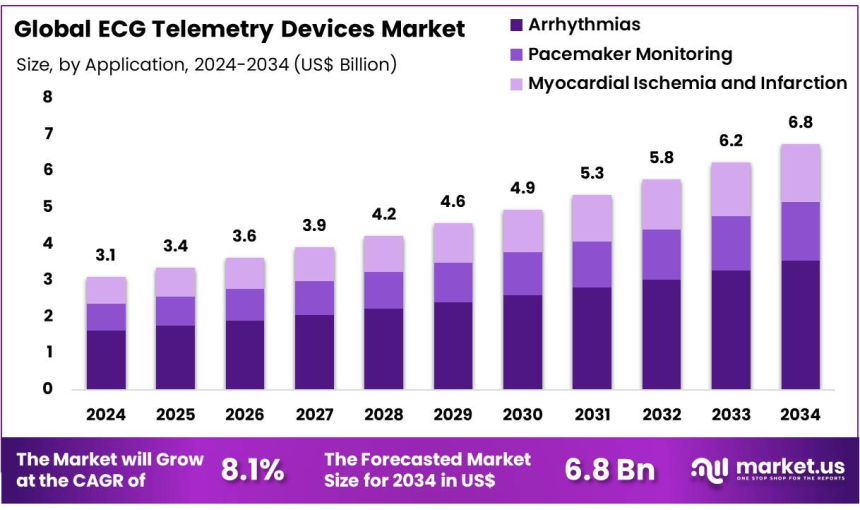
ECG Telemetry Devices Market Expands as Demand for Remote Cardiac Moni...


Best Live Music Venue in Sydney – GJ Donovan Performing at Canterbury...