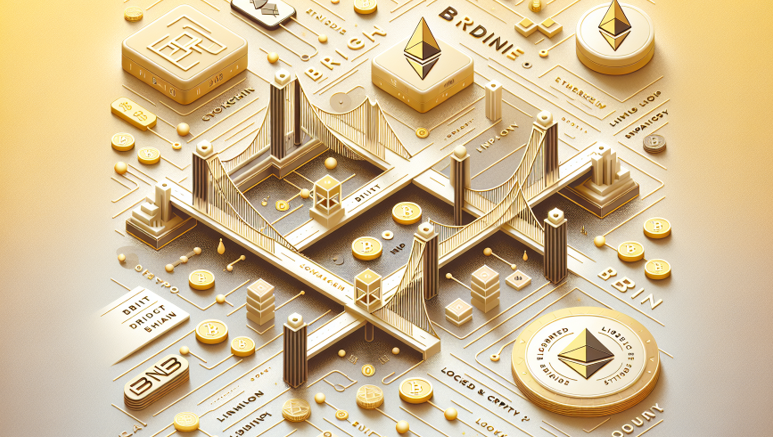

fShen (Shen) announces bridge to Ethereum
Community tokens on BNB Chain eventually face a choice. Stay comfortable in a familiar ecosystem, or stretch outward into the larger, more expensive, more complicated world of Ethereum and beyond. fShen has made its choice.
The bridge to Ethereum is officially happening, and the decision says something about how the team is thinking about the project's long-term trajectory.
fShen (ticker: Shen) is a community-driven token on BNB Chain that's built its identity around a combination of Asian mythological themes and tight community culture. The branding draws from the Shen archetype — transformation, power, devotion — giving the project a narrative density that most meme-adjacent tokens lack.
The community has coalesced around these themes organically. The memes, the in-jokes, the shared vocabulary all reinforce the identity rather than feeling bolted on. That kind of cultural coherence is hard to fake and harder to replicate. It's what separates community tokens with real staying power from the ones that fade after the initial momentum dissipates.
Live trading data for Shen is available on DexScreener for anyone tracking volume, liquidity, and holder patterns.
The bridge uses established infrastructure rather than custom-built cross-chain code. This matters enormously — the worst exploits in crypto history have come from teams trying to roll their own bridge logic. Using audited, battle-tested bridge protocols dramatically reduces that risk.
On the mechanics:
- Lock-and-mint architecture. Shen tokens bridged from BNB Chain get locked on the source side, with wrapped versions minted on Ethereum
- Cryptographically-verified relayers sign the cross-chain messages
- Unified supply accounting ensures total Shen supply doesn't mysteriously grow just because the token now lives on two chains
- Bidirectional withdrawals let holders move tokens back to BNB Chain whenever they choose
Nothing here is novel. All of it is correct. Meme-adjacent tokens don't need to invent new bridge technology — they need to use the working technology properly. fShen is doing exactly that.
Ethereum has higher fees than BNB Chain. Transactions are slower. The user experience often feels more cumbersome. So why bother?
Because Ethereum is where a massive amount of crypto capital lives and where certain holder cohorts have rarely strayed. ETH-maximalist DeFi users, serious NFT collectors, long-time Ethereum-native participants — these people typically don't bridge to BNB Chain just because a token exists there. They'd need a compelling reason, and for most projects, they won't find one.
By establishing presence on Ethereum directly, fShen reaches that audience on their home turf. The bridge reduces friction to basically zero for anyone who'd otherwise never have interacted with a BNB Chain token.
For existing fShen holders, nothing changes on the BNB Chain side. The token continues trading exactly as it has. What changes is the addressable market on the other side of the bridge.
Bridge announcements always warrant security scrutiny. fShen's approach starts from a strong foundation on BNB Chain.
The primary PancakeSwap pool is locked via Mudra Liquidity Locker, with the lock verifiable via on-chain certificate. Anyone can confirm: the lock exists, it applies to the correct LP tokens, and it has meaningful duration. This isn't marketing language. It's cryptographically-enforced reality.
On the Ethereum side, the liquidity pool will be structured identically. Locked LP, verified contract, constrained admin controls. The security posture doesn't degrade as the token expands — it gets reproduced chain by chain with the same rigor applied to the original deployment.
That consistency matters. Cross-chain expansions often fail because teams pay attention to security on their home chain but treat new chains as secondary, leading to exploits and holder losses. fShen is deliberately avoiding that trap.
One of the real challenges with multi-chain expansion is avoiding liquidity fragmentation. Split existing liquidity too aggressively and every pool ends up thin. Seed new chains too conservatively and the token becomes functionally unusable on them.
fShen's approach:
- Keep BNB Chain as the primary liquidity hub with the deepest pools
- Seed Ethereum liquidity at a scale matched to initial demand expectations — enough to be tradeable, not so much that capital is wasted sitting idle
- Let organic LP provision build Ethereum depth over time rather than injecting large amounts from the treasury
- Trust arbitrageurs to balance prices across chains as the bridge sees flow in both directions
This is disciplined rather than flashy. It prioritizes long-term health of both pools over a headline-grabbing launch.
A few practical considerations for holders planning to bridge or buy on Ethereum:
Initial slippage may be higher. Until Ethereum liquidity builds depth, larger trades will incur more slippage than on BNB Chain. This normalizes as depth grows.
Gas costs are real. Ethereum transactions cost meaningfully more than BNB Chain transactions. Bridge in amounts that make economic sense given those costs.
Price alignment takes time. Early in the bridge's life, arbitrage might not be fast enough to keep prices perfectly aligned across chains. Small discrepancies are normal and will tighten as volume grows.
Bridge withdrawal is always available. If the Ethereum experience doesn't work for you, bridging back to BNB Chain remains possible at any time.
The Ethereum bridge is likely the first step in a longer multi-chain strategy. Polygon, Arbitrum, Base, and other networks are all candidates for future expansion. Each would require the same careful approach — proper bridge infrastructure, identical security standards, patient liquidity bootstrapping.
For now, fShen is focused on executing the Ethereum expansion cleanly. Getting the first cross-chain deployment right matters enormously. It sets the template for everything that follows. If the team can pull off a successful Ethereum launch without any of the common pitfalls — thin liquidity, security issues, community fragmentation — subsequent expansions become much more credible.
The community is ready. The infrastructure is in place. The bridge opens soon.
Best Roses for East Bay Gardens | Evergreen Nursery
Find the best roses for East Bay gardens and monarch plants to pair with them, from diseas...




FIFA World Cup Final Tickets: Argentina Moves Closer to FIFA World Cup...