
Flange Bolts Manufacturers in Rajkot | Reliable Supply
Looking for trusted Flange Bolts Manufacturers in Rajkot? Get consistent quality, tested batches, and fast delivery. Send your RFQ today.
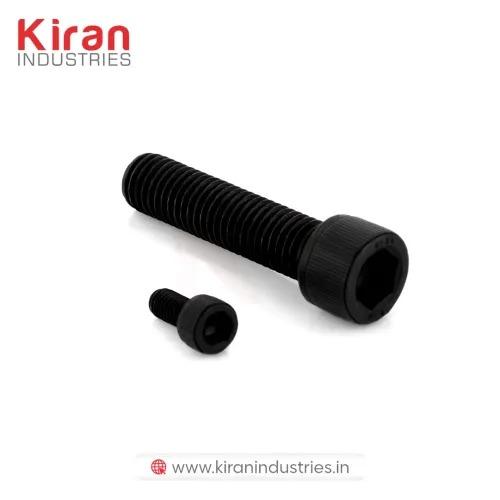
Flange Bolts Manufacturers Who Actually Deliver What They Quote
The shipment arrives. You open the crates. And suddenly those Flange Bolts Manufacturers you trusted look very different on paper than in steel—threads slightly off, coating inconsistent, and no one picking up calls.
Most buyers don’t lose money on price. They lose it on assumptions.
And yet, in the fast-moving world of industrial procurement, flange bolts are still treated like commodity items. That’s a mistake. A bad batch doesn’t just delay assembly—it halts production lines, triggers penalties, and quietly eats into margins.
The Specification Details Buyers Usually Miss
Thread Tolerance Isn’t “Standard”—It’s Controlled
Flange bolts come with integrated washers, which distribute load and reduce the need for separate components. Sounds simple. It isn’t.
Thread class matters. A lot. Most buyers accept vague specs like “metric standard.” That’s how mismatched fittings happen.
Material Grades and Heat Treatment
Common grades: 8.8, 10.9, 12.9
Heat treatment directly affects tensile strength
Improper tempering leads to brittle failure under load
Here’s where things slip: some suppliers outsource heat treatment without traceability. You won’t see the problem until failure testing—or worse, field use.
Surface Finish and Coating Thickness
Zinc plating, HDG, black oxide—each has its place. But coating thickness must match application.
A 12-micron coating vs. 8-micron isn’t a rounding error. It’s corrosion life.
Flange Design Geometry
Not all flanges are equal. Serrated vs. non-serrated matters depending on vibration exposure.
Most buyers don’t ask.
One Overlooked Detail: Runout Accuracy
Runout affects how evenly load is distributed. Poor runout means uneven stress and eventual loosening.
Nobody mentions this in quotations.
The 5 Questions That Separate Reliable Suppliers from Risk
1. “Can you share batch-level test reports?”
A good supplier sends MTCs with heat numbers.
A bad one says, “We test regularly.”
That’s not an answer. That’s a dodge.
2. “Where is heat treatment done?”
If the answer is “third-party,” ask where, how often audited, and whether batch traceability exists.
No clarity here usually means inconsistency.
3. “What’s your rejection policy?”
A supplier who says “we’ll review case by case” doesn’t have a policy. That’s a negotiation you’ll lose after delivery.
4. “Can you hold dimensional tolerance below ±0.02 mm?”
Most will say yes. Few actually measure at that precision.
Ask for inspection reports.
5. “What’s your lead time variance?”
Everyone promises 15 days.
Ask what happens when raw material delays hit. If they can’t answer, expect 25 days in reality.
What You Actually Gain from the Right Supplier
Lower cost isn’t the real win.
Consistent Assembly Fit
Threads that match reduce rework time. Even a 2% mismatch rate can slow assembly by hours per shift.
Reduced Inventory Buffer
Reliable delivery timelines mean you don’t overstock “just in case.”
Fewer Field Failures
Which means fewer warranty claims. And fewer angry calls.
Predictable Coating Life
Especially critical in export markets with high humidity or coastal exposure.
Cleaner Audits
Documentation matters. Buyers underestimate how often clients ask for traceability.
Margin Protection
You’re not paying twice—once for the product, and again for fixing its problems.
Availability in Rajkot and Why It Matters More Than You Think
Rajkot isn’t just another industrial city in Gujarat. It’s one of India’s densest fastener manufacturing clusters, with over 3,500 MSME units contributing to the sector (as per regional industry data).
That concentration changes things.
Raw material access is faster. Tooling vendors are nearby. Heat treatment facilities operate within short transport cycles. Which means lead times shrink—not on paper, but in reality.
For buyers sourcing from Rajkot, Gujarat, 360024, India, proximity isn’t about geography. It’s about supply chain compression.
And yes, we’ve seen buyers shift from distant suppliers to Rajkot just to cut 6–8 days from procurement cycles.
What We’ve Learned the Hard Way
We’ve been manufacturing fasteners at Kiran Industries long enough to know where things break—not just in metal, but in processes.
We’ve supplied to clients exporting to 31 countries, and the feedback isn’t always polite. That’s where the real learning happens.
In 2019, we scrapped an entire batch of flange bolts because coating thickness dipped below 9 microns in random samples. It wasn’t caught by standard inspection—but a European client flagged it during salt spray testing. We changed our inspection protocol after that. Permanently.
We don’t outsource critical processes without audit trails. And we don’t ship unless batch reports match what was promised.
Send Specs, Not Just Enquiries
If you're sourcing flange bolts, don’t send a one-line RFQ.
Send us:
Required grade (8.8 / 10.9 / 12.9)
Quantity (MOQ starts at 5,000 pieces)
Coating specification
Application details (if available)
We respond within 24 hours. Not with generic pricing—but with clarifications if something looks off.
That’s usually where bad orders get fixed.
Flange Bolts Manufacturers Aren’t Equal—And That’s the Point
Choosing the right Flange Bolts Manufacturers isn’t about finding the cheapest quote. It’s about finding the one who tells you what could go wrong before it does.
Because the next decade of sourcing won’t reward speed alone—it will reward accuracy.
FAQs
What’s the difference between flange bolts and regular bolts?
Flange bolts have a built-in washer, which distributes load and reduces loosening. Regular bolts need separate washers. For vibration-heavy setups, flange bolts are usually the safer choice.
Are Allen Bolt Manufacturers in India reliable for export quality?
Some are. Many aren’t.
The issue isn’t capability—it’s consistency. Unless the manufacturer maintains batch traceability and proper heat treatment control, export quality becomes hit-or-miss.
Do Allen Key Bolt Manufacturers in India follow international standards?
Yes, but not universally.
Standards like DIN and ISO are followed by established manufacturers. Smaller units may claim compliance without full testing infrastructure. Always ask for certification proof.
What coating is best for flange bolts?
Depends on application.
Zinc plating works for indoor use. Hot-dip galvanizing suits outdoor exposure. But HDG can affect thread fit, which many buyers overlook.
Can I mix suppliers for flange bolts and Allen bolts?
You can. But it introduces risk.
Thread compatibility and coating variation can create assembly issues. Most buyers eventually consolidate suppliers for this reason.
How do I verify an Allen Bolt Manufacturers in India before ordering?
Start with sample orders.
Then check:
Inspection reports
Heat treatment traceability
Coating thickness records
If they hesitate to share data, that’s your signal.
What’s a realistic lead time for bulk flange bolts?
15–20 days for standard sizes.
But here’s the caveat—raw material delays can push it beyond 25 days. Suppliers who don’t acknowledge this upfront usually miss deadlines.
Get Verified Gate.io Account Research: The Ultimate Expert Guide
Get Verified Gate.io Account Research: The Ultimate Expert Guide Gate.io has become one o...

Get Fanvue Account Fraud Awareness: The Complete Expert Guide
Get Fanvue Account Fraud Awareness: The Complete Expert Guide Online platforms like Fanvu...
How to Get a Gate.io Account Safely: Complete Investigation Guide
How to Get a Gate.io Account Safely: Complete Investigation Guide Gate.io is one of the w...
Is It Legal to Get a Fanvue Account in the US? – Complete Expert Guide...
Is It Legal to Get a Fanvue Account in the US? – Complete Expert Guide (2026 Edition) Fan...
Where to Get Gate.io Account Legitimacy Check: The Ultimate Expert Gui...
Where to Get Gate.io Account Legitimacy Check: The Ultimate Expert Guide Gate.io is one o...