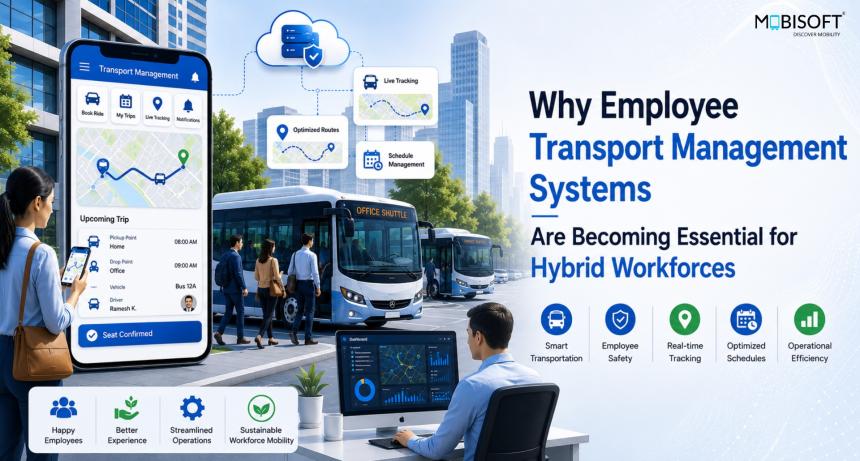

Employee Transport Management System for Hybrid Workforces
Discover why an employee transport management system is essential for hybrid workforces. Improve employee commuting, safety, scheduling, and operational efficiency.
Why Employee Transport Management Systems Are Becoming Essential for Hybrid Workforces
Hybrid work isn't a passing phase anymore. It's how most companies actually run things now. But here's the catch nobody quite planned for. When office days become optional, fixed transport routes stop making sense. Attendance swings from thirty people on a Monday to ninety on a Wednesday, and someone still has to figure out who needs a ride. This is exactly where an employee transport management system earns its place, not as a nice add-on, but as a working necessity.
How Has Hybrid Work Changed Daily CommutesA few years ago, commute planning was almost boring in its predictability. Everyone showed up five days a week, so transport teams built routes once and mostly left them alone after that. That world isn't really around anymore. Gallup's February 2026 tracking puts it at fifty-two percent of remote-capable employees now working hybrid, twenty-six percent fully remote, and just twenty-two percent on-site full time, numbers that keep shifting week to week depending on who you ask.
Fixed-schedule fleets simply weren't designed for that kind of back and forth. A bus that used to run at eighty percent capacity every day might carry twenty people on a Friday now, sitting mostly empty the rest of the ride. Fuel gets wasted, and someone on the admin side ends up rerouting things at the last minute, usually over the phone. We think the real cost hybrid work introduced isn't the flexibility itself, it's the scramble underneath it that nobody quite budgeted for. Companies that treated transport as a fixed line item for years are now realizing it has to move with actual attendance, not a roster drawn up three years back.
What Breaks Without a Transport SystemWithout a proper employee transport management system in place, things tend to unravel in fairly predictable ways. Manual coordination simply cannot keep pace with a workforce that changes its office days on a whim. Here's what usually goes wrong first.
- Unpredictable headcount each day: Some days vehicles run empty, other days people get left waiting because nobody accounted for a sudden spike in attendance.
- Manual roster juggling: HR, admin, and transport vendors end up on endless phone calls and spreadsheets just to confirm who's coming in tomorrow.
- Safety and liability worries: Late shifts and early morning pickups get genuinely risky without proper oversight, and solo travelers usually feel it the most.
- Zero real-time visibility: Nobody really knows where a vehicle is at any given point, whether it's stuck somewhere, or if the employee even got on.
Individually, none of this feels like a crisis. Give it a month though, and the small stuff piles up into something that costs real money, plus a fair bit of employee patience along the way.
How Do ETMS Platforms Adapt to Flexible SchedulesThis is where a proper employee transportation management system genuinely shines. Rather than assuming a fixed group of riders every day, the platform builds routes around who's actually coming in. Employees mark their office days through an app or a simple check-in, and the system takes it from there.
Dynamic Route OptimizationThe platform recalculates pickup points and routes based on daily attendance data, grouping riders by zone rather than by a fixed list. This alone cuts down wasted mileage considerably, since vehicles only travel where people actually need to go that day.
Real-Time Employee AlertsEmployees get live updates on driver location and roughly when the cab will show up, along with a heads-up if the route changes midway. It cuts down on the constant back and forth of texting the driver, or worse, just standing outside and hoping.
Most decent platforms plug directly into HRMS and attendance tools too, so the pickup list updates on its own instead of someone re-typing names into a sheet every morning. Small detail, sure. But it adds up to a fair few saved hours across a week, and honestly, most admin teams will take that trade any day.
Why Does Employee Safety Depend on Smart TransportSafety isn't a checkbox feature here; it's often the deciding factor in whether someone even accepts a job offer, let alone sticks around past their first year. A 2026 study published in a peer-reviewed transportation journal examined how Indian women commuters perceive risk at transit stops and inside vehicles, and found that these perceptions determine whether they'll use certain transport options at all. Worth sitting with for a moment, that.
A capable employee transport management software addresses this through a few concrete features.
- Live GPS tracking visible to both the employee and the facilities team
- SOS or panic buttons built directly into the rider app
- Verified, background-checked drivers with visible profiles
- Geofencing alerts if a vehicle deviates from its assigned route
Employers carry a duty of care that doesn't pause just because someone works from home three days a week. If anything, the days they do commute deserve even sharper attention, since irregular schedules often mean odd hours and unfamiliar routes.
Can Transport Systems Cut Costs for Hybrid OfficesHere's a fair question to ask. Why keep paying for a full fleet when half the seats sit empty most days? Legacy fixed fleets were built assuming demand stays constant, and hybrid work undid that assumption gradually, whether companies noticed at the time or not.
Route optimization and smart pooling change that math quite a bit. Instead of running ten half-empty vehicles, a well-tuned employee transportation solution could probably handle the same headcount with seven or eight, just by grouping riders more sensibly and adjusting day to day. Fuel and maintenance costs make this worth paying attention to as well. Bureau of Transportation Statistics data from February 2026 puts motor vehicle maintenance and repair costs up 2.4 percent year over year, even with gasoline prices easing a touch. Every idle mile is still money, basically.
We'd argue the real ROI isn't a flashy savings percentage some vendor promises. It's the calmer benefit of right-sizing your fleet to match current demand, not a headcount from before hybrid work existed. Companies exploring employee transportation solutions for the first time often assume the goal is cutting costs. The bigger win is usually predictability instead.
What to Look for in a Transport PlatformPicking the right platform shouldn't come down to whoever has the flashiest app demo. A handful of practical things matter a lot more than the sales pitch.
- HRMS integration: The system should sync with your existing attendance and HR tools, no duplicate data entry required.
- Real-time tracking and alerts: Both riders and admins need to see what's happening live, not read about it in a report the next morning.
- Scalability: It needs to handle a headcount that swings around, whether that's twenty people showing up or two hundred.
- Safety certifications: Check for verified compliance with local safety rules and proper driver vetting.
- Reporting and analytics: Utilization numbers let you right-size your fleet based on actual data instead of a guess.
Maybe the simplest test is this: Would the platform hold up if half your workforce switched their office days next week without warning? If yes, you're probably looking at a genuine employee transportation management system, one built for how people work now rather than how they used to a few years back.
ConclusionHybrid work made static transport planning look outdated pretty fast, faster than most companies expected, honestly. Fixed routes and rigid schedules just can't keep up with a workforce whose office days move around weekly, sometimes daily. A well-built employee transport management solution handles flexibility, safety, and cost control together, and companies don't really have to pick one over the other anymore.
Maybe it's worth treating transport as part of the actual workplace strategy now, rather than something bolted on at the end.
Take a look at your current transport setup sometime this week. There's a decent chance you'll find more room to improve than you'd expect.

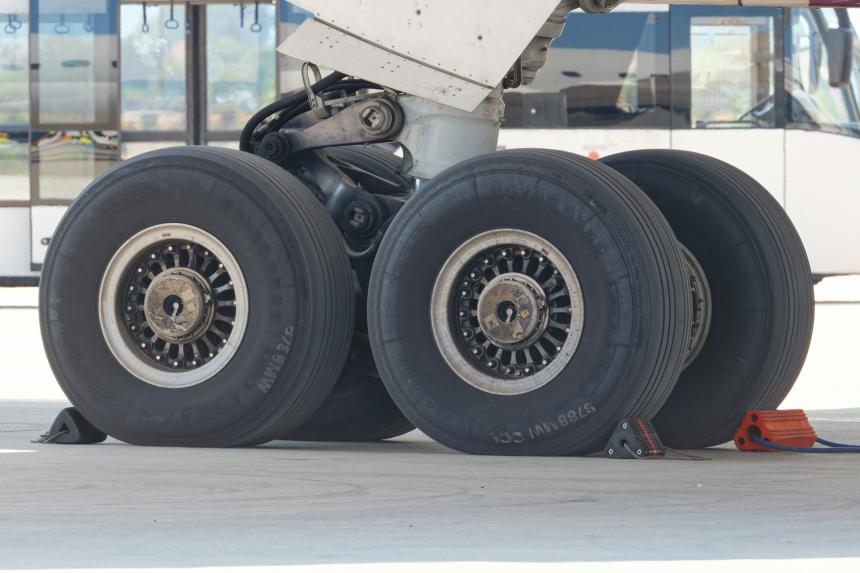
Wheel Chocks Market Report: Competitive Landscape and Industry Insight...