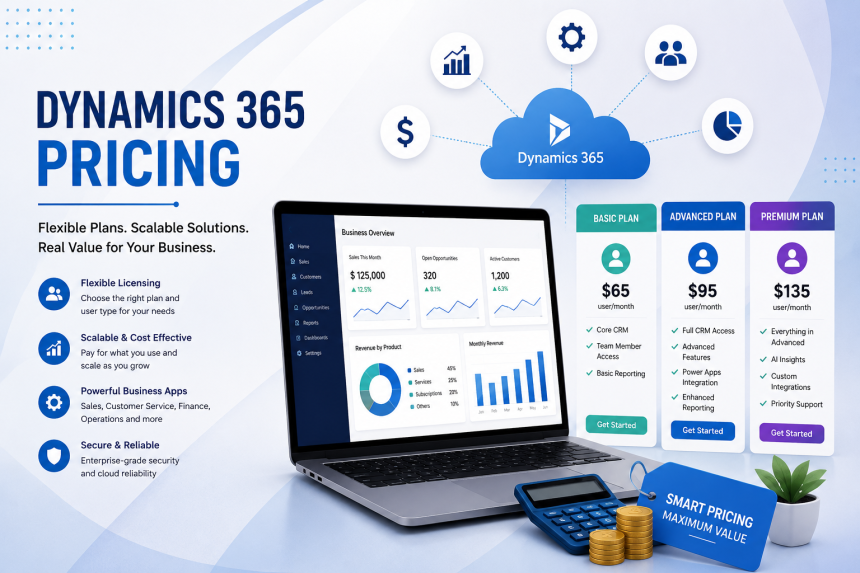

Dynamics 365 Pricing: Plans, Costs & Smart Budgeting Guide
Understand Dynamics 365 Pricing, licensing options, cost factors, and budgeting tips to choose the right Microsoft solution for your business growth.
Introduction
Selecting the right business management platform involves more than comparing features—it also requires understanding the long-term investment. Every organization has different operational needs, team sizes, and growth goals, making software pricing an important part of the decision-making process. Microsoft offers flexible licensing options for its business applications, allowing companies to choose solutions that match their workflows without paying for unnecessary features.
Whether you are a startup, a growing enterprise, or an established organization planning digital transformation, understanding licensing structures can help you optimize costs while maximizing productivity. This guide explains how Microsoft licenses its applications, what factors influence pricing, and how businesses can estimate their overall investment.
What Determines Microsoft Dynamics 365 Pricing?
The total investment depends on several factors rather than a single fixed amount. Microsoft provides separate applications for sales, customer service, finance, operations, marketing, field service, and supply chain management. Businesses can purchase only the applications they need or combine multiple solutions.
Some common pricing factors include:
- Number of licensed users
- Selected business applications
- User license type
- Required integrations
- Cloud deployment requirements
- Customizations and automation
- Third-party extensions
- Ongoing support and maintenance
Each business has unique operational requirements, which is why licensing can vary significantly between organizations.
Understanding User Licensing Options
Microsoft offers different user licensing models designed for different job responsibilities.
Full Users
Full users require complete access to business applications and perform day-to-day operations. These licenses are typically assigned to managers, sales executives, finance teams, customer service representatives, and administrators.
Team Members
Team Member licenses are suitable for employees who only need limited access, such as viewing reports, updating records, approving workflows, or accessing dashboards.
Device Licenses
Organizations operating shared workstations, retail counters, warehouses, or manufacturing facilities may choose device-based licensing instead of assigning licenses to individual users.
Choosing the appropriate license type helps businesses reduce unnecessary software expenses.
Applications That Influence Licensing Costs
Microsoft offers multiple applications that organizations can purchase individually or together depending on business needs.
Some commonly implemented applications include:
- Dynamics 365 Sales
- Dynamics 365 Customer Service
- Dynamics 365 Business Central
- Dynamics 365 Finance
- Dynamics 365 Supply Chain Management
- Dynamics 365 Project Operations
- Dynamics 365 Human Resources
- Dynamics 365 Field Service
- Dynamics 365 Customer Insights
Each application serves a different business function, allowing organizations to build a solution that matches their operational requirements.
How Dynamics 365 Pricing Helps Businesses Plan Their Investment
Instead of purchasing a large software package with unnecessary features, Dynamics 365 Pricing is designed to provide flexibility. Organizations can start with the applications they currently need and expand their licenses as business requirements evolve.
This modular licensing approach offers several advantages:
- Better budget control
- Reduced upfront investment
- Easy scalability
- Flexible user licensing
- Lower operational costs
- Faster software adoption
Businesses can also mix different license types to ensure every employee receives the right level of access without increasing overall software expenses.
Additional Costs Businesses Should Consider
While licensing is the primary investment, organizations should also evaluate implementation-related expenses.
These may include:
Implementation Services
Professional implementation ensures proper configuration, security settings, workflows, and business processes.
Data Migration
Moving customer records, financial data, inventory information, or historical business records from legacy systems requires careful planning.
Custom Development
Many businesses customize dashboards, reports, forms, workflows, and automation to match their internal operations.
Integration Services
Organizations often connect Microsoft Dynamics 365 with applications such as Microsoft 365, SharePoint, Power BI, Outlook, Teams, ERP systems, payment gateways, and third-party software.
User Training
Employee training improves adoption rates and helps teams utilize business applications more efficiently.
Considering these additional services provides a more accurate estimate of the total project investment.
Benefits of Flexible Licensing
One of Microsoft's biggest advantages is licensing flexibility.
Organizations can:
- Add users whenever required
- Upgrade licenses easily
- Remove unused licenses
- Expand into additional applications
- Support remote and hybrid teams
- Scale globally without replacing software
This flexibility allows businesses to align technology investments with future growth instead of purchasing everything at once.
How to Estimate Your Business Requirements
Before selecting licenses, businesses should evaluate their operational needs.
Important questions include:
- How many employees require access?
- Which departments will use the system?
- Are advanced reporting tools required?
- Will multiple business applications be implemented?
- Is integration with Microsoft products necessary?
- Are custom workflows needed?
- Will the company expand in the future?
Answering these questions helps determine the most suitable licensing strategy.
Why Working with a Microsoft Partner Matters
Many organizations choose to work with experienced Microsoft implementation partners when selecting licenses.
A certified partner can help:
- Analyze business requirements
- Recommend suitable applications
- Optimize licensing costs
- Avoid unnecessary purchases
- Plan future scalability
- Configure business processes
- Provide technical support
- Deliver user training
Partner guidance reduces implementation risks while ensuring businesses receive maximum value from their investment.
Tips for Optimizing Licensing Costs
Businesses can reduce software expenses without compromising productivity by following a strategic licensing approach.
Best practices include:
- Assign licenses based on employee responsibilities.
- Review license usage regularly.
- Start with essential applications before expanding.
- Utilize Team Member licenses where appropriate.
- Remove inactive user licenses.
- Plan integrations before implementation.
- Work with certified implementation experts.
These practices help organizations maintain cost efficiency while supporting long-term business growth.
Future Scalability and Business Growth
As organizations grow, their software requirements naturally evolve. Microsoft Dynamics 365 supports business expansion by allowing companies to introduce new applications, users, and automation without replacing existing systems.
Whether expanding into new markets, increasing workforce size, or improving customer engagement, businesses can scale their technology investment gradually. This reduces operational disruption while ensuring that the platform continues to support changing business goals.
Conclusion
Understanding software licensing is an essential step before implementing any business solution. Rather than focusing solely on initial licensing costs, organizations should evaluate long-term scalability, implementation requirements, integrations, customization, and future expansion plans.
Microsoft Dynamics 365 offers a flexible licensing model that adapts to businesses of all sizes, making it easier to control costs while gaining access to powerful business applications. By carefully assessing organizational requirements and choosing the right combination of licenses, companies can achieve better operational efficiency, improved productivity, and a stronger return on investment. With proper planning and expert implementation support, businesses can confidently invest in a solution that grows alongside their future success.
Best Graphic Designing Institute in Delhi: Start Your Creative Journey...
Graphic design has become one of the most sought-after creative careers in today's digital...

Hair Stylist Course in Delhi: Build a Creative Career with a Hair Styl...
The beauty and wellness industry has experienced remarkable growth over the last few years...
Fashion Styling Course: Build a Creative Career with Fashion Diploma C...
The fashion industry is constantly evolving, creating exciting opportunities for individua...
ISO 50001 Internal Auditor Training – Improving Energy Performance Thr...