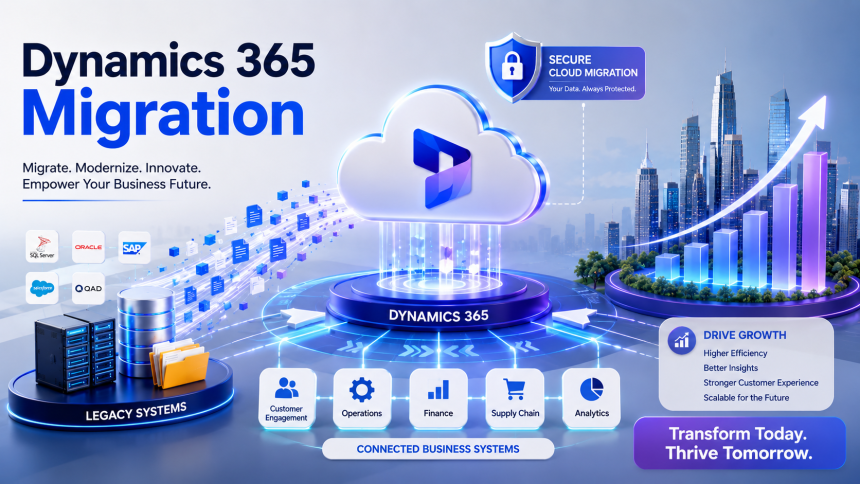

Dynamics 365 Migration for Cloud-Driven Business Success
Learn how Dynamics 365 Migration helps businesses modernize systems, improve security, streamline operations, and accelerate digital transformation.
Introduction
Digital transformation has become a defining factor for organizations that want to remain competitive in an increasingly technology-driven marketplace. Businesses relying on outdated CRM and ERP platforms often face challenges such as disconnected systems, slow processes, limited scalability, and rising maintenance costs. These issues can reduce productivity and make it difficult to respond quickly to customer expectations or market changes. Microsoft Dynamics 365 offers a modern cloud-based business platform that unifies customer engagement, finance, operations, and analytics into a single intelligent solution. A well-planned migration enables organizations to modernize their technology, improve operational efficiency, and establish a flexible foundation for future growth. Instead of simply upgrading software, migration creates opportunities to optimize business processes and strengthen long-term digital capabilities.
The Growing Importance of Cloud-Based Business Platforms
Organizations today require business applications that are flexible, secure, and capable of supporting continuous innovation. Traditional on-premises systems often demand expensive hardware investments, lengthy upgrade cycles, and ongoing maintenance while limiting collaboration across departments. As businesses expand, these systems frequently struggle to accommodate changing operational requirements, creating barriers to productivity and informed decision-making.
Microsoft Dynamics 365 addresses these limitations by delivering a unified cloud environment where business information is accessible in real time. Employees can collaborate efficiently regardless of their location, leadership teams gain immediate visibility into performance metrics, and organizations benefit from regular platform enhancements without disrupting business operations. This cloud-first approach helps companies remain agile while reducing infrastructure complexity and operational costs.
Establishing a Strong Migration Plan
Successful migration projects begin with thoughtful planning rather than immediate implementation. Organizations should evaluate their current applications, business workflows, reporting requirements, and long-term objectives before determining the most suitable migration approach. Understanding the existing technology landscape allows businesses to identify outdated processes that can be improved while ensuring essential operations continue without interruption.
A structured migration roadmap creates clear expectations for every phase of the project. Collaboration between business leaders, technical teams, and department managers helps align implementation activities with organizational goals. Careful planning also enables businesses to anticipate potential risks, allocate appropriate resources, and develop realistic timelines that minimize operational disruption during the transition.
Preparing Business Data for a Smooth Transition
Business data represents one of the most valuable assets within any organization. However, years of operating legacy systems often result in duplicate customer records, inconsistent formatting, outdated information, and incomplete transactions. Migrating poor-quality data into a new platform can affect reporting accuracy, automation, and overall system performance.
Organizations should therefore dedicate sufficient time to reviewing, validating, and cleansing existing information before migration begins. Removing obsolete records and standardizing data improves accuracy while ensuring employees have access to reliable information from the first day of implementation. High-quality business data supports better decision-making, improves customer relationships, and creates a strong foundation for future digital initiatives.
Creating an Integrated Business Environment
Modern organizations rely on multiple software applications to manage sales, finance, customer service, marketing, inventory, and communication. When these applications operate independently, employees often spend valuable time transferring information manually between systems, increasing the likelihood of errors and reducing overall efficiency.
A major advantage of Dynamics 365 Migration is its ability to integrate seamlessly with Microsoft 365, Azure, Power BI, Power Automate, Microsoft Teams, Outlook, and numerous third-party business applications. These integrations create a connected business environment where information flows securely across departments in real time. By eliminating disconnected processes, organizations improve collaboration, automate repetitive tasks, and provide decision-makers with comprehensive operational insights.
Protecting Data Through Advanced Security
Security plays a critical role throughout every migration project because organizations must safeguard confidential customer information, financial records, operational documents, and intellectual property during the transition. A secure migration strategy helps maintain business continuity while ensuring compliance with industry regulations and organizational governance policies.
Microsoft Dynamics 365 includes enterprise-grade security capabilities such as role-based access controls, identity management, encryption, multi-factor authentication, and continuous threat monitoring. These technologies help protect sensitive business information while ensuring employees have secure access to the resources required for their responsibilities. Establishing well-defined security policies before deployment further strengthens governance and reduces organizational risk.
Testing for Business Continuity and Reliability
Before launching a new business platform, organizations should verify that every component functions as expected. Comprehensive testing confirms that migrated data is accurate, workflows operate correctly, integrations perform reliably, and security permissions have been configured appropriately. Identifying issues before deployment helps prevent costly disruptions after the system becomes operational.
User acceptance testing is equally valuable because it allows employees to perform real business activities within the new environment before implementation is completed. Their feedback helps improve workflows, identify usability concerns, and refine training requirements. Thorough testing increases organizational confidence while supporting a successful transition with minimal interruption to daily operations.
Managing Migration Challenges Successfully
Every migration project presents unique technical and organizational challenges. Legacy applications may contain complex customizations that require redesign, while inconsistent business processes can complicate implementation efforts. Employee resistance to change may also affect productivity if users are unfamiliar with the new technology or receive insufficient training before deployment.
Organizations can overcome these challenges through proactive planning, transparent communication, and continuous employee engagement. Providing practical training programs ensures users understand new workflows and system capabilities, while collaboration with experienced implementation specialists reduces technical risks. A structured approach enables businesses to address potential obstacles before they affect project success, ensuring a smoother migration experience.
Long-Term Business Benefits of Migration
The value of migration extends far beyond replacing outdated software. Organizations gain access to intelligent analytics, automated workflows, cloud scalability, and real-time reporting that continuously improve business performance. Employees spend less time completing repetitive administrative tasks and more time focusing on innovation, customer engagement, and strategic initiatives that drive organizational growth.
Cloud-based infrastructure also ensures businesses benefit from ongoing platform improvements, enhanced cybersecurity, automatic updates, and simplified maintenance. As organizational requirements evolve, Microsoft Dynamics 365 provides the flexibility to integrate emerging technologies without requiring major infrastructure investments. This adaptability enables businesses to remain competitive while supporting continuous digital transformation.
Conclusion
Migrating to Microsoft Dynamics 365 is a strategic investment that empowers organizations to modernize business operations, improve collaboration, and strengthen long-term competitiveness. Rather than simply replacing legacy systems, migration creates an intelligent digital environment where people, data, and processes work together more efficiently. Careful planning, high-quality data preparation, secure implementation, comprehensive testing, and effective user adoption are all essential for maximizing migration success.
Organizations that approach migration with a well-defined strategy gain greater operational efficiency, improved customer experiences, enhanced security, and increased business agility. Microsoft Dynamics 365 provides a scalable cloud platform capable of supporting future innovation while adapting to changing business needs. By embracing a structured migration journey today, businesses establish a resilient technological foundation that enables sustainable growth, operational excellence, and continued success in an increasingly digital world.