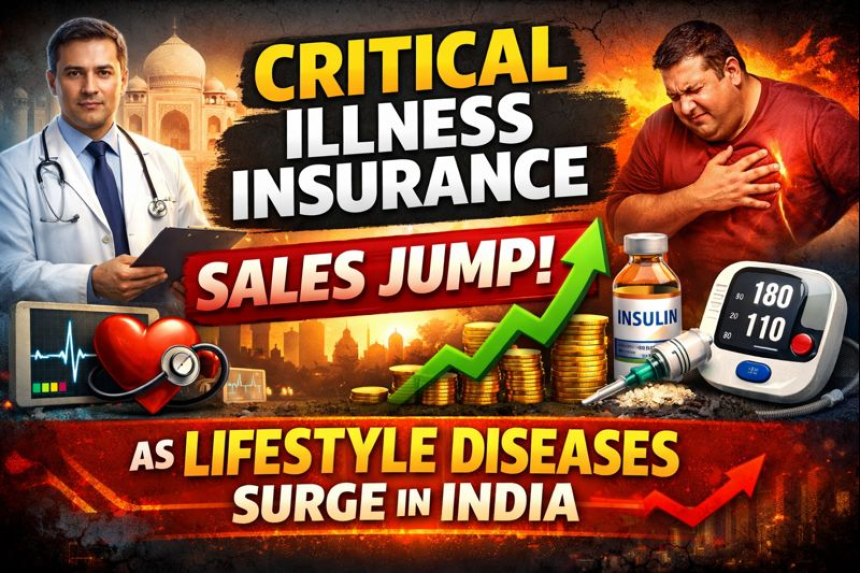

Critical Illness Insurance Sales Jump as Lifestyle Diseases Surge in India
Critical illness insurance is a specialized type of insurance that provides a lump sum payout if the insured is diagnosed with any of the listed critical illnesses specified in the policy.
India is witnessing a dramatic transformation in healthcare dynamics, marked by a significant rise in lifestyle-related diseases such as diabetes, cardiovascular conditions, and cancer. This shift has driven an increasing awareness among the population about the importance of having comprehensive health insurance. As a result, third-party critical illness insurance sales in India are experiencing remarkable growth, emerging as a crucial financial safeguard against the mounting medical expenses associated with these debilitating conditions.
Understanding Critical Illness InsuranceCritical illness insurance is a specialized type of insurance that provides a lump sum payout if the insured is diagnosed with any of the listed critical illnesses specified in the policy. Unlike private medical insurance that typically covers hospitalization expenses, critical illness insurance emphasizes providing financial relief for treatment, recovery, and associated lifestyle changes due to severe diseases. The one-time payout offers policyholders the flexibility to use the funds for medical treatments, repaying debts, or managing daily expenses while they focus on recuperation.
This unique insurance product addresses a pressing gap in traditional private medical insurance plans, as it explicitly covers high-cost ailments such as stroke, heart attack, kidney failure, cancer, and neurological disorders. Given rising healthcare costs and the increasing prevalence of critical illnesses, it has become vital for individuals to secure adequate financial protection in the wake of such life-altering diagnoses.
Growing Lifestyle Diseases in IndiaIndia is experiencing an alarming rise in non-communicable diseases (NCDs), often referred to as lifestyle diseases. Factors such as sedentary living, unhealthy eating habits, rising stress levels, and limited physical activity have contributed to a surge in the prevalence of these ailments. Conditions like obesity, diabetes, hypertension, and cancer are increasingly being diagnosed across all age groups, highlighting a major health burden.
According to industry reports in 2026, approximately one in four Indians is at risk of death from an NCD before the age of 70. Additionally, healthcare expenses associated with critical illnesses have risen exponentially, often placing tremendous financial strain on families. This makes a compelling case for people to opt for critical illness insurance and private medical insurance as preventive financial measures.
Why Third-Party Critical Illness Insurance Is Gaining GroundThe rise in critical illness insurance sales through third-party channels can be attributed to several factors:
- Increased Awareness: Through Education Initiatives Insurers, brokers, and third-party distributors are increasingly educating people about the risks of lifestyle diseases and the limitations of conventional private medical insurance. Campaigns focusing on the financial implications of critical illness diagnoses are driving awareness and pushing individuals to seek broader coverage through dedicated critical illness insurance plans.
- Ease of Accessibility: Third-party vendors simplify the insurance purchase process by offering customized policies that fit diverse customer needs. Many of these distributors embrace digital platforms to make the process seamless and hassle-free, ensuring consumers are well-informed before selecting a plan. This increased accessibility has led to a significant uptick in sales across urban and semi-urban regions alike.
- Flexible Coverage: Terms Unlike traditional private medical insurance policies, critical illness insurance offers a clear and predefined coverage amount, with no complications over bill submissions or hospitalization records. The transparent payout structure ensures that policyholders have financial independence post-diagnosis, which makes these policies highly appealing.
- Increasing Medical Costs: India's healthcare sector continues to evolve, bringing cutting-edge technologies and treatments for critical illnesses. However, these advancements come with soaring costs. Third-party critical illness insurance policies play a crucial role by providing substantial payouts to ease the financial burden of treatment expenses and post-treatment care.
- Complementary Benefits to Private Medical Insurance: Private medical insurance primarily covers day-to-day healthcare needs, including hospitalization, doctor consultations, and diagnostic testing. Critical illness insurance serves as a complement to private medical insurance by addressing high-risk medical conditions that require intensive and expensive treatment. Many individuals are recognizing the value of combining these two types of coverage for comprehensive protection.
The growth of critical illness insurance in India has led to the standardization of key features in these policies. While products may differ slightly across providers, certain common practices have become widely accepted as part of the industry's standards:
- Comprehensive Coverage Lists Most critical illness insurance plans include coverage for major illnesses such as cancer, stroke, paralysis, kidney failure, and organ transplants. Providers often update their lists based on emerging health trends to ensure relevance.
- Predefined Payout Amounts The lump sum payout is fixed beforehand and is typically disbursed once the policyholder is diagnosed with a critical illness meeting the policy conditions. This structure eliminates the ambiguity often associated with hospital bills and treatment-specific claims under standard private medical insurance.
- Reasonable Waiting Periods Policies generally come with waiting periods ranging from 30 days to 90 days, during which claims cannot be made. This ensures policyholders avail of the coverage for long-term protection rather than immediate financial aid.
- Simplified Claim Processes Industry norms prioritize hassle-free claim submissions to ensure quick payouts. Policyholders need to submit basic documentation, such as medical certificates or diagnostic reports, to complete the process.
- Adaptability to Changing Needs Many insurers offer dynamic features such as the option to enhance coverage, add riders, or integrate critical illness insurance with private medical insurance. This flexibility has helped establish a standard of customer-centered service within the market.
Although critical illness insurance is gaining traction in India, certain challenges remain:
- Limited Penetration in Rural Areas Urban households tend to be more aware of the financial advantages of critical illness insurance due to better access to information and education. However, rural populations remain underserved, with insurers struggling to penetrate these regions effectively.
- Premium Affordability While lump sum payouts are significant, premiums for critical illness insurance can be higher than those of traditional private medical insurance plans. A significant portion of India’s population may still find these premiums unaffordable.
- Scope of Coverage Some consumers feel that predefined lists of critical illnesses are restrictive, leaving out conditions they perceive as equally threatening. Enhancing coverage through innovative product designs will be essential in addressing this issue.
- Customer Awareness Despite the rise in sales, there remains a gap between awareness and understanding of critical illness insurance. Many individuals view private medical insurance as sufficient for their needs, creating a missed opportunity for educating customers about the added benefits of critical illness coverage.
To address the challenges and elevate the growth of third-party critical illness insurance sales, digital transformation is playing a pivotal role. The rise of artificial intelligence (AI) in customer profiling, predictive analytics for assessing risks, and machine learning-powered chatbots is enabling distributors to reach wider audiences. Digital platforms also empower policyholders to make informed decisions using comparison tools, calculators, and informational resources.
Furthermore, innovative insurance products that combine critical illness insurance with other health coverage, such as private medical insurance, are emerging to provide holistically tailored solutions. The emphasis is on offering flexibility in coverage and competitive pricing models to cater to diverse income groups across India.
ConclusionAs India battles the growing epidemic of lifestyle diseases, critical illness insurance is no longer a luxury but a necessity for financial resilience. The spike in third-party critical illness insurance sales highlights a shift in consumer perception, driven by the increasing need for robust protection against the financial stress associated with serious health conditions.
While the industry continues to address affordability, accessibility, and awareness, the integration of digital technologies and customer-centric product designs promises a brighter future for critical illness insurance in India. For individuals seeking comprehensive coverage, complementing their private medical insurance plans with critical illness insurance is the optimal pathway toward securing their physical and financial well-being. As the Indian healthcare landscape evolves, embracing insurance solutions that address critical ailments is undoubtedly a wise investment for every household.