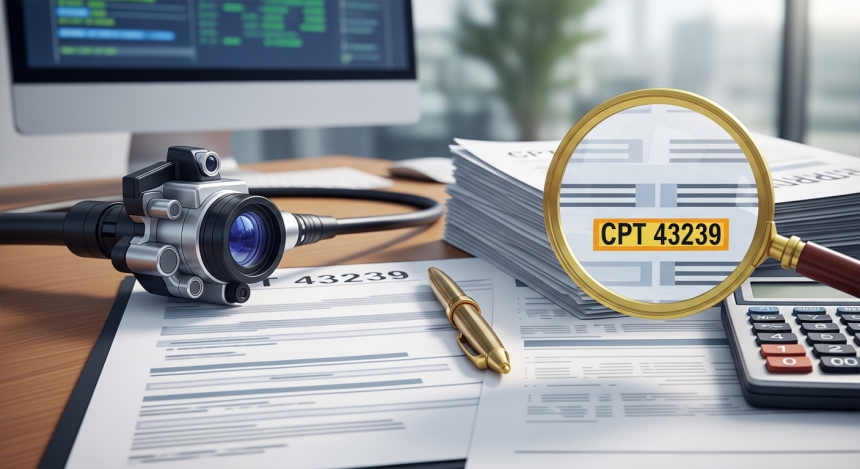

CPT 43239: Endoscopy Billing, Documentation and Reimbursement Guide
Complete guide on CPT 43239 endoscopy billing, documentation, coding rules, and reimbursement strategies for accurate claims and improved revenue cycle management.
Endoscopy procedures play a critical role in diagnosing and managing gastrointestinal conditions. While these procedures are routine in many healthcare settings, billing and coding for them requires a high level of accuracy. Even small mistakes can lead to claim denials, delayed payments, or reduced reimbursement.
Understanding how to properly bill and document endoscopy services ensures that providers receive appropriate payment while staying compliant with payer guidelines. This guide breaks down everything healthcare professionals need to know about coding, documentation, and reimbursement for endoscopy procedures.
Upper gastrointestinal endoscopy allows physicians to examine the esophagus, stomach, and duodenum using a flexible scope. It is commonly used to investigate symptoms such as abdominal pain, bleeding, nausea, and difficulty swallowing.
During the procedure, physicians may also perform biopsies or collect tissue samples for further evaluation. These additional steps affect how the procedure is coded and billed.
Accurate reporting depends on whether the procedure was purely diagnostic or included therapeutic intervention.
The code CPT Code 43239 is used for esophagogastroduodenoscopy with biopsy. This means that during the endoscopy, the physician not only examined the upper GI tract but also removed tissue samples for analysis.
This code should be used only when a biopsy is performed. If no biopsy is taken, a different code must be selected. Proper understanding of this distinction is essential for avoiding claim errors.
Correct code selection ensures that the procedure is accurately represented and reimbursed at the appropriate rate.
Strong documentation is the foundation of successful billing. Without it, even correctly coded claims may face rejection.
Medical NecessityProviders must clearly explain why the endoscopy was required. Symptoms, prior treatments, and clinical indications should be included in the patient record.
Procedure DescriptionThe operative report should detail the procedure, including scope insertion, areas examined, and any findings.
Biopsy ConfirmationSince this code involves biopsy, documentation must clearly state that tissue samples were taken.
Findings and DiagnosisThe physician should document observations and provide a clear diagnosis or suspected condition.
Clear and complete documentation supports claim approval and reduces audit risks.
Billing errors can disrupt revenue flow and increase administrative burden. Identifying these issues early helps prevent repeated mistakes.
Incorrect Code SelectionUsing the wrong code for the procedure performed is a common issue. Always confirm whether a biopsy was taken.
Missing DocumentationIncomplete records make it difficult for payers to validate the service.
Overlooking Bundled ServicesCertain services are included within the primary procedure and should not be billed separately.
Modifier MisuseIncorrect or missing modifiers can lead to claim rejection or underpayment.
Avoiding these mistakes improves efficiency and claim success rates.
Modifiers provide additional context about the procedure and help ensure accurate reimbursement.
Modifier 26Indicates the professional component of the service.
Modifier TCRepresents the technical component when billed separately.
Modifier 59Used to identify distinct services when appropriate.
Modifier 76Applied when the same procedure is repeated by the same provider.
Each modifier must be supported by clear documentation to justify its use.
Reimbursement for endoscopy procedures depends on multiple factors, including payer policies, documentation quality, and service location.
Insurance PoliciesEach payer may have different coverage rules and reimbursement rates.
Facility TypePayments may vary depending on whether the procedure is performed in a hospital or outpatient setting.
Claim AccuracyClean claims are processed faster and are less likely to be denied.
Healthcare providers often rely on experts such as Avenue Billing Services to ensure accurate billing and improved financial outcomes.
Endoscopy procedures are a key part of gastroenterology practice. Proper billing requires familiarity with specialty specific guidelines and coding requirements.
Working with experienced gastroenterology billing services ensures that claims are handled with precision. These services understand the nuances of GI procedures and help reduce errors that could lead to denials.
Specialty focused billing also improves workflow efficiency and supports better revenue cycle management.
Insurance verification is a critical step before performing any endoscopy procedure. It helps confirm coverage and reduces the risk of denied claims.
Eligibility ChecksVerify that the patient’s insurance is active and covers the procedure.
Authorization RequirementsSome payers may require prior approval for endoscopy services.
Patient Cost ResponsibilityInform patients about potential out of pocket expenses.
Taking these steps improves transparency and reduces financial surprises for patients.
Medical billing requirements can vary depending on the state. Providers must stay informed about local regulations and payer expectations.
For example, practices offering Medical Billing Services in Michigan must follow state specific Medicaid rules and payer contracts. These factors influence how claims are processed and reimbursed.
Key Considerations- Coverage differences across payers
- Documentation standards
- Reimbursement variations
Understanding state specific requirements helps maintain compliance and avoid unnecessary denials.
Efficient billing processes lead to faster payments and fewer errors. Healthcare providers can take several steps to improve performance.
Regular Staff TrainingKeep billing teams updated with the latest coding and payer guidelines.
Use of TechnologyAdvanced billing systems can identify errors before claims are submitted.
Internal AuditsPeriodic reviews help identify weaknesses and improve accuracy.
Clear CommunicationEnsure coordination between clinical and billing teams.
These strategies help create a more streamlined and effective billing process.
Even with strong systems in place, claim denials may still occur. Handling them properly ensures that revenue is not lost.
Identify the IssueReview denial codes and payer feedback to understand the problem.
Make CorrectionsUpdate coding or documentation before resubmitting the claim.
Submit AppealsProvide supporting documents to justify the claim when necessary.
Track OutcomesMonitor denial trends to prevent future issues.
A structured denial management approach improves recovery rates and reduces delays.
Clear communication with patients plays an important role in the billing process.
Explain the ProcedureHelp patients understand why the endoscopy is needed.
Discuss CostsProvide estimates and explain insurance coverage.
Offer SupportAssist patients with billing questions and payment options.
Transparency builds trust and reduces the likelihood of disputes.
Accurate billing for endoscopy procedures requires attention to detail, proper documentation, and a clear understanding of coding guidelines. Each step in the process contributes to successful reimbursement and financial stability.
By focusing on clean claims, staff training, and efficient workflows, healthcare providers can reduce denials and improve revenue performance. Strong billing practices also allow providers to focus more on patient care and clinical outcomes.
A well managed billing system ensures consistency, compliance, and long term success in a competitive healthcare environment.
ISO 45001 Basic Certification
IGURU STORE is a group of experienced and technical experts, consultants, auditors and pri...


Sushmita Srivastava Songs That Bring Soulful Hindi Music to Life
Listen to Sushmita Srivastava songs on Spotify. A talented Bollywood singer, female playba...