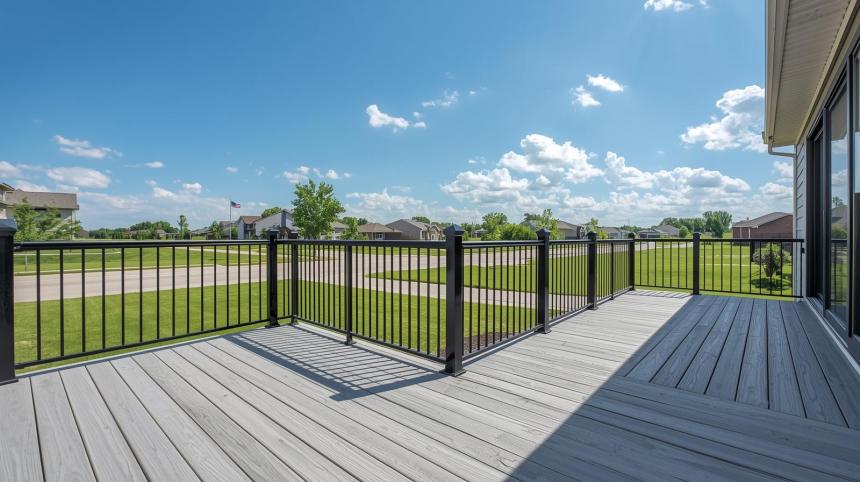

Composite Decking vs. Pressure-Treated Wood in Iowa: Real Cost and Maintenance Comparison
Annual spring inspection for freeze-thaw damage combined with sealing every 1–3 years is the highest-impact maintenance combination for extending PT lumber deck life in Iowa's climate.
Composite decking boards cost more upfront than pressure-treated lumber — that's true, and there's no point dancing around it. But in Iowa's climate, the 15-year total cost comparison between the two materials is a lot closer than most homeowners expect, and in many cases composite comes out ahead when you factor in what pressure-treated wood actually demands across a full Iowa seasonal cycle.
I want to give you an honest comparison here — not a sales pitch for one product over the other. Both materials have real applications and real trade-offs, and the right answer depends on your budget, your timeline in the home, and how much ongoing maintenance you're actually willing to do. Let's work through it.
Understanding What You're Actually ComparingBefore getting into numbers, it helps to understand what each material actually is — because "pressure-treated wood" and "composite decking" each cover a range of products that perform differently.
What Pressure-Treated Lumber IsPressure-treated (PT) lumber is softwood — typically Southern yellow pine — that has been impregnated with chemical preservatives under pressure. The preservatives protect against rot and insect damage. The most common treatment for residential decking today uses ACQ (Alkaline Copper Quaternary) or CA (Copper Azole) chemistry, which replaced the older CCA (chromated copper arsenate) formulation phased out for residential use in 2004.
PT lumber is structurally sound, widely available, and genuinely durable when maintained properly. It's also the default framing material for deck substructures regardless of what decking surface goes on top — even composite decks typically use PT lumber for joists, beams, and posts.
What Composite Decking IsComposite decking is manufactured from a blend of wood fiber and polyethylene or PVC, with colorants, UV stabilizers, and bonding agents added. Modern products fall into two main categories:
- Uncapped composite: Wood-plastic blend without a protective polymer shell. More affordable, but more susceptible to moisture absorption, mold, and UV fading.
- Capped composite: A polymer cap co-extruded on three or four sides of the board. Dramatically better moisture, mold, stain, and fade resistance. The appropriate specification for most Iowa residential decks.
When experienced Iowa contractors talk about composite decking, they're almost always referring to capped composite products — specifically three-sided or four-sided capped boards from established manufacturers. Uncapped composite has largely fallen out of favor in the quality residential market because its real-world performance doesn't justify its cost premium over pressure-treated.
How Iowa's Climate Treats Each MaterialIowa's continental climate is genuinely hard on outdoor building materials — and the two products respond to that climate very differently.
What Iowa's Seasons Do to Pressure-Treated LumberWinter freeze-thaw cycles: PT lumber absorbs water. When that water freezes, it expands within the wood fiber, driving slow but progressive degradation. Each freeze-thaw cycle pushes the wood toward cracking, checking (surface cracks along the grain), and eventual splitting. Iowa winters cycle above and below freezing repeatedly — sometimes within a single week — which means this process runs more frequently here than in colder but more stable climates.
Spring moisture: Iowa springs are wet, and PT lumber exposed to sustained moisture without adequate sealing is a mold and mildew candidate. The preservative treatment protects against rot but doesn't prevent surface mold growth on an unsealed or poorly maintained deck.
Summer UV and heat: Unprotected PT lumber grays out quickly in Iowa's 200+ annual sunny days. Without regular staining or sealing, a new PT deck looks weathered and gray within 1–2 seasons. Surface temperatures on a dark-stained PT deck in direct Iowa summer sun routinely exceed 130–150°F.
What this means practically: PT lumber decks in Iowa require active, consistent maintenance to perform well. An unmaintained PT deck degrades visibly within 2–3 years and structurally within 8–12, depending on conditions and exposure.
What Iowa's Seasons Do to Composite DeckingWinter freeze-thaw cycles: Capped composite's polymer shell prevents moisture absorption at the board surface. The board can't absorb the water that drives freeze-thaw damage. This is the single most important performance difference between composite and PT lumber in Iowa's specific climate.
Spring moisture: Capped composite's non-porous surface doesn't support mold growth the way PT lumber's wood fiber does. Surface cleaning in spring is typically straightforward — a wash and rinse, not remediation.
Summer UV and heat: Quality capped composite with UV stabilizers in the cap layer fades more slowly than unsealed or inadequately sealed PT lumber. That said, composite does get hot in direct Iowa summer sun — dark-colored boards can reach 140–160°F surface temperature on a July afternoon. This isn't a structural issue, but it's a comfort consideration.
→ The climate summary: Iowa's seasons consistently favor composite over PT lumber on maintenance burden and long-term structural integrity. The freeze-thaw advantage alone is significant in a state that cycles as dramatically as Iowa does.
The Real Cost Comparison: What You'll Actually SpendThis is where the conversation gets specific — and where a lot of homeowners make decisions based on incomplete information. Let's build the full picture.
Upfront Material and Installation Costs400 sq ft deck, Des Moines area, 2025 pricing:
Cost ComponentPressure-TreatedMid-Range Capped CompositeDecking boards (materials)$1,800–$3,200$5,600–$9,600PT framing (both use PT)$2,500–$4,000$2,500–$4,000Hardware and fasteners$400–$700$600–$1,200 (hidden fasteners)Labor (installation)$3,500–$6,000$4,000–$7,000Total upfront$8,200–$13,900$12,700–$21,800The upfront gap is real — typically $4,000–$8,000 on a 400 sq ft deck. That's a meaningful number, and I won't pretend otherwise.
The Maintenance Cost That PT Lumber Adds Over TimeHere's where the comparison changes. PT lumber requires ongoing maintenance that composite largely doesn't.
Annual/recurring PT lumber maintenance costs:
- Cleaning and preparation (annual): $100–$200 in products, or $300–$500 for professional cleaning
- Staining or sealing (every 1–3 years): $300–$600 DIY, or $800–$1,500 professional
- Board replacement as splitting and rot occurs (years 5–15): $500–$2,000 depending on extent
- Fastener tightening and replacement as wood moves: $100–$300 periodic
Annual/recurring composite maintenance costs:
- Cleaning (annual): $50–$100 in products
- Board replacement: Minimal to none under normal conditions with quality capped composite
- No sealing or staining required
Over 15 years, the ranges overlap significantly — and at the higher end of PT lumber maintenance costs (professional staining every two years, meaningful board replacement), composite actually comes out ahead. At the low end, where a homeowner consistently DIY-maintains their PT deck and has minimal board replacement, PT lumber retains a modest cost advantage.
The honest conclusion: for Iowa homeowners planning to stay in their home 10+ years and willing to do the math, composite is often cost-competitive — not just more convenient.
💬 A Contractor's Perspective on the Long-Term Math"I've built a lot of PT decks and a lot of composite decks over the years. The homeowners who call me back are almost always the PT deck owners — either because they've let maintenance lapse and the deck is showing it, or because they're tired of the annual maintenance cycle and want to switch to composite. I almost never get a callback from composite deck owners asking for repairs. The upfront conversation about cost is harder, but the 10-year relationship with the homeowner is better."
— Deck contractor, Des Moines metro areaHead-to-Head: Performance in the Categories That MatterAppearance Over Time
Pressure-treated:
- New PT lumber is light green-tan from the treatment chemistry; this color fades to gray relatively quickly without sealing
- With consistent staining, can maintain warm wood tones for years
- Individual boards develop character — knots, grain variation, checking — that some homeowners appreciate and others find inconsistent
- Maintenance lapses show clearly and quickly
Capped composite:
- Consistent color and grain embossing across all boards in a production lot
- Fade resistance is meaningfully better than unsealed or inadequately maintained PT lumber
- Some darker composite colors do fade noticeably over 5–10 years despite UV stabilizers — lighter colors tend to hold better
- No knots, splits, or grain inconsistency; uniform appearance throughout the deck's life
Winner: Composite for consistency and low-maintenance appearance; PT lumber for homeowners who prefer natural wood character.
Structural PerformancePressure-treated:
- Genuinely strong structural material when properly maintained
- Prone to warping, twisting, and cupping as it dries after installation — green PT lumber installed immediately can move significantly in the first season
- Board splitting and checking increases over time, particularly at fastener points
Capped composite:
- Dimensionally stable — doesn't warp, twist, or cup with moisture changes
- Relies entirely on the framing substructure for load capacity; composite boards themselves don't add structural rigidity
- Can sag between joists if joist spacing is too wide — follow manufacturer specifications
Winner: Tie — each material has structural advantages and limitations.
Environmental Considerationsa. PT lumber uses preservative chemicals; newer ACQ and CA treatments are significantly safer than older CCA but still involve chemical inputs b. Composite decking typically incorporates recycled wood fiber and recycled polyethylene — often 50–95% recycled content depending on manufacturer c. End-of-life disposal is more challenging for composite than natural wood d. Sustainably sourced PT lumber from certified forests has a reasonable environmental profile relative to plastic-based products
Winner: Situational — depends on what environmental factors matter most to the buyer.
Comfort and Safety✔ PT lumber is cooler underfoot in summer sun than composite ✔ PT lumber doesn't splinter when new and well-maintained; splinters become a real hazard as the wood ages and checks ✔ Composite doesn't splinter, ever — a genuine safety advantage for families with children and barefoot use ✔ Composite gets significantly hotter in direct Iowa summer sun — 140–160°F surface temperatures are common on dark-colored boards
Winner: Composite for splinter safety and longevity; PT lumber for heat management in full-sun Iowa applications.
Maintenance Guide: What Each Material Actually RequiresMaintaining a Pressure-Treated Deck in IowaYear 1:
- Allow new PT lumber to dry for 6–12 months before applying sealer or stain — wet PT lumber doesn't accept finish well
- After drying, clean thoroughly and apply a penetrating stain-sealer appropriate for treated wood
- Tighten any fasteners that have loosened as the wood dried and moved
Annual maintenance (ongoing):
- Clean thoroughly each spring — remove winter debris, wash with a deck cleaner, rinse completely
- Inspect all boards for checking, splitting, and rot at fastener points — address promptly
- Re-stain or re-seal every 1–3 years depending on product, sun exposure, and wear
Iowa-specific considerations:
- Inspect after each winter for freeze-thaw damage: cracked boards, raised fasteners, and any boards showing signs of decay at the ends
- Sand any rough or splintered surfaces before summer barefoot season
- Check the ledger connection to the house for moisture intrusion each spring — this is the most structurally critical maintenance point on any Iowa deck
Warning: Skipping PT lumber maintenance in Iowa doesn't just affect appearance — it accelerates structural deterioration. A PT deck that goes three or more years without proper sealing in Iowa's climate will show meaningful board degradation and may have compromised fastener integrity.
Maintaining a Composite Deck in IowaSpring cleaning (annual):
- Sweep off winter debris and leaf matter — tannin stains from wet leaves are common on Iowa composite decks and are easier to remove before they set through winter
- Wash with a composite-approved cleaner and soft-bristle brush
- Rinse thoroughly; inspect seams and fasteners
Ongoing care:
- Remove food and grease spills promptly — capped composite is stain-resistant but not stain-proof; prolonged contact allows penetration
- Use plastic or composite shovels for snow removal — metal shovel edges scratch the polymer cap
- Avoid rubber-backed mats in fixed positions — they cause discoloration on the cap surface over time
Periodic inspection:
- Check expansion gaps annually — boards pushed against fixed objects can cause edge lifting in summer heat
- Inspect hidden fasteners or face screws after the first Iowa winter; thermal cycling occasionally shifts boards slightly in the first season
- Apply end-sealant to any new cuts made during installation or repair — cut ends expose wood fiber core
Pros: ✔ Lower upfront cost — meaningful for budget-conscious projects ✔ Natural wood appearance and character ✔ Cooler surface temperature in direct Iowa summer sun ✔ Widely available at consistent quality from multiple local suppliers ✔ Easy to repair or replace individual boards from available stock ✔ Strong structural performance as a decking material
Cons:
- Requires consistent annual maintenance in Iowa's climate — not optional
- Splinter risk increases as wood ages, checks, and dries
- Grays out quickly without adequate sealing — aesthetics degrade without maintenance
- Freeze-thaw cycles accelerate degradation over time in Iowa conditions
- Chemical preservative treatments require care around children and pets during installation
Pros: ✔ Dramatically lower maintenance burden than PT lumber ✔ No splintering — safety advantage for families with children ✔ Consistent color and appearance over the deck's lifespan ✔ Doesn't absorb moisture — resistant to Iowa's freeze-thaw degradation ✔ Long warranties (25–50 years on quality products) ✔ Incorporates recycled materials in most products
Cons:
- Higher upfront material and installation cost
- Gets hot in direct Iowa summer sun — dark colors especially
- Cannot be refinished or restained; color change requires replacement
- Quality varies significantly by manufacturer and product tier
- End-of-life disposal more challenging than natural wood
- Cut ends require sealing to protect wood fiber core
1. Buying the cheapest PT lumber without checking moisture content Green, wet PT lumber installed immediately warps, cups, and moves significantly as it dries. Buying kiln-dried or allowing wet PT lumber to dry before installation reduces movement and improves fastener retention.
2. Choosing uncapped composite to split the cost difference Uncapped composite in Iowa's climate delivers the worst of both worlds — higher cost than PT lumber with moisture and mold performance not much better. If you're going composite, go capped.
3. Skipping the first-year PT lumber sealing Waiting more than 12–14 months to seal new PT lumber in Iowa's climate means the wood has already started its degradation cycle. The first sealing should happen as soon as the wood has dried adequately — not whenever it's convenient.
4. Not budgeting for composite's full accessory list Composite deck boards are the visible cost; fascia boards, hidden fasteners, matching railing systems, and any required composite framing add 40–60% to the board cost alone. Budget the full system, not just the boards.
5. Ignoring joist spacing requirements for composite Most composite products specify 16" on-center maximum joist spacing, with 12" required for diagonal installations. Installing over wider-spaced framing leads to board flex and eventual locking system stress.
Making the Right Call for Your Iowa ProjectThe choice between composite and pressure-treated ultimately comes down to three honest questions:
- How long are you staying in the home? If less than 5 years, PT lumber's lower upfront cost is likely the better financial decision. If 10+ years, composite's total cost advantage becomes more compelling.
- How realistic are you about maintenance? If you'll consistently maintain a PT deck every 1–2 years, the cost advantage of PT holds. If life gets in the way and maintenance lapses — as it does for most busy Iowa families — composite's forgiveness pays dividends.
- What's the primary use of the deck? A family deck with barefoot summers and kids running around benefits meaningfully from composite's no-splinter surface. A utilitarian deck serving a secondary purpose might not need that premium.
At Kyadata, we stock composite decking boards across the full tier range — from mid-range capped products suited to most Des Moines residential applications to premium four-sided capped options for homeowners who want maximum longevity. We work with both contractors and homeowners who want honest product guidance before they commit to a significant outdoor investment.
If you're working through this decision for a specific project and want to talk through what the right material looks like for your situation, reach out before the spring build season tightens up supply and contractor availability.
Frequently Asked Questions1. Is composite decking worth the extra cost over pressure-treated in Iowa's climate? For homeowners staying 10+ years, capped composite typically reaches cost parity with pressure-treated when you factor in Iowa's maintenance requirements across 15 years.
2. How often does a pressure-treated deck in Iowa need to be re-sealed or re-stained? In Iowa's climate, pressure-treated decks need cleaning and inspection annually, with re-staining or re-sealing every 1–3 years depending on sun exposure and product performance.
3. Does composite decking hold up through Iowa's freeze-thaw cycles? Capped composite's polymer shell prevents moisture absorption, which is the primary mechanism of freeze-thaw damage — making it significantly more resistant than pressure-treated lumber in Iowa winters.
4. What's the lifespan of a pressure-treated deck versus composite in Des Moines? A well-maintained PT deck typically lasts 15–25 years in Iowa; quality capped composite is warranted for 25–50 years and realistically outlasts most PT decks with less maintenance.
5. Can I mix composite decking boards with a pressure-treated substructure? Yes — most composite decks use pressure-treated lumber for joists, beams, and posts, with composite boards on the surface only; this is the standard construction method.
6. Why does composite decking get so hot in Iowa summers? Composite boards absorb more solar heat than natural wood, particularly in dark colors — choosing lighter composite colors (grays, light tans) reduces surface temperatures meaningfully on Iowa south-facing decks.
7. What's the most important maintenance task for a pressure-treated deck in Iowa? Annual spring inspection for freeze-thaw damage combined with sealing every 1–3 years is the highest-impact maintenance combination for extending PT lumber deck life in Iowa's climate.
Online Slot Game: A total Guidebook for you to Capabilities, Game play...
Online Slot Game: A total Guidebook for you to Capabilities, Game play, along with Tricks...
How to Choose the Right Plastic Surgeon in Chicago, IL
Choosing to undergo plastic surgery is a personal decision that deserves careful thought,...

From Environmental Audits to Remediation: How Best environmental engin...
This guide explains how Best Environmental Engineering Consultants help organizations mana...
Fluff Pulp Price Trend Q2 2026 | Price Trends, Forecast, Chart, Prices...

Mediclinic Dubai Laparoscopic surgeon
Mediclinic Dubai Laparoscopic surgeon