Commercial Insulation Solutions for Better Temperature Control in Large Facilities
The efficiency of a large facility depends heavily on the R-value per inch of its insulation.
Large commercial facilities achieve consistent indoor temperatures using high-performance commercial insulation systems that eliminate air leakage and create a thermal break between the interior and exterior environments. For most warehouses, manufacturing plants, and retail centers, the most effective approach involves applying closed-cell spray foam or advanced fiberglass systems to the building envelope. These materials stop the convection of air through walls and roofs, which accounts for nearly 40 percent of a building's energy loss. By sealing these gaps, facilities maintain stable climates, protect sensitive inventory, and reduce the mechanical load on heating and cooling systems.
Maintaining a controlled environment in a massive space requires more than just a powerful HVAC system. This article explores the technical standards, material choices, and installation strategies that professionals use to manage thermal performance in demanding industrial settings. Drawing on decades of building science and industrial application data, the following sections detail how facility managers can optimize their operations through smarter insulation choices.
Technical Performance of Modern Insulation Materials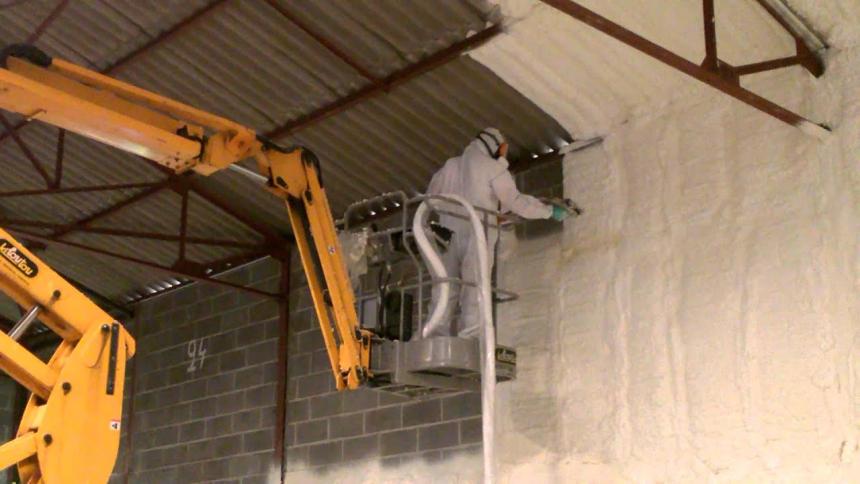
The efficiency of a large facility depends heavily on the R-value per inch of its insulation. This R-value measures the resistance to heat flow, supporting the thermal break necessary for climate stability. In cold climates, high R-values prevent heat from escaping, while in warmer regions, they keep solar heat from penetrating the structure. However, R-value is only part of the equation. Air infiltration can bypass even the thickest traditional batts if they are not paired with a proper air seal.
Commercial builders often turn to spray foam because it provides both high thermal resistance and a built-in air barrier. Closed-cell foam, for instance, adds structural strength to large-span walls and prevents moisture from condensing on metal surfaces. This is a common issue in metal buildings where temperature differences between the inside and outside lead to "sweating" on the interior walls.
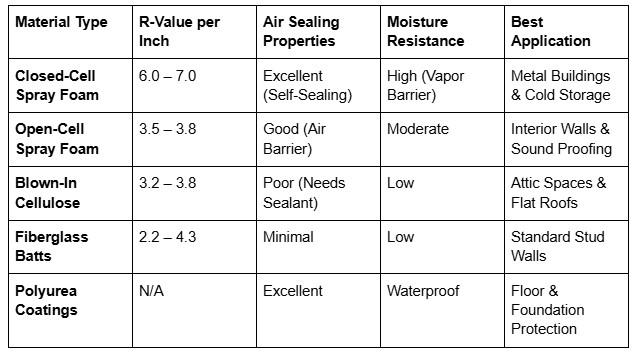
Comparing Industrial Insulation OptionsDifferent facility types require different material properties. A climate-controlled pharmaceutical warehouse has stricter needs than a dry-storage facility. The table below outlines the performance characteristics of common commercial materials.
Bonus Tip: When insulating a metal building, apply insulation directly to the metal panels. This moves the dew point to the outside of the foam, preventing rust and mold growth behind the insulation layer.
Managing Thermal Bridging in Steel StructuresSteel is an excellent conductor of heat. In a typical large facility with steel studs or frames, heat travels through the metal, bypassing the insulation between the studs. This process, known as thermal bridging, can reduce the overall efficiency of an assembly by up to 50 percent. To combat this, experts recommend continuous insulation (CI).
Continuous insulation involves a layer of material that covers the structural members rather than just the spaces between them. This creates a thermal break. For large facilities, using thermal barrier coatings or exterior foam boards ensures that the steel frame does not act as a radiator, pumping heat into the building during the summer or leaching it out during the winter.
Climate Specific Guidance for Large FacilitiesRegional weather patterns dictate the best insulation strategy. In Northern climates, the primary goal is preventing heat loss through the roof. Since heat rises, the roof is often the most significant source of energy waste. Here, installers prioritize thick applications of dense pack cellulose or spray foam in the ceiling.
In Southern, more humid climates, the focus shifts to moisture control and radiant heat. High humidity can lead to mold in warehouse corners where air stays stagnant. Using closed-cell foam or crawl space encapsulation protects the building from the "stack effect," where warm, moist air is pulled in from the ground level and moves up through the building.
Bonus Tip: Facilities in high-humidity areas should consider crawl space encapsulation. This involves sealing the ground with a heavy-duty vapor barrier and insulating the walls to keep the sub-floor area dry and temperature-stable.
 Factors to Consider Before Selecting a Solution
Before committing to a specific insulation upgrade, facility managers must evaluate several operational factors. The wrong choice can lead to recurring maintenance costs or inadequate climate control.
- Building Usage and Occupancy: A gym or high-traffic retail space generates significant internal heat and moisture from people. This requires more breathable insulation or more advanced ventilation compared to a robot-driven warehouse.
- Fire Safety Requirements: Commercial codes often require thermal barrier coatings over spray foam. These coatings provide a 15-minute fire rating, which is mandatory in many industrial zones.
- Long-Term Durability: In facilities where walls might be bumped by forklifts or heavy machinery, a rigid material like closed-cell foam is preferable because it does not sag or settle over time.
- Strategic Leak Audits: Insulation effectiveness depends on an airtight building. A diagnostic assessment of the facility to identify leaks around loading docks, vents, and roof seams is a necessary first step before installation.
Practical Steps for Implementation
Upgrading a large facility often happens in phases. Many businesses start with air sealing, which is the most cost-effective way to see an immediate change in utility bills. By sealing gaps around windows, doors, and utility penetrations, they stop the draft that forces HVAC systems to run constantly.
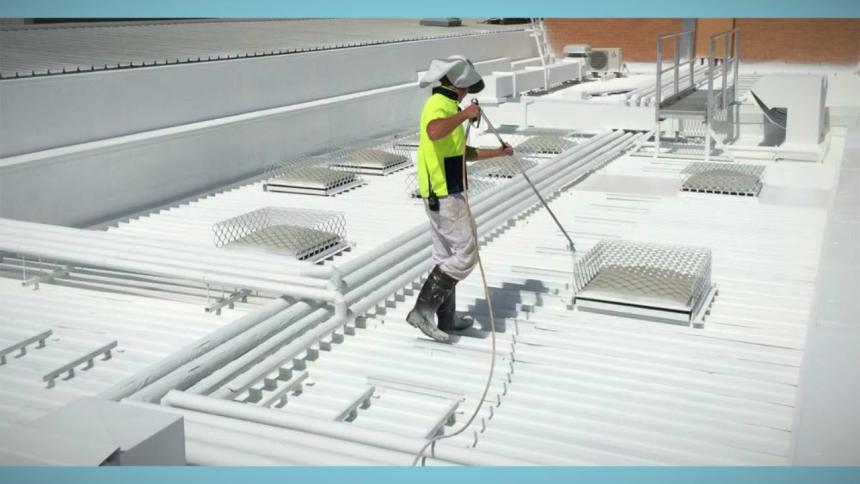
Next, focusing on the roof and upper walls provides the highest return on investment. Because temperature extremes are most felt at the roofline, adding a high-R-value layer here stabilizes the entire volume of air inside the facility. For older buildings, blowing in dense pack cellulose or adding polyurea coatings to existing flat roofs can extend the life of the structure while improving thermal performance.
Summary of Effective Temperature ControlAchieving better temperature control in large facilities requires a strategic combination of high R-value materials and airtight sealing. By addressing thermal bridging and choosing climate-appropriate solutions like closed-cell foam or dense pack cellulose, businesses can maintain stable environments. The key is to treat the building as a single system where the roof, walls, and foundation work together to resist heat flow. Managers should evaluate their specific fire safety needs and building usage before selecting a material to ensure long-term performance and durability.
Recommended Support for Facility UpgradesFor those managing large-scale properties, consulting with a professional insulation provider is the most reliable way to identify energy leaks and thermal gaps. Proseal Spray Foam offers a wide range of industrial services, including Closed Cell Spray Foam, Air Sealing, and Thermal Barrier Coatings. They assist businesses in determining the best material for their specific structural needs and regional climate. To discuss a project or schedule an assessment, they can be reached at (715) 227-6295 or via email at [email protected]. Their expertise in commercial spray foam and crawl space encapsulation ensures that large facilities remain efficient and protected from the elements year-round.
Common Questions About Commercial InsulationDoes spray foam insulation provide any structural benefits?Yes, closed-cell spray foam is a rigid material that adheres to the surfaces where it is applied. In many commercial settings, this adds significant racking strength to walls and can help metal buildings withstand higher wind loads.
How does insulation help with noise control in large plants?Materials like open-cell spray foam and fiberglass are excellent at absorbing sound. In manufacturing plants with heavy machinery, applying these materials to walls and ceilings can reduce the echo and overall decibel levels, creating a safer environment for workers.
Is it necessary to remove old insulation before adding new layers?It depends on the condition of the existing material. If the old insulation is wet, moldy, or has been compressed, it should be removed. However, if it is dry and intact, new blown-in insulation can often be added on top to increase the total R-value.
What is the lifespan of commercial spray foam?When installed correctly and protected from direct UV light, spray foam lasts for the life of the building. It does not sag or settle like fiberglass batts or cellulose, meaning the thermal performance remains consistent for decades.
AiraBreeze Portable Air Cooler: How It Works, Key Features, Benefits,...
AiraBreeze is a compact personal cooling device designed to provide refreshing airflow in...

Glucotex Blood Sugar Support : Tout ce qu'il faut savoir avant d'achet...
Glucotex est un complément alimentaire formulé pour aider à maintenir une glycémie saine,...