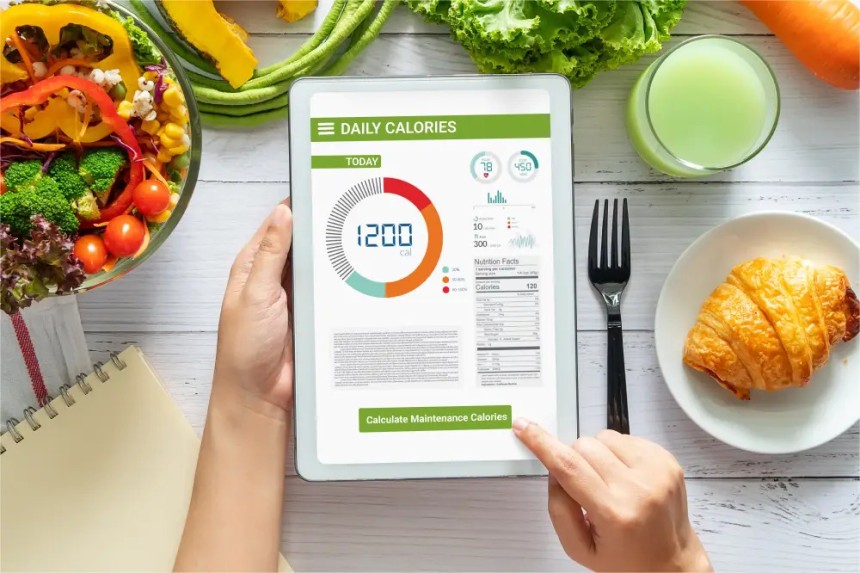

Calorie Calculator To Track Your Intake And Stay On Top Of Your Fitness And Health Goals
A calorie calculator provides the structure and guidance you need to align your diet with your health goals.
Maintaining a balanced diet requires more than just avoiding unhealthy foods. It involves understanding how much energy your body truly needs and how to fuel it effectively. Whether your goal is to lose weight, build muscle, or simply eat more mindfully, a calorie calculator is one of the most valuable tools to help you achieve your health and fitness targets.
By considering factors like your age, weight, height, activity level, and health goals, a calorie calculator can estimate the number of calories your body requires each day. This personalized approach allows you to tailor your nutrition, making it easier to stay on track with your fitness goals.
What is a calorie calculator?
A calorie calculator is a digital tool designed to estimate your daily caloric needs. It typically calculates your Basal Metabolic Rate (BMR)—the number of calories your body burns at rest—and then multiplies it by an activity factor to find your Total Daily Energy Expenditure (TDEE). This helps determine how many calories you need to maintain, gain, or lose weight.
Many calorie calculators also offer macronutrient recommendations, helping you balance proteins, fats, and carbohydrates according to your activity levels and fitness goals.
Step-by-step: How a calorie calculator works
Step 1: Calculate your Basal Metabolic Rate (BMR)
Your BMR represents the number of calories your body needs to perform basic functions such as breathing, circulation, and temperature regulation—without any physical activity.
You can calculate your BMR using the Mifflin-St Jeor equation:
For men:
(10 × weight in kg) + (6.25 × height in cm) − (5 × age in years) + 5
For women:
(10 × weight in kg) + (6.25 × height in cm) − (5 × age in years) − 161
Step 2: Determine your Total Daily Energy Expenditure (TDEE)
Your TDEE accounts for physical activity. Multiply your BMR by the relevant factor:
- Sedentary (little to no exercise): BMR × 1.2
- Lightly active (light exercise 1–3 days/week): BMR × 1.375
- Moderately active (moderate exercise 3–5 days/week): BMR × 1.55
- Very active (hard exercise 6–7 days/week): BMR × 1.725
- Super active (intense training or physical job): BMR × 1.9
TDEE reflects the total number of calories you need per day to maintain your current weight.
Step 3: Set your weight goal
If you aim to lose weight, subtract 500–1,000 calories from your TDEE for a safe and sustainable deficit. For weight gain, add 250–500 calories. To maintain weight, simply match your daily intake with your TDEE.
Example:
If your TDEE is 2,200 calories and your goal is fat loss, reduce daily intake to around 1,700–1,800 calories.
Step 4: Calculate your macronutrient needs
Protein
Protein is essential for muscle maintenance, recovery, and satiety.
- Sedentary/light activity: 1.0–1.2g per kg of body weight
- Moderately to highly active: 1.4–2.2g per kg
Example:
A person weighing 68 kg (150 lbs) and moderately active might need 95–150g of protein daily.
Fat
Fats support hormone production, brain function, and nutrient absorption. The recommended minimum is 1g of fat per kg of body weight, or roughly 20–35% of daily calories.
Example:
68 kg body weight = at least 68g fat per day.
Carbohydrates
Carbs fuel the body’s energy needs, especially during exercise.
- Recommended intake: 45–65% of daily calories
- To calculate grams: divide carb calories by 4
Example:
If your goal is 2,000 calories/day and carbs make up 50%:
1,000 calories from carbs ÷ 4 = 250g of carbohydrates/day.
Using a BMI calculator alongside
Although not a direct substitute, a BMI calculator can complement your calorie tracking. BMI (Body Mass Index) helps classify your weight status based on your height and weight. While it does not measure body fat, it offers a starting point for understanding overall health.
BMI formula:
Weight (kg) ÷ Height (m²)
- Below 18.5 = Underweight
- 18.5–24.9 = Normal weight
- 25–29.9 = Overweight
- 30 and above = Obese
Combining BMI insights with calorie tracking offers a more complete view of your health.
Common calorie values for everyday foods
Being aware of the calorie content of common foods helps with portion control and smarter choices. Here is a guide:
Fruits
- Apple (medium): 95 kcal
- Banana (medium): 105 kcal
- Grapes (1 cup): 52 kcal
Vegetables
- Broccoli (1 cup, cooked): 55 kcal
- Carrot (medium): 25 kcal
- Sweet potato (medium): 112 kcal
Grains & cereals
- Brown rice (1 cup): 216 kcal
- Oatmeal (1 cup, cooked): 154 kcal
- Whole wheat bread (1 slice): 80 kcal
Proteins
- Chicken breast (3.5 oz): 165 kcal
- Salmon (3.5 oz): 206 kcal
- Tofu (3.5 oz): 70 kcal
Dairy & alternatives
- Skim milk (1 cup): 83 kcal
- Cheddar cheese (1 oz): 113 kcal
- Greek yogurt (1 cup, plain): 130 kcal
Fats & oils
- Olive oil (1 tbsp): 119 kcal
- Peanut butter (2 tbsp): 188 kcal
- Avocado (half): 114 kcal
Snacks & treats
- Chocolate (1 oz): 140 kcal
- Potato chips (1 oz): 152 kcal
- Ice cream (½ cup): 145 kcal
Final thoughts
A calorie calculator provides the structure and guidance you need to align your diet with your health goals. Whether you are working towards weight loss, muscle gain, or simply improved nutrition, understanding your caloric and macronutrient requirements empowers you to make informed decisions every day.
By pairing this tool with a BMI calculator, food awareness, and consistent tracking, you can maintain control over your fitness journey and achieve lasting success. Regular monitoring, small adjustments, and a balanced diet are key to a healthier lifestyle.
Reading a Ballistics Chart: Velocity, Energy, Drop and Wind Without Ge...
Ballistics charts look like a wall of numbers. Four columns carry most of the meaning, and...

Eight Mistakes Buyers Make With Mainstream Rifle Ammunition
Eight Mistakes Buyers Make With Mainstream Rifle Ammunition
Twist Rate, Barrel Length and Bullet: Setting Up a Rifle for the Load
A bullet only flies true if the barrel spins it fast enough. Here is how twist rate, bulle...