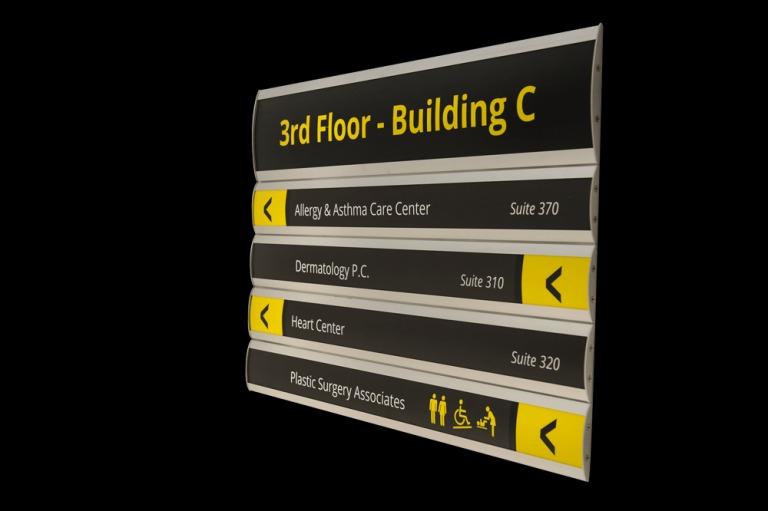

Building Directory Signs for Medical Offices and Healthcare Centers
At QC Signs & Graphics, we strive to deliver the perfect directory signs that can be installed on your building’s entrance or office lobby to deliver a smooth navigational experience to your visitors
Finding the right department, physician, or treatment area can be stressful for patients and visitors. In a medical office or healthcare center, clear signage is more than a branding element—it is an important part of the overall patient experience. Building directory signs help people quickly understand where they need to go, reducing confusion and making healthcare facilities easier to navigate.
Why Building Directory Signs Matter in Healthcare
Medical buildings often contain multiple doctors, departments, laboratories, pharmacies, and support services under one roof. Without an organized directory, visitors may need to ask reception staff for directions or walk through unfamiliar hallways looking for a specific destination.
A professionally designed building directory sign provides information at a glance. It can identify tenants, departments, floor numbers, suite locations, and other important destinations.
Effective directory signage can help:
- Improve patient navigation
- Reduce unnecessary questions at reception
- Create a more professional environment
- Make multi-tenant medical buildings easier to understand
- Support a consistent visual identity
- Improve the first impression for patients and visitors
What Should a Healthcare Directory Sign Include?
The information on a medical building directory should be organized logically and kept easy to scan. Depending on the facility, it may include:
- Physician or practice names
- Medical departments
- Suite numbers
- Floor numbers
- Laboratory or imaging locations
- Pharmacy information
- Reception and administrative areas
- Emergency or other important destinations where appropriate
Avoid overcrowding the sign with unnecessary information. Visitors should be able to locate their destination within seconds.
Design Considerations for Medical Office Directory Signs
Healthcare environments require signage that is highly readable and professional. Typography should have sufficient size, spacing, and contrast so information can be recognized easily.
A good directory sign typically uses a clear hierarchy. For example, floor numbers can be visually prominent, while physician or tenant names can follow a consistent format. Consistency becomes particularly important when a building contains many suites.
Materials also matter. Acrylic, aluminum, engraved materials, and dimensional lettering can provide a polished appearance while allowing directory systems to be customized as tenants change.
ADA and Accessibility Considerations
Accessibility should be considered when planning healthcare signage. Depending on the sign's purpose, location, and applicable requirements, ADA-compliant signage may be necessary.
Requirements can involve factors such as tactile characters, Braille, contrast, character size, mounting height, and placement. Healthcare facilities should evaluate applicable federal, state, and local requirements before manufacturing and installing permanent signage.
A professional sign provider can help identify where accessibility requirements may apply, but compliance should ultimately be verified for the specific facility and application.
Creating a Consistent Wayfinding System
A building directory works best as part of a larger healthcare wayfinding signage system. Directional signs, room identification signs, elevator signs, parking signs, and directories should share common typography, colors, symbols, and design elements.
For example, a patient might first see a building directory in the lobby, then follow directional signs toward an elevator and finally use a suite identification sign to find a physician's office. When these signs work together, navigation becomes much more intuitive.
Keep Tenant Information Easy to Update
Medical buildings can experience frequent tenant changes. A directory system that allows individual names or panels to be updated can save property managers from replacing the entire sign whenever a practice moves or changes its name.
Modular directory systems can be particularly useful for multi-tenant healthcare properties because individual listings can often be changed while the main sign structure remains in place.
Final Thoughts
Well-planned building directory signs for medical offices and healthcare centers can make a significant difference in how patients and visitors experience a facility. Clear information, thoughtful design, accessibility, durable materials, and consistent wayfinding all contribute to an environment that feels organized and easier to navigate.
For healthcare property owners, administrators, and facility managers, investing in professional directory signage is not simply about aesthetics. It is about helping people find the right place with less stress and greater confidence.

Open House Without Borders: How Virtual Tours Are Expanding the Proper...
Solvarex Review: Is It Worth Trying? Pricing, Results & Where to Buy
What Is Solvarex? Solvarex is a dietary supplement designed to support general wellness,...
Vigortrix Review: Is It Worth Trying? Results, Pricing & Where to Buy
What Is Vigortrix? Vigortrix is a men's vitality dietary supplement designed to support e...